From Hype to Hire: How DKSH Scaled Recruitment with AI and Automation
In the rapidly evolving recruitment landscape, AI and automation promise transformative results—but turning that promise into reality requires more than just technology.
From Hype to Hire: How DKSH Scaled Recruitment with AI and Automation
In the rapidly evolving recruitment landscape, AI and automation promise transformative results—but turning that promise into reality requires more than just technology.


This blog is part of a larger collection of client story content for these companies.
Meet the speakers.

DKSH
DKSH

Paradox
Watch the on-demand webinar:

Kynthia KOH (00:04):
Before we start the webinar, let us get a sense of where everyone is with a poll. If everyone could help to fill in the poll.
Kynthia KOH (00:15):
Let's just take a few moments. Seems like a lot of people are still
Kynthia KOH (00:26):
Exploring the possibilities. Oh, these a bit less. Not many people are using AI at the moment. Most are still just starting to pilot and exploring the possibilities. Oh, that's quite interesting. Great. Thanks for taking part in the poll. It's great to see where everybody is at right now. Whether you're just starting to explore or you think to scale across your business, we hope that the session today gives you some useful ideas and practical takeaways. Now I'm pleased to introduce our speakers for today. We have, together with us, we have Adeline, the global head of Talent acquisition at DKSH, where she heads recruitment strategy across 36 markets. She's played a key role in transforming DKH hiring processes, rolling out success factors, launching global TA analytics, and leading the adoption of AI tools. She brings over 20 years of experience and a strong passion for using tech and data to shape the future of hiring. Also with us today we have turning on the client success director at Paradox Turning leads the APEC client success team and has deep experience across the HR tech landscape from L and d and performance to payroll and BPO. She works closely with clients across the region to bring AI powered recruitment to life and to help recruiters spend more time with people not software. With that, I'll hand it over to Ling and Alene to take us through DKSH journey. Hi, sun, please.
Adeline Foo (02:05):
Thanks Kenia. Hi everyone. I'm really excited to be here with you today to share alene story and on how DKSH used AI and automation to transform their recruiting process. We're going to focus on ai, not just in ta, but how the journey actually evolved for the DKSH team as part of the transformation and we know that tech alone is not going to be able to help you transform. It also takes a lot of change management and strategy to make that happen. So I'm very pleased that we have Adelyn here to share with us how she's done that and also talk through some of the key results, business impact and some of the learnings through that process and journey. So thanks Lyn for joining us this morning. Really happy to have you here.
Zhenlin Ong (02:55):
Most welcome. Hi everyone.
Adeline Foo (02:58):
All right, let's start with a little bit of context. Why is AI advancement the talk of the town for the past couple of years? This diagram here, this chart here shows you how rapidly things have changed across the last 25 years. We started before the two thousands with handwriting recognition, speech recognition, and then we move rapidly into being able to recognize images when you can scan your images or scan your photos or your facial recognition as well and rapidly ramped up. If you see the line towards the right side rapidly ramped up upwards to start with language understanding. So everything from large language models, natural language processing, all of those have contributed to the rapid use of ai. If you think about your own use of AI today, you might find that it's actually everywhere in your daily life. Everything from trying to use your assistance on your mobile phones, asking your assistants through verbal prompts to search for some information to play the latest music and even chat GPT helping a lot of people just put together drafts of information or research information as well.
(04:15):
We're seeing that really come across in our daily lives, even without us really noticing it, but just applying it in the workplace and trying to apply in recruitment and HR could be a study, different story altogether. And there are some challenges that we'd like to talk through with you today. Just like the poll results, right? A lot of you have said that AI is important, it's a part of our everyday lives, but there is a disconnect that we've seen in the use of AI technology in businesses and creating that business impact versus why people feel that it is actually important to use this. Now we've partnered with the Harvard Business Review to determine how and what senior leaders truly think about AI automation and the efficacy of their TA processes. Well, only 11% have already taken steps to automate multiple areas of their process, yet those that are the most universally satisfied with the results are also those 11% of organizations who have implemented.
(05:20):
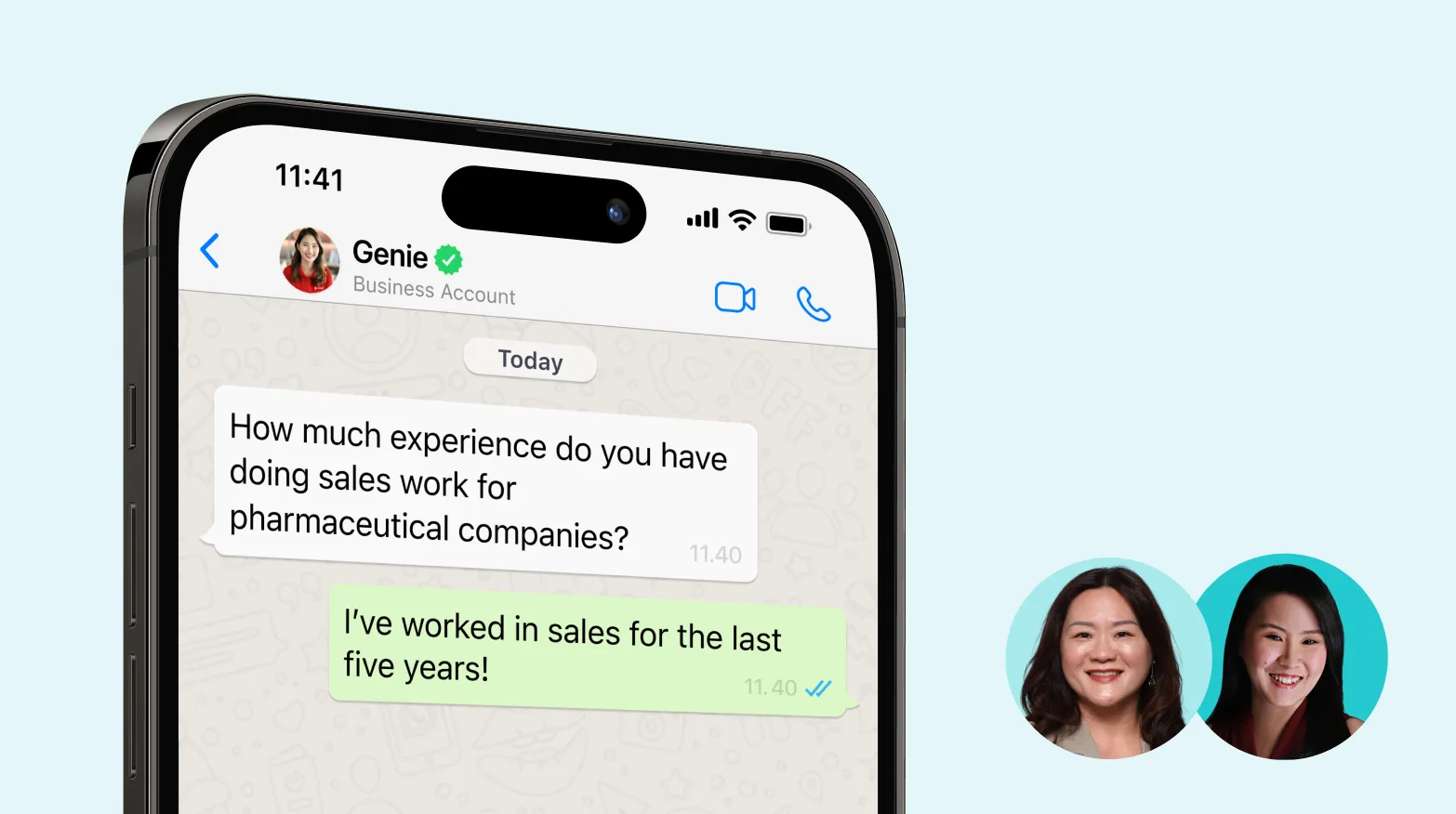
So you can see the high return rate, the high satisfaction rate for those who have implemented ai, but a very, very small percentage of organizations have actually started to use that across their process. So there's a huge opportunity for you to be part of the 11% for you to benefit from AI and the use of automation technology in your course of work. That's what we want to try and share with you today as well to share with you the possibilities and how we actually transform hype to make it a reality. And with that, I want to share with you a little video on how Evelyn and her team at DCH actually made that happen through the use of ai. So you have just met Jeannie VKH recruiting assistant here to help schedule interviews, get candidates their applications through a simple conversation, and I'm sure you're very interested to find out how Adeline and her team were able to put Jeanie in place and some of the thought process about it. Let's start off Lin, if you can just introduce DCSH, the type of hiring that you do today and some of the challenges as well.
Zhenlin Ong (09:19):
Thank you. Thanks ly. Hi everyone. Lemme tell you a bit about DKSH. We are actually a trusted partner for companies looking to expand their businesses in Asia and beyond. We specialize in what we call market expansion services. So we help companies to deliver their growth and most of these are Fortune 500 companies, including healthcare, consumer goods, performance materials and technology. Four very different sectors. We're headquartered in Zurich and we are public listed company in Switzerland. 95% of our business actually comes from Asia Pacific region and we employ over 29,000 people across 36 markets. Majority of our head count is actually junior Salesforce in supply chain as well. So approximately we hire about 4,000 such people we label as junior Salesforce and supply chain, the so-called blue collar level, and we were looking for towards AI to help us in automating part of these recruitment process and ideally it should be with scale and sustainability. So we have about 65 people in our talent acquisition teams and yeah, DKSH is actually celebrating 160 years this year.
Adeline Foo (10:42):
Congratulations on 160 years DKSH team. And other than I suppose you have 65 team members right across the globe as you started your automation journey, right? What problems are you trying to solve specifically and was there a strategic vision that you've set for the project?
Zhenlin Ong (11:03):
Yeah, sure. So we launched, this will have to take us back a little bit, right? In 2022 we launched SuccessFactors, the recruiting module was launched and it didn't take us very long to notice that our colleagues in the emerging markets, especially where language is a challenge, they was struggling to adopt success factors for recruitment due to three main reasons. First being that candidates applying to these junior positions in Asia, they're not English savvy. Secondly, they are not tech savvy. They can't really interface with success factors. And then thirdly, the application process is quite lengthy and tedious in success factors. So that kind of set us off thinking there should be a solution. How can we enable these job application or job search process to be easier for candidates using their native languages?
Adeline Foo (11:58):
Perfect. I think everyone has their own different set of challenges through hiring and is really specific to your industry as well as the candidate profiles that you are hiring for. So thanks for sharing where your journey started and what you are trying to solve for. I'm going to hop over to a bit of a poll and what we want to do is to also understand your own challenges in your organization. A poll will be coming up on your screen in a short second and we'll like you to tell us what are the three biggest challenges you face in recruitment. We'll give everyone just a couple of seconds more to complete the poll and maybe five more seconds before we close the poll and take a look at some of the results.
(13:24):
Alright, we've got some interesting results that's come true on the poll. I think that the top two that on the list are lack of qualified candidates with required skills, time consuming administrative tasks. For example, screening, interview scheduling, and then next in line we also have high competition for top talent. That's pretty consistent with what we kind of hear across our client base as well as they are engaging with paradox as well as any considerations to transform and automate the recruitment process. We are really keen to reach out to qualified candidates really quickly. It's very competitive when you want to secure top talent and AI and automation is really going to help you shorten that administration time, that turnaround time so you can grab your top talent really quickly. So thanks everyone for responding to the poll. Evelyn, do you also find that that's the same case when you started thinking about how you would create a strategy for automation and AI and TA
Zhenlin Ong (14:32):
Certainly very much resonate with the top three challenges that we saw in the polling. So for us, I think attracting the candidates could be a challenge as well because it's not always sexy jobs, especially in supply chain and all that yet competition can be very, very high. And the other thing is the application process really needs to be fast so that in a very competitive talent landscape, you're not going to lose out to your competitor by going through step-by-step admin processes and stand to lose that candidate.
Adeline Foo (15:09):
Yeah, that's right. And then maybe just as a start of the journey, how did you manage to navigate the HR tech landscape? It's becoming increasingly crowded with a lot of hype around ai, a lot of players in the market. How do you cut through all the noise and evaluate the technology that can truly help you transform your hiring process?
Zhenlin Ong (15:31):
Certainly I think our criteria was very clear that our AI solution provider should really have the stability and scalability to partner us in multiple markets and also meet the needs for Asian languages. So we really wanted to see that whoever partner that we select, they would already have success stories with multinational companies in Asia particularly, and that technical support is available in this region. We need that speed to address technical issues. We did our research. I really went with an open mind to look at which are the technologies available out there, maybe the ones that are on bigger scale, attended lots of HR tech exhibitions, sat through multiple demo sessions and spoke to counterparts from other companies who had been earlier in their adoption journey for AI and also learn from them their transformation process. And that's how paradox name came up a few times and we then invited Janine and team to have further discussion and we were glad to know that they've already helped a few companies, quite a number of companies in Asia, particularly in Singapore, to adopt paradox. So references were also very positive. Yeah,
Adeline Foo (16:51):
Thanks for sharing that ly. I'm so glad you found us. But more importantly, I think the audience here would probably more interested to know as well, what were the key considerations when you were designing for the journey? Because you talked about trying to find the right partner that could match the process and design and the future state that you were thinking of. Can you tell us a little bit more about the steps that you took to decide what to automate, what to leave to the human decision and the recruitment team and then what are the specific challenges in balancing automation and personalization?
Zhenlin Ong (17:29):
Sure. That's quite a few questions in one, so let me take a bit of time to talk through that. So we really wanted to offer candidates 24 7 experience where at any time they can ask and find out about DKSH, what it's like to work in DKSH. Our culture candidates should also be able to find matching jobs easily and quickly when they're visiting our career site, almost receiving instant answers to their basic questions about job requirements, working locations, working hours, et cetera. So for Genie, our AI recruiting assistant, it qualifies the candidate once it qualifies that the candidate is suitable, it's actually going to help the candidate to apply easily to dialogues. That's important. They don't need to interface with success factors, which was the issue or the problem we were trying to resolve and the candidates are through this journey. Talking to Jeanie really are almost immediately real time captured into success factors.
(18:36):
And what's really beautiful is that Jeanie could schedule interviews by offering three options to the candidates you saw earlier in the video we shared with you, and immediately actually within minutes that scheduling can happen between the candidate and the recruiter. Subsequent interviews that may happen with hiring managers and all that could also be facilitated through the paradox platform. Yeah, so on the second part of your question, you were asking whether there were specific challenges in our balancing automation versus personalization. How did we overcome? We really prioritized this high volume recruitment that I shared with you just now, which is the junior sales roles. We piloted in five markets. These are Thailand, Vietnam, Malaysia, Cambodia and Singapore. So there were nuances to our hiring criteria. We prioritized sales positions for consumer goods, which is FMCG sales reps as well as our healthcare medical sales reps. As you can hear already, there are two different business units, two different industries targeting different kinds of candidate profiles.
(19:49):
So there are really a lot of nuances, not just in terms of the market and the language, but the job functions as well. So personalizations were required to quite a large extent to understand what are the differences in this role so that we can work on the backend to teach Genie how to qualify candidates. But there is really, it's not an entirely fully automated process. As I said, humans still need to come into play. So once Genie is able to be happy enough with the first layer of screening, it pushes that conversation to the TA recruiter and TA will then have the conversation to ascertain whether the candidate will be shortlisted for subsequent interview. So that's how we manage the automation and the human part of it. A lot of conversations have to happen, a lot of collaborations across functional teams. It is not only the TAs in the market, the core project team, the IT teams, the paradox team, even our system integrator, were involved in the whole project backend before anything goes live. Yeah,
Adeline Foo (21:05):
Thanks for sharing that Evelyn. I think we're also really keen to share with the audience here today a little bit of a deep dive and view of what they can expect or what candidates can expect when they are interacting with Jeanie. Maybe you can talk us through what the hiring experience looks like now for candidates that are applying to Jeanie.
Zhenlin Ong (21:27):
Candidate experience is actually really swift now. So in the past, without Jeannie popping up to help candidates, they may have to plow through a lot of long lists or they have to do a self-help in what country, what kind of jobs they're looking for. But now just conversationally telling, Jeannie will be able to show them a more curated list of job vacancies that match the keywords that candidate are looking for and then that process is really truly conversational and candidates don't really have to interface with SuccessFactors to put in their application. So it's very simplified, very streamlined, almost feel like you're talking to a human and voila, you get your interview scheduled almost immediately, almost instantly. So a lot of our candidates actually have expressed that it is actually a pleasure because they don't have to wait so long to hear back from a recruiter.
Adeline Foo (22:38):
Awesome, I'm so glad to hear that your candidates are giving you positive feedback on interacting with Jeannie and that's helping as well to streamline and make the recruitment process a lot more efficient for your recruiters as well. Can you talk to a little bit about how did you manage change? Because I'm sure this is quite a huge change for your recruiters and your hiring managers, introducing Jeannie, including her as part of the recruitment journey and process and making sure that your recruiters are still using SuccessFactors but have the benefit of using the automation from Jeannie. Can you share with us a little bit on how you've managed to get adoption going with the newly automated processes and tools?
Zhenlin Ong (23:26):
Sure. Well change is really people centered, right? A tool is a tool. If people are not going to use it, your tool is going to be quite elephant. So change is truly people centered. Whilst we have the best intention of automating candidate care and interview scheduling process so that both recruiters and hiring managers can really focus on having quality conversations with the right candidates, it's really not easy to drive this change. We launched Genie in December last year, so we've really completed seven months now of the implementation go live and we are still in the process of change. So I think it's important to bear in mind in any change, communication really is the key. There's a lot of preparation in terms of communicating what Jeannie is going to, what Genie is, why is Genie important, and then what is the impact on the key stakeholders, what are the benefits that they can anticipate to receive?
(24:33):
So that's on the pre go live stage where you really need to engage through different format, tweak your change key messages according to your stakeholder profile and before going live of course to enable change to be faster, the core users being ta, they really need to be fully involved in UAT, they need to be trained, right? They need to have the comfort level that they can use this post go live. Also importantly, we enrolled the TA to be the ones who are going to communicate and train the hiring managers in the market so that they already embrace it so that then after that they can be your spokesperson locally. So communication is key. It's not just having meetings, use videos, use workshops, whatever that is going to be impactful. Now besides that, I think we of course need to have a lot of assurance because change is not easy, especially for TAs.
(25:34):
They may have some fears that they will lose their job, so we need to bear that in mind and give multiple assurances at different stages that recruiters are not going to lose their job because of automation, but in fact we're going to create more value add in their role so that they can be true partners to the business and look at more talent intelligence rather than spending too much of their time on the admin part of the work. So be sure to also celebrate successes. I think it's important to celebrate every success more the small ones as well and give credit to the team. And I think that builds confidence as part of the change management journey. What we have learned from Project Genie is that you really cannot underestimate change here if you really want to have full adoption, asking for feedback at every point of the journey is important hearing from them. And don't be afraid to also engage candidates who are the ones who are going to come to your platform to understand their candidate journey and make tweaks along the way to improve that process.
Adeline Foo (26:41):
Fantastic. I'm going to just take us back a little bit because you've mentioned a lot about empowering recruiters involving the team that's actually doing the work day to day in some of the project activities as well. So if we talk about turning your vision of implementation into reality, can you just talk us through some of the critical factors or milestones in the implementation process that really helped you make sure that the project was successful?
Zhenlin Ong (27:10):
Yeah, I think as we said, UAT is really important, right? And getting the teams locally who are the users involved is critical. We learned from our previous mistake when we implemented SuccessFactors and really ensured that our core project team sat with the recruiters in the market to run the UATs so that there's always someone partnering them during the UAT. Whenever they encountered challenges and issues, we were there immediately to provide prompt solutions and it was also really good to, it is important to bear in mind to have the Parad Paradox team also to support us throughout the UAT process. So they were there along with us throughout the journey so that any issues that were raised, almost immediately the paradox team were able to provide an answer or a solution and if not, they always made sure that to take kid back to the tech team and come back to us. So UAT was done for us in quite an agile manner. I think our teams on the ground also enjoyed that experience and they, that's an important engagement point because they can already visualize how it's going to be post go live for them. And as I said just now, teamwork, you cannot underscore that teamwork collaboration across many stakeholder groups are really important. Everyone play an important role for this to be successful.
Adeline Foo (28:38):
Absolutely, and I agree with your observations as well. The most successful projects we've seen is when we involve the recruiters right from the start and we involve various parts of the business, even if they are not directly going to use Jeannie for interview scheduling or anything like that. I think just the understanding that this is really going to help you get to your quality candidates much faster really helps build advocates within the organization. So I'm really glad that we were able to include the recruiters throughout the project and that really helped with this change management strategy that you had throughout the whole process as well. So let's look at results. So I'm very sure that the business is keen to get results from the whole lot of hard work from the TA as well as project team. Can you just talk through some of the results that you've seen so far?
Zhenlin Ong (29:34):
Sure. So today Jeanie has engaged close to 20,000 candidates and answered 16,000 plus candidate questions. The top time we were tracking is about over 80 hours of top time between Genie and candidates. We're really pleased with the results. You can see that we have achieved 99.6% positive interaction rate, meaning candidates are happy with genie's responses. This has, but not to underscore the most important box here, you see 95% reduction in the time to schedule. In the past when we were just relying on success factors receiving the candidates, and we all know as TA or hr, you receive a lot of cvs and you aren't able to screen through every one of them and that's a lot of candidates sitting in your application box, right? But by the time you finish screening and seeing who are the ones that you want to arrange your scheduling, a lot of weeks have maybe at least two weeks have gone. So what this genie has really done for us is reducing that from application to time to scheduling that first call, it has tremendously reduced by 95%. Another s spillover effect, I must say, is that candidates are very pleasantly surprised that DCH is among one of the early adopters of AI in the recruitment process. So it has given us quite a bit of uplift in employer branding and seeing DCH in a different light. Yeah,
Adeline Foo (31:11):
Awesome. I think with these results and your outlook on using AI in recruitment, looking ahead, do you see DKSH continuing to evolve its use of AI in recruitment or other parts of what you do today to interact with candidates? And if you are then what innovations or improvements are you most excited about or starting to work on?
Zhenlin Ong (31:34):
Sure. Well, in conjunction with Genie, we also piloted CVS screening, which is embedded within SuccessFactors. This is powered by large language model. With this solution, our recruiters are already benefiting tremendously. As I said, if candidates don't come through Genie, they come through the other normal process of applying to success factors. This AI tool helps to prioritize the strong matching candidate profiles first for TA to have conversations with. So this also helps us to speed up if candidates really are not suitable, we can inform them much faster so that they don't feel like they're being ghosted by after applying to the jobs. We have also been exploring using AI with our internal internal data databases. We all have databases of candidates that may not be entirely sitting in success factors and it will go to waste if we don't do anything with this database. So we are embedding AI as well to do the similar thing of matching to the job requisition so that we can quickly have a short list of candidates that we can contact.
(32:51):
Looking forward to the future, I think we are really excited what AI can offer us, and I personally am super keen to look at more advanced predictive hiring where AI can give us analytics to predict candidate success, right? True analysis of behavior, cognitive and culture fit, perhaps also hyper personalized candidate experiences where AI can help us to tailor the outreach. Most of you may be LinkedIn users, LinkedIn recruiter users. You already can see a glimpse of how an email outreach to candidate can be highly personalized through the use of ai. We hope that we can have that as well outside of LinkedIn and push job recommendations and communicate in a very customized manner to candidate so that we can continue to enhance candidate engagement and employer branding can stay at the top of mind. Last but not least, I think one possibility where AI can be adopted is where you are doing recruitment for jobs that are very skills-based and a very hands-on kind of job. How about considering using virtual or augmented reality tools so that candidates can have a preview of the job in a very realistic way, an immersive experience so that they know they can visualize whether they can imagine themselves doing that job? I think that would help already in making sure that you will not have bad hires, you'll hire people who already know what they're walking into.
Adeline Foo (34:33):
That's a very exciting outlook and vision that you have on utilizing AI in all the various ways within recruitment. I'm also really interested to hear if you have any advice for other talent acquisition leaders who are maybe not as far down the journey as you are and they're just starting to consider implementing AI or even considering if that's a good fit for the organization. Do you have any advice for them?
Zhenlin Ong (35:01):
I think keep an open mind. We saw from the poll earlier, most of us are really still at exploration stage and you did the right thing by signing up for today's program so that you're hearing other company's journey. So keep an open mind, be courageous. Most importantly, have a clear understanding of your internal situations. What is it that you're trying to address? What is the biggest business pain point that you have? And then through your research and talking to various potential service providers, understand whether their solutions are going to be able to solve the problem. So don't be afraid to also bring along other stakeholders that need to be your key partners in making this journey a success because not everyone, not even it sometimes may be aware of the AI technologies that are available that is specific to recruitment. So bring them along, include them, include your market TAs as well so that they can see and they can imagine the possibilities of the future. Yeah,
Adeline Foo (36:17):
Wonderful. Thanks for all that advice, Adeline. I'm sure it will be very useful for the attendees of today's session. Thank you everyone for paying attention in our conversation and in the spirit of keeping it conversational, just like Evelyn and I were having from before. We're more than happy to take a couple of questions during the q and A segment of today's session. And of course if we don't get to your questions right away, we'll make sure that we'll get back to you as well. So, and Tia, and wait a minute, I might want to also lean on you to see if there are any top questions. There are quite a few that have come true during the session as well. Okay. Maybe I'll pick the question on how long did the transformation process take from initiating the project to final launch? Ly, I'll let you talk through this with your own experience.
Zhenlin Ong (37:22):
Transformation is an ongoing journey, right? If you are asking how long did it take for us on the implementation phase, it's round about five months. So during those five months, we need to have all the various communications with the various stakeholders, whether it be the TAs or the hiring managers. I also say that even after go live five months we go live, we still continue to engage because you don't expect people to adopt it immediately. You need to have cadence conversations with the different stakeholders on their experience and constantly asking, where can we improve? How can we make this easier for you? That those are the fundamental questions that will open up more engagement. Yeah,
Adeline Foo (38:16):
That sounds good. Thank you ly. I think we also have some questions around screening. Does Jeannie help to do first screening process on behalf of hr? For example, notice period, reason for leaving, et cetera so that we don't waste the candidate's time as well. And then I think you answered that question in some parts of what we were talking about. Is there anything else you'd like to add in terms of how your team has been using the screening options in Genie?
Zhenlin Ong (38:46):
Yeah, so I think the screening, just bear in mind who your target audience is, right? So if your candidate is a blue collar level, you may not be able to ask too many questions. Their attention span may not be so high using a chat bot, but when you're hiring a more professional level and above, you may be able to customize that screening question more. So it does go down to the level of customization. You could also leverage on if your ERP system is SuccessFactors or Workday, there is a possibility to include those filter questions in there that you would like your version of Genie to ask the candidate. So it's really up to you how many levels of questions you want to ask, but bear in mind the candidate experience.
Adeline Foo (39:40):
Exactly. I think there was also a question on the types of roles that we can use Genie or Paradox in general to hire for. I think you've touched on the majority of your highest being junior sales roles in the two different segments of your organization. We are also able to have applications come true, have scheduling done through Paradox for whether it's niche roles, confidential roles, and the various different types of roles from corporate all the way to ground staff. Do you have a view on that as well?
Zhenlin Ong (40:19):
So sorry, could you repeat and just focus on what's the gist of that question again?
Adeline Foo (40:25):
Yeah. Is Jeannie or is Paradox able to help you with hiring for niche levels? Yeah, different levels.
Zhenlin Ong (40:34):
Yeah. I think we haven't gone to the really, really niche one. We already felt that the sales jobs that we are piloting now between healthcare and consumer goods already has some nuances. So healthcare, to be candid, we typically are looking for candidates who have pharmaceutical degree pharmacy, pharmacy degree, whereas the Salesforce in consumer goods, we don't tend to even have degree as a criteria. So to answer your question, yes you can use Genie for niche positions. It's true your filtering questions once again, but I would recommend that you have a blended approach wherein TA still plays a part in having the first conversation because we cannot fully rely on AI to make that hiring decision. Shortlist decision today, AI can help by helping you to at least funnel some candidates that are more relevant, but TA still need to do that conversation piece. Yeah.
Adeline Foo (41:39):
Does that change how your recruiters are using SuccessFactors, which is your A TS?
Zhenlin Ong (41:46):
Certainly embedding Genie into integrating into SuccessFactors as well as the other AI tool that I mentioned just now has truly helped to speed up a lot of that screening process. Screening time is shortened, so that and interview scheduling, whether they come through Genie or they are coming through success factors, we are able to put everything to do interview scheduling on the Paradox platform. So just yesterday we were asking our TA community in our global call, how much time are they spending if they don't have Genie, every recruiter is saying at least 30 minutes to an hour a day is spent on interview scheduling. So just imagine how powerful having an automated tool like this is to help that scheduling happen in the background.
Adeline Foo (42:37):
Yeah, absolutely. One more question on how AI is impacting your overall process, right? Do you have an opinion around whether your reducing the reliance on recruitment agencies or headhunters through the use of Genie?
Zhenlin Ong (42:55):
Well, I will be candid with you. We are quite proud of our TA teams globally. We don't rely heavily on agencies because of the level that we are recruiting, but where there are still difficult, one thing I want to mention is that Genie is not a sourcing tool. Genie is going to help start that conversation. So you still need to think about how you're going to do your marketing, your recruitment marketing to channel and funnel candidates into that first conversation to land on your career site where your recruiting assistant bot is sitting. So it's still important not to neglect that marketing part to drive your candidate through that funnel. So I can't say that it has concretely reduced because we don't heavily rely on agencies. It's more the very senior level of recruitment that still has, we haven't piloted those roles yet, so it's to be seen.
Adeline Foo (44:01):
Thanks for that. Adeline can, I just wanted to do a time check on how much time we have left for question.
Kynthia KOH (44:10):
10 minutes left. Awesome. And there's question that came in here, has the highest votes, does Paradox support any AI screening or first round or screening using AI instead of the TA person doing the shortlisting?
Adeline Foo (44:25):
Yeah, we absolutely can do that. I think some of you might have heard Addin mention that throughout our conversation as well. So the paradox screening criteria can be built based on the criteria that you are setting out for a particular role. So in Lin's example for her junior SOS role in FMCG and in healthcare they have very different criteria. So we can set up the screening rules based on the role types or the role job categories, and then they'll have to pass that screening criteria. And the criteria could be you're just asking them to respond yes or no, and you'll screen them out or you deprioritize their applications and prioritize the ones that respond positively.
Zhenlin Ong (45:09):
I see. I think there's one more built on question from there, which is assuming we can provide JD, is Paradox able to see out candidates who are already in our a TS database? So the keyword being already in our A TS database? I don't think so because whatever is sitting in your database currently does not have that conversation with the paradox tool. So that's probably something that you want to consider embedding other solutions like what we have done, we have embedded an AI solution using large language model within success factors for those kinds of databases.
Adeline Foo (45:52):
And just to add on as well, because that's a great approach and the follow up action from that is what do you do once you have done a look through of all your database of all the candidates and there'll be some that you want to progress, there's some that you want to reach out to because they might have applied sometime back now and you have new opportunities that you want to re-engage. So we also have a CRM tool with a campaign feature that allows an outreach to candidates that you either define through a list or some of the criteria if we already have them on paradox, that's going to give you some opportunities to utilize the database that you have after you've done all of that screening and parsing and all of the hard work at the front. Then the next opportunities what we can reach out to the candidates to get them to apply for an opportunity, have them targeted for specific roles that are really hard to hire or the top positions that you're hiring for as well. Great. So I'm also going to just have a quick look at which other questions have been up forwarded.
Kynthia KOH (47:03):
Okay, there's one here. So they're asking with all this automation and time savings, what's the TA function downsize?
Zhenlin Ong (47:12):
It's your organization's decision in our organization. No, the answer is no because you need to understand what are the processes that TAs are currently involved in today because the time feel is actually impacted by all these activities in the process. So where do you want to create more value? That's a question you ask. I think it's very normal for most organizations, especially large multinationals that are looking at investing in tools like this to ask what's the ROI? How many headcounts are you going to slash as a result of this? I would say approach that carefully if you are not clear on your end-to-end processes and where you really still need the human touch, take a very careful approach to that. Yeah,
Adeline Foo (48:05):
I second that comment as well. We've heard from several other clients similar to what Lene is saying and one of the ways to think about it is not to just reduce head count but to basically do more with less. You're not going to increase the head count, but you actually need a recruiters to do more and more. The hiring volumes might be there, the complexity of the hiring might increase. You might need them to take on additional tasks as well. And a lot of that also involves improving their value add to the organization with higher value tasks rather than just scheduling interviews as example. So that's one way to structure out your conversation internally on the benefits the ROI of implementing an AI and automation tool.
Kynthia KOH (48:55):
Thank you for sharing that. We have another popular question here. Does paradox help to screen out repeated candidates who are not successful in the last six months instead of scheduling them to another interview with the TA if they meet the requirements?
Adeline Foo (49:10):
Yeah, I'll answer from a technology point of view, we absolutely can do that. First of all, if you are candidate a repeat applicant for the same job, right, you're not going to be able to put through a second application for the same job, even if the job is still open and you're still in the process of hiring them. We want to make sure that we are getting legitimate applications and no one is spamming the recruiters inbox by applying for a job 10 times. That's of course not going to stop your candidates who are really keen to join your organization and many of you would have some of those candidates as well who applying multiple times. We have the opportunity to validate if they have an existing application with another job requisition and also where are they at in that job application as well. We also don't want to stop candidates who are actually suitable for multiple roles and sometimes it's a little bit of a competition that we've heard within our client TA teams that you're trying to get the top talent and it's a great match for both roles, but the recruiters actually have to come together to have that conversation.
(50:20):
That's really important and that's one of those key things that we always tell our clients. I always have a conversation internally whether between TAs if you notice that hey, this person has also applied for another job, but also with your hiring managers and a lot of the automation and AI that we put in place is really to free up your time so that you can invest time in having those quality conversations and make sure that you are kind of having the candidates get into the roles with the right fit. So I kind of answered that question like a roundabout way, Ellen, do you have an opinion of would you want your candidates to apply multiple
Zhenlin Ong (50:57):
Times? We can't stop them from apply multiple times, right? While Paradox can screen out the same candidate applying to the same job multiple times, it may not be able to stop same candidate for different jobs. So they probably could pass the questions, the filtering questions. That Paradox is programmed to ask and lens and interview, but TA is still in control. You can still review the CV and it's already captured in your A TS. You can see how many jobs this candidate has applied to the company and you can take the suitable action of rejecting informing the candidate that the interview will not proceed because you have already spoken to them before. So this is where we say you really need to balance both AI and human. Yeah.
Kynthia KOH (51:54):
Okay. So there's another question that's asking what happened to Success Factor after adopting Adopting Paradox and also if they will need an A TS,
Adeline Foo (52:06):
I'll start first. You don't need an A TS, so paradox can be your A TS or if you have an existing a TS, we can be that interaction layer on top of it where we are doing what we have done for Adeline's team, we're allowing our candidates to apply to a conversation without the candidates having to create a user account and password in order to put an application. So absolutely both, just depending on your use case. I think the key for the paradox team is always to make sure that we make them best recommendation for your use case and we'll want to have that conversation with those of you who are interested to explore more.
Kynthia KOH (52:48):
Okay. I think we have time for a couple more questions. So a quick question would be, is the platform able to support the language like Chinese for example?
Adeline Foo (52:58):
Yes, we can support simplified and traditional Chinese.
Kynthia KOH (53:02):
Okay, that's great. And do we need to hire a project manager for the implementation of paradox?
Adeline Foo (53:09):
Not necessarily, but you'll benefit from doing so mainly because there's some coordination between the it, the HR technology teams as well as your market TAs or your recruitment team. I'll let Adam share a little bit more of our experience as well.
Zhenlin Ong (53:28):
So sorry, I was actually looking at the questions in the box. Could you repeat that question again?
Adeline Foo (53:33):
Do we need to hire a project manager?
Zhenlin Ong (53:35):
Okay. So I noticed from the questions that there are people in the audience that come from SMEs or could be from large organizations. So not everybody may have that luxury of having a project manager. In our instance, we do have a bridge person who is sitting in our HR technology team who has been given the role of project manager from ta. Also we have a project manager so that we can work really closely. The TA project manager is the interaction with the markets users and the project manager from technology team is to bridge with paradox with the your system integrator as well as your internal it. So they play very important roles, but if you come from a smaller setup where resources are lean, then I think finding someone who is passionate about technology and recruitment is a good start to putting a person like this to be a project manager. So in short, you do need someone to project manage because without that you may not be able to clock your milestones and deliverables. Yeah,
Adeline Foo (54:54):
Thanks Lin. I'm going to answer a couple more of the more technology related questions. One being how interview availability is suggested by Jeannie. So we have an integration with Outlook and also a virtual scheduling or virtual meeting platform of your choice that allows us to first of all check free and busy times of interviewer calendars and we can do that overlay of multiple people, multiple calendars and check those availability so you don't actually have to manually maintain that. And we also have the integration with like I said, things like Zoom or WebEx and that's going to allow you or allow Jeannie to automatically include the virtual interview links into the calendar invites. So that's how we're actually automating a lot of the schedule checking instead of having the recruiters do that. There was also a question on PDPA and requesting consent from candidates prior to collecting their information as part of the application process. We absolutely do that as well. That's a really important part of the process that we implement for our clients. We do follow a couple of different rules depending on what your organization requires, but at the in summary, we actually will require the candidates to accept or decline the terms and conditions. We'll show them what the terms and conditions are and you can also include very specific terms that are specific to your organization in that and your candidates will accept the conditions will be able to continue with the application process.
Kynthia KOH (56:37):
I think we can answer one more question, but in the meantime, those who have not filled out the feedback form, could you please help to scan the QR code at the bottom right and then you can have the fill feedback form while we listen to another question.
Adeline Foo (56:51):
Okay. So there was one more question. That is a known fact that AI can sometimes make mistakes if it comes to bulk screening resumes, answering can make queries using ai. How can we be sure that there are no mistakes made by the AI with the high volume making it difficult to double check everything? You are absolutely right. It's a really tall task for an AI platform to be able to understand first of all the intent of the question that's being asked and then also make sure that we have the right ring fans in place within our large language models so that we're not referencing information outside of this given set of knowledge base or information. How we do that in candidate q and A at Paradox is that we have obviously in a very established methodology around how we are using our large language models within the recruitment parameters and then also once again within our client's organization parameters.
(57:50):
So if you're telling us that your benefits policy say it's all these things, we are not going to go out into the worldwide web and find an answer because that's not irrelevant to your organization and that's also factually incorrect. So we do have parameters built into our large language models to make sure that the answers that we provide is not just contextual, it's also something that is within a defined set of rules. And you can also tell us that there specific responses that I never want you to use contextual AI to create a response. I want it with a defined response and we can absolutely do that as well. I'll just respond to the screening question before we close off. Kenia screening rules are something that we can build together with our clients and depending on the roles, like I said, depending on the organization and what your screening rules are, whether it's work rights, whether it is an H check or there are specific skill sets that you are asking the candidate to respond to, we will be able to work with our client organizations to make sure that we are qualifying the candidates based on the criteria that you want us to qualify the candidates too.
(58:57):
So we're not using AI to just intelligently scan a CV and make a decision. We will not make a decision on your behalf. We just want to give you a recommendation based on the screening rules so that you can prioritize your time spent on the top tier candidates.
Kynthia KOH (59:16):
Great. Thank you very much. Turning and thank you Lene for joining us today. We are very pleased to have you with us. So if everyone would be able to scan the feedback form Q code and fill out the feedback form. Thank you. I think we can end the webinar here.
Kynthia KOH (59:36):
Thank you everyone. Thank you. Thank you everyone.
Meet the speakers.
DKSH
DKSH
Paradox