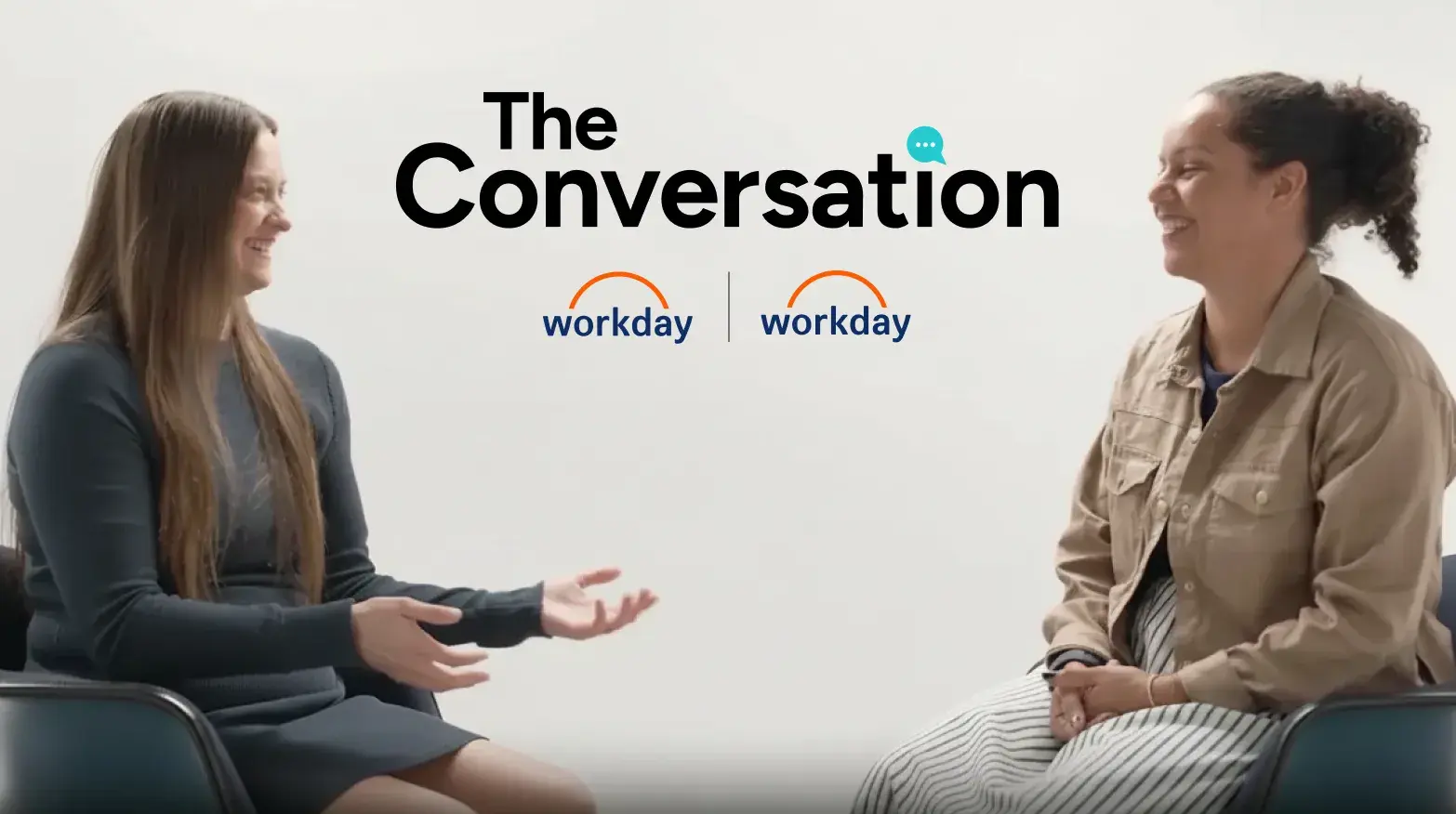
The Conversation with AAA and Valvoline.
AAA MWG's VP of Talent Acquisition Darnell Hill and Valvoline's Director of Talent Acquisition Sarah Wright went in on change management, frontline hiring, and southern barbecue.
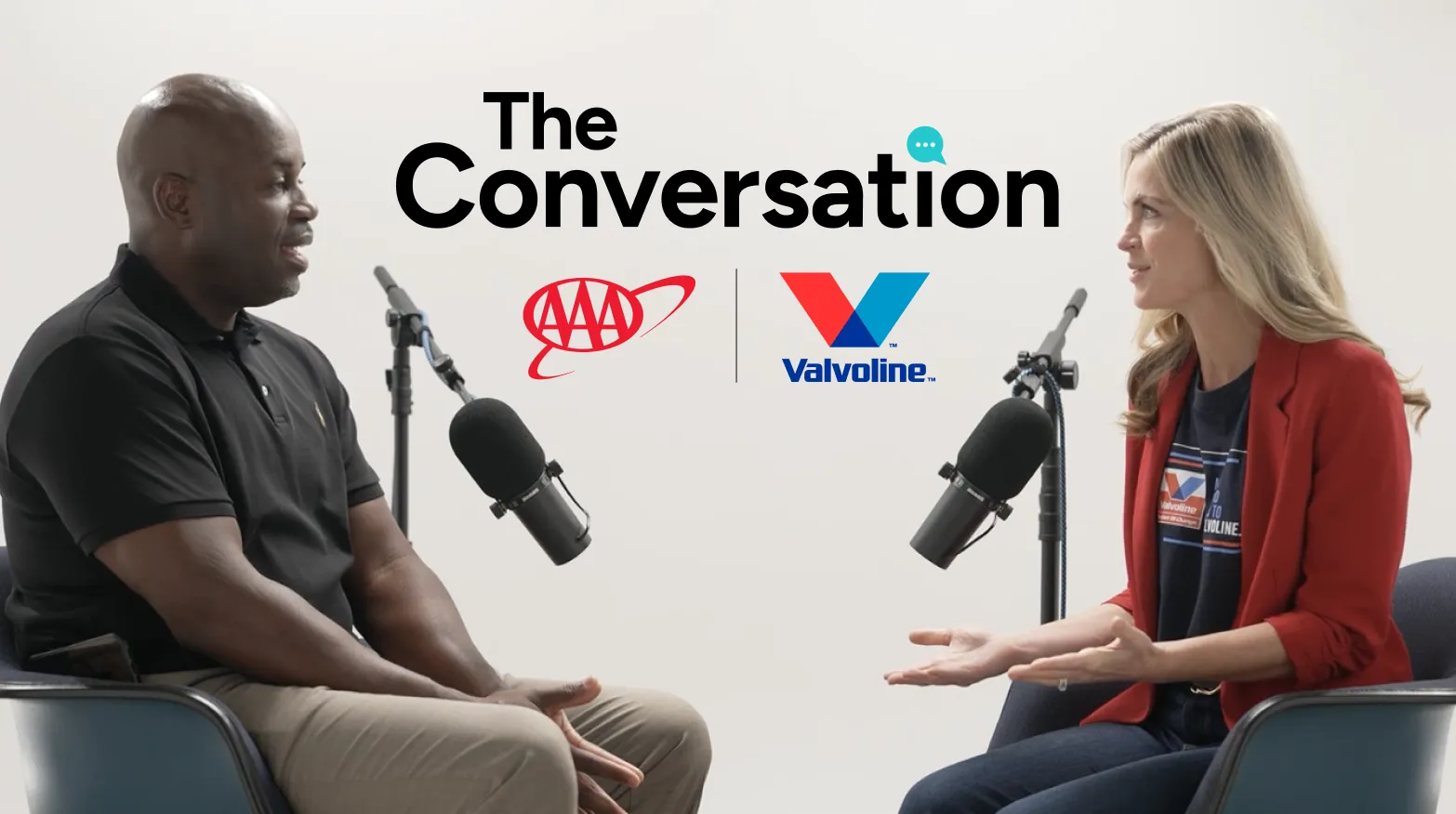
The Conversation with AAA and Valvoline.
AAA MWG's VP of Talent Acquisition Darnell Hill and Valvoline's Director of Talent Acquisition Sarah Wright went in on change management, frontline hiring, and southern barbecue.


This blog is part of a larger collection of client story content for these companies.
Meet the speakers.

Experienced Professional with a demonstrated history of working in Human Resources, Safety, Operations and Supply Chain.
Experienced Professional with a demonstrated history of working in Human Resources, Safety, Operations and Supply Chain.
Experienced Human Resources Staffing Professional with a passion for building business partnerships, attracting and retaining top talent, and improving business processes.
Watch the on-demand webinar:

Sarah Wright: This is my friend, Darnell Hill. He is the VP of Talent Acquisition for AAA.
Darnell Hill: And this is my good friend, Sarah Wright. She is the Director of TA for Valvoline.
Sarah Wright: Awesome! So good to meet you.
Darnell Hill: Absolutely.
Sarah Wright: So, a little bit about Darnell here. He oversees the TA team for AAA. He had an interesting journey to TA. So you've been in multiple spaces within HR. Originally from Indianapolis, but now in San Francisco.
Darnell Hill: Correct.
Sarah Wright: And you've been in the AI space for about two years. So I've been excited to learn from you. And your favorite thing to eat at a ballgame is a barbecue sandwich and triple tips?
Darnell Hill: Tri-tip!
Sarah Wright: Tri-tip.
Darnell Hill: Barbecue tri-tip.
Sarah Wright: You are born and raised in Kentucky?
Darnell Hill: I'm a true country girl. I grew up about an hour from Louisville.
Sarah Wright: Louisville, yeah.
Darnell Hill: Louisville and Lexington. And our claim to fame is I'm from Loretta, which is where Maker's Mark is made.
Sarah Wright: Okay. And your favorite food at a ballgame is actually a hamburger?
Darnell Hill: Chicago dog.
Sarah Wright: Chicago dog.
Darnell Hill: All the way!
Sarah Wright: All right. Good deal. A little mustard on that, little ketchup?
Darnell Hill: All the things! Even the jalapeno on the side.
Sarah Wright: Little more spice in there. So, how did the road lead to AAA?
Darnell Hill: It was an interesting road. I've played in a number of different spaces and I think AAA just offered an opportunity for me to really come in and make an impact. And I saw an opportunity in safety and was able to promote that into benefits and L&D and then ultimately talent acquisition. And I've been in talent acquisition for the last four years.
Sarah Wright: Okay. How about yourself?
Darnell Hill: Well, I'm one of those individuals that straight out of college went into the staffing world and spent the last 20 years in talent acquisition. And my road led to Valvoline about five years ago and I joined in our store operations. So my area, what we do is the Valvoline Instant Oil Changes that you might pass every day when you're going down the road. So my team helps to staff those. And started during the height of COVID.
Sarah Wright: So, yeah, it was fun times staffing our stores then. And then about a year ago, I stepped into the Director of Talent Acquisition position. So it's been fun. It's a crazy but interesting time to be in recruiting, right?
Darnell Hill: Absolutely. Talent acquisition is a fun world. For me, what I've really tried to focus on now, obviously I'm sure like you, is the adoption of AI and then where we're going to head to over the next five years. So building out that roadmap as we go forward.
Sarah Wright: Yeah, we're in the similar position. So we're growing rapidly. We have franchise stores and we have corporate-owned stores. And my team oversees corporate-owned, but we partner very closely with our franchisees and consult and learn from them too. But yeah, we're in a similar spot where I think we're all trying to do more with less but do it better. And so Paradox has been a great match for us. We actually just went live with Workday as well. And so we're taking a step back and we're like, "Who can give us the data?" right? To be able to drive efficiencies but also who can help us save a little time from an administrative perspective so that our recruiters can spend more time with our candidates? So we're driving quality candidates into our stores and then you know this story drives profitability and so on and it's been fun.
Darnell Hill: Definitely takes the data to move to C-suite, right?
Sarah Wright: Yeah, absolutely!
Darnell Hill: We've been a Workday client since I've joined AAA. And I think now with the evolution of Paradox and then ultimately other entities that are going to be coming aboard as well, we're going to really have an end-to-end talent suite that's going to help us level up. And that's what we call it internally at AAA.
Sarah Wright: Yeah. So I can tell you and I can really nerd out quickly with the conversation. It's similar with us. Like it's the capabilities at our fingertips now going live with Workday and Paradox have really it's going to transform, you know, how we go not necessarily our processes but how we allocate money and where we spend time. Paradox is also our careers owns our career site or host it. We now have the data, right? Like the source tracking of when who's applying and who actually leads to hires. And we're in a project right now where we're tying it back to retention. And so it's really going to shape like even how we market. Like okay, now we can see that we're investing in these areas for marketing, but it's not driving retention, right? So do we want to reallocate where we're spending our dollars? And how's that going to translate over to just higher quality talent in the stores? Our guests being happier. And so the technology is it's like impacting every part of how we do business without even our store teams really even knowing it. Yeah, it's cool.
Darnell Hill: I think career site management was probably the most logical first step, right? And that's something we did and I saw an opportunity as did my team when we had other carriers and businesses in there operating our career site and it just didn't make sense, right? You try to look at them as far as bringing all that data back in-house. And there were things that we wanted that they simply couldn't offer. And I think that's where kind of the rubber met the road with Paradox. Paradox said that we can offer these things to you. And it was great. And so the conversations continued. And if your procurement team is like mine, they're great, but it takes a little bit of time to get that across the finish line. But ultimately, I mean Paradox is going to be a one-stop shop for us and then the direct integration with Workday and the partnership now is really going to elevate us as we go forward.
Sarah Wright: It's exciting to kind of think of like what are the capabilities that are going to come that we didn't realize we were going to have, right? Before. We're in this cool project right now with our career site. So we just invested in a revamp of our employer brand. And so we partnered with a Paradox partner to design redesign our career site. And Paradox will host it. We'll go live on the 13th, but it's very much like this, right? It's about our family members others may call employees, but we call them family members telling their own stories, right? Like why do they come to Valvoline? And then just making that available having that connection between our family members and the candidates before even maybe the recruiters connect with them. And Paradox has worked so well with our partner to get this up and running. So we're excited to see how that translates to quality candidates you know and how that helps our stores too.
Darnell Hill: Yeah, I think the beauty about Valvoline is like AAA, right? It's a well-known brand. It's been around forever. Legacy. Yeah, we actually have that, you know, as an advantage for both of us, you know, bringing in those legacy employers that are able to just again sell based on the name. And having the efficiencies now are going to help drive us.
Sarah Wright: So I'm curious like projects or you know what's going on right now that's major? Because I think we're all kind of in transformation mode you know as the world around us is changing. What's what's top of your list of priorities?
Darnell Hill: Two letters, right? AI, AI, AI, right? And and it's really across the enterprise it's not just from a talent perspective. But I think where we had the advantage as a talent acquisition team, we got ahead of it. We got ahead of it two years ago. So the AI agents, everything that's coming out now is nothing new to me. I was very fortunate to have a team that was very AI-focused even though we couldn't necessarily employ some of the strategies internally, we did have vendor partners that were, right? So we utilized and leveraged the vendor partners to really advance what we were trying to do. And it's been great. Um, you know, as things evolve and then we gain more of a tolerance internally to adapt to the AI functionality of everything that's in the market right now, what we were able to do was position ourselves so we're not playing from behind. And so just leaving another conference last week, it was a lot of my peers talking about, you know, beginning this journey and I'm like, "No, we've been on this journey for about two years. I know where you are. And if I can do anything, please leverage me for any opportunities or conversations you want to have." So that's been great.
Sarah Wright: That's awesome. We're probably a little bit behind you. We just went live in March with Paradox and I'm interested in your perspective on AI since you've been in this a little longer. I think what we're learning is there's a lot of unique capabilities that we didn't have before, but I don't think AI's arrived to the place that people are envisioning at you know and it's a journey, right? To get there. I think we have at least our experience we've hit some bumps in the road. And I was at a conference about a month ago and they asked they said, "Raise your hand if you think recruiting and hiring is easier today than it was two years ago." And nobody in the room raised their hand.
Darnell Hill: Really? Oh, my team would definitely raise their hand. And I think because it's ever-evolving. One thing I saw last week was it was an agent talking to an agent talking to another agent, right? You could see the end game for the long term and although nobody is at that point, it was interesting because at that particular intersection, it was like, "Wow, there's going to be a loss of people when we get to that point." And trying to understand that but for me internally, I think it's been great because what we've done with AI is utilize the efficiencies in the process to advance what we're doing. So from a sourcing perspective, how we go about looking at candidates. I think where we really got ahead of it with all the vendor partners we created direct integration. So no more third-party dependency. I had all that when I came in the door. Yeah, and it was like, "I don't think that's the right path any longer." And again with Paradox and Workday being so succinct in their overall process, I think it just helped us evolve what we were already doing from a day-to-day perspective. So going with a direct integration with Indeed, with ZipRecruiter, with LinkedIn and then having that directly with Paradox and Workday. Everything feeds into one channel and ultimately Workday is a single source of truth for everything. And so it's going to be great for us. I will tell you keep going. Okay. It is an interesting journey. Yes, definitely keep going. But you will notice the enhancements in time.
Sarah Wright: Yeah. I think where we're seeing some great efficiencies are with like the automation of reminders to candidates or just any of the administrative things, right? That our recruiters were having to do before. Um, I think the area one of our next steps is to find an assessment that really helps us to hone in on the quality talent quicker. So you're probably very similar to us. It's not four years ago when we were all struggling to find candidates. Now there's a plethora of candidates and our recruiters are really working hard to find the quality talent through the interviews. And so I think once we find that assessment that helps us to really focus in on the right talent quicker, I think that's the point we're going to feel like, "Okay, like this is a well-oiled machine and our recruiters hopefully gives them some work-life balance you know at the time." But we're able to scale with the same without having to grow our teams, right?
Darnell Hill: I think the next logical step is quality hire, right? And I think that's where we're all headed. Um, it's not quantity, it's quality because if you have better quality, you won't need as many people, right? And that's what we've tried to look at it from that perspective as just growing internally our team. Um, where I've heard some talent acquisition teams are losing a little bit of head count, we've actually been able to expand our head count because we've brought a lot of the vendor costs internally and eliminated like I said before that third-party dependency. So that saved us a little bit. But we've also had the evolution occur where recruiters are more focused on the efficiencies that are out there in the market and how to be better. And that's what it's about. It's about upskilling yourself individually as a recruiter, it's also about upskilling the organization. And I think that's where quality hire is really going to play a significant role in what we're trying to do as we go forward. I mean annually we do we're divisional. Um, so we have about 5,200 employees, but annually we do about 2,000 hires. And so again I would love to see that number continue to decline because that means we're getting more quality candidates, people are sticking around a little bit longer and that's what we want.
Sarah Wright: That's so interesting like when we talk to our peers similar journeys, right? That we're all on. We do about 11,000 hires a year, but it's 20% less than what we did two years ago, right? And so similar to what you said focusing on that quality and then for us again it's always about tying it back for to a 90-day retention is is what we're looking to do. And um similar we did an analysis and we had a third party that was helping us with recruiting. And so we created a plan about three years ago about we need to make sure we have a team that's invested, you know, in in our family members and bringing in the right talent. And so we increased we almost doubled the size of our team, but actually decreased our cost about 24% from 2020. Um, so yeah, it is it's a really cool journey to be on right now. Um, I think we're all kind of sitting back and wondering, "Okay, what does this mean for recruiting long term?" But I believe there's always going to be the human element that's needed if you're wanting quality talent, right? I think quality talent's going to require that. It just may not require it at the scale that we've seen in the past, right?
Darnell Hill: We're going to have different windows of touch points, right? Along the process. So where you may be able to incorporate some agents in the beginning phases and through the assessment piece at the end of the day, you're going to need a human readily present for that. So um speaking of assessments, what have you done? Because I've seen a lot of companies transition to assessments and not look at it from the same perspective as myself meaning where they try to create one or two assessments for the entire population. And I found that was a miss. But I don't know what your experience has been overall with assessments.
Sarah Wright: Yeah. So we have one right now. And when I walked into this role about a year ago and I looked at the data, the greatest value of that assessment was just having an assessment and the fallout of a candidate just not taking it. The pass rate of someone taking this assessment was extremely high, it was 91%, right? So then you have to take a step back and say, "If I remove the assessment outside of the fallout of people not taking it, is it really driving or pointing us to quality talent?" And it's a big question mark. Like it's likely not, right? And so for about a year and a half, we've demoed at this point five or six assessments. And what we're learning it is personality assessments mainly that we're looking at. There is a broad variety of of how different companies go about it. We focus in on the candidate experience, right? So they may all be personality assessments, but what's going to relate to our frontline population the best and what's going to get us the best results? And so I I won't mention names, but right now we are looking at two strongly. One is a short assessment. It's very simple, interactive with the candidate. Um, we know several other companies who have used it and speak highly. And then the other is something we've never seen before. And it's not an actual assessment, it's a tool that assesses. So um it they come in and they evaluate like what are common characteristics of your high performers? And the idea is they're not accidents, they're patterns, which I think we could all probably get on board with that. And they identify the patterns. And then they use machine learning to help you identify what those qualities are. And then in the application process, they help you capture those data points. So you would arrange your application process to capture and then it would create a fit score. So similar to assessment, but they just don't have to take an assessment. Um, what and I think we started this a year and a half ago and then we pushed pause as we went live with Workday and Paradox. One thing is things are changing so quickly, right? So the the latter product wasn't even out then. Um, so I think it's going to be an interesting journey when we look for partners. It's going to be it's really important to be an innovator because I'm sure similar you're similar you don't want to change partners every year. So someone who is an innovator is critical for stability but still being able to keep up with the innovation.
Darnell Hill: Yeah, I think finding those key components that are relevant to the job, right? What makes a good fit for this particular role? And that's key. I mean initially when we went down the path we were assessing for cultural fit. While there's still some relevancy in that, I think we're better suited to be assessing for overall fit, right? Fit of the role, what makes a high-performing employee and what makes people stick around. And so again understanding those traits and tying it all together. I think that's where assessments have to be focused if you're truly going to get value out of them.
Sarah Wright: For sure. We yeah, we're excited to partner. We might actually pilot more than one assessment this year. And it's kind of like at the end of the day we're looking for results. Um, one cool thing with partnering with Paradox as our ATS is they can create, you know, these they can duplicate our environments pretty quickly um and create a new account. Maybe we take three of our markets and we put this in the new account and add the, you know, the assessment. We do another account for, you know, three other markets and we pilot both at the same time. So it's really not capabilities I think we've had in the past, not that easily anyway.
Darnell Hill: Yeah, I think one thing we have to focus on is the legalities behind assessments right now and dispositioning candidates and so being mindful of that as we continue forward on our journey. But I'm sure Valvoline's taken care of that.
Sarah Wright: For sure. Yeah, I think it's important, right? To ask for the bias case studies and absolute. We're I would say we're a conservative company when it comes to looking at AI and those types of things, right? Like we want to make sure that we're doing right by candidates and and then too like some states are stricter on those laws than others. We lean towards what's the most strict strict state, right? Um, but yeah, I agree. I think especially with the newer technology that's coming out, you know, and it's not been vetted for a long period of time, you definitely wanted to get your legal teams involved and and talk to others, right? Who are using it.
Darnell Hill: Yeah, the legacy employers don't want to be at the forefront of AI, right? Want to kind of ease our way into the process.
Sarah Wright: For sure. Good deal. Good deal. So, you're in four years in TA with AAA and I'm curious, how large is your team?
Darnell Hill: I have 15 recruiters, three coordinators, two directors, one manager, a recruiting marketing specialist, and then I have a principal analyst as well. And I'm looking to bring on two interns that recently completed the term with us this summer.
Sarah Wright: Awesome. Um, a few thoughts. We just went live with our intern program this past summer. and we were looking for supplemental support in our recruiting department because since that's when our peak season hiring is. So I'd love to chat with you about that. Super successful and also beneficial for them, right? Like helping them out in their career. It was it was pretty cool um I think symbiotic relationship. But I'm curious, you know, as the world of recruiting changes and I have a lot of recruiters who have been doing this 20, you know, I think my 26 years is my most tenured. How do you keep the team engaged and motivated and continuing to learn as the world around them changes? And maybe even they have a little bit of insecurity you know of where you know this world of recruiting is going.
Darnell Hill: You have to keep them up to speed, keep them abreast of the changes that are coming, make them feel included in the process, right? Understand this is not being pushed from the top down. This is us. Where do we see value? How can we continue to enhance the value that we see on an overall everyday basis and where are we going to get the most bang for our buck? I think that's really where it comes down to. And so from a recruiting perspective, I've told my recruiters, "AI is not going to replace you. Somebody that understands how to utilize the AI will probably replace you if you don't level up." And so it's really, really important for us continue to cross-train, upskill these individuals. Um, recruiters can't be kind of the one-stop shop, you know, for one line of business anymore. I think the more valuable you become across the enterprise, the more likely you're going to be around for years and years to come. And so upskilling has been the biggest focus. Don't just focus on one line of business. Great, start there, start in finance, but then let's move you over to branches. Let's move you over to emergency roadside service, right? Let's create kind of a multidimensional recruiter in the day-to-day. And again I think it just makes them more valuable. And then the LinkedIn Learning classes on AI. Um, I've brought in some recruiters recently being very intentional about who I brought on that were heavily focused in AI and how to utilize the technology to source candidates and different things like that. And so what this allowed for us is to be able to have a peer do a lot of the upskilling on a day-to-day basis with the recruiting team. And that's been great. They don't always want to get it from us, right? It feels like it's getting pushed from the top down. So when they can get it directly from a peer, I've noticed that that tends to go over a little bit more. And when it's a new peer, it adds tremendous value for that new recruiter and the rest of the team because they get to see directionally how we're changing and pivoting day to day.
Sarah Wright: Yeah, I can't agree with you more. Like keeping your team involved, right? And really giving them that opportunity like, "This is the direction, but I welcome your feedback." And I often ask like, "What am I missing here?" right? Like, "What have I not thought about?" And it gives them that opportunity to be a part of the conversation. Maybe I learn something too you know you're probably like me, I'm big on saying I'm not I don't do the job every day, right? And making them included in it. But I you know the mindset is key like you said of being willing to learn and leverage the technology. And um I've been really impressed with our recruiting team. Like even those who have been here for you know 26 years embracing it. But the why. Understanding the why is so important for getting them on board. Um, when we went live in March, you know, it was right before our peak season and the team's learning you know Workday and they're learning Paradox at the same time and bringing in our partners like you'd mentioned. And I even you know I think it's important to even give them that opportunity to speak with the partners if they want, right? Like maybe there's deeper questions that I can't answer or just that comfortability of the confirmation, right? They've heard it from me they've heard it from somebody else. Um, and being able to have that interaction with the vendors and and another you know learning about the AI sourcing directly from them. They hit the ground running, right? With the proper the right training and the documentation and that comfort. Um, you know, we didn't miss a beat and I can't say I'm just super proud of them.
Darnell Hill: Good, good. Yeah, that's what it's about, right? You want to get that buy-in. And so ultimately we have to be together, right? It has to be one one team, one voice, going on the same path.
Sarah Wright: Sounds great. How did you step into the world of automation within TA?
Darnell Hill: You really want to stairstep it. I think there's an opportunity to automate a number of different things. And so one thing we've looked at is automating how we initially connect with candidates, automate the response when you apply for a role making sure that you're getting a response within 24 hours. You can have a role, you know this you've been in TA for a while, 400 candidates can apply. A recruiter can't respond to 400 candidates within 24 hours. But having automation in place can definitely help guide that, right? Where you get a canned response, "Thank you for applying," blah, blah, blah, whatever comes with that. And so that's really where we started the journey and making sure we could hit all of our touchpoints. Nobody wants to be ghosted on an opportunity, right? You at least want to hear back. You want to create that sense of hope that you know maybe I do have a chance at this particular role. And we really focus on the candidate experience. And anywhere yeah, anywhere we bring in automation is truly heavily going to be focused on that. We wanted to make sure we utilize the technology to kind of candidate stack a little bit, right? Here's maybe your one through 10 for this particular role, 10 through 20 and so on and so forth. And it doesn't mean you just disqualify the candidates at the bottom of the funnel, what you really do that's where the assessments come into play you want to better understand where the opportunities exist. And so that's what my recruiting team does. If you happen to rank one out of if you rank 40 out of 40 candidates, it's not a disqualifying ranking what it allows us to do is to hone on where the opportunities exist. You may have answered a question a particular way, you may not have understood how you answered that question. Well we we can really dive in if you tell me you were a marketing specialist and you have all this experience in the past, um I think it's an opportunity for us to kind of dive into that a little bit more. And so that's what it's been. It's been us taking a deep dive utilizing the technology to really better understand candidates and and where the opportunities exist. So I would tell you for automation, do not utilize it to disqualify candidates. You understand that, you know what's coming along that path from a legal perspective, but truly utilize it to create a better sense of just ownership from a company perspective providing a better experience as we go forward.
Sarah Wright: Yeah, for sure. It's all about and you know I think people think automation and it's not human. Well really if you flip that around, the automation allows our recruiters to focus on the humans, right? So those repeatable tasks that aren't high value, right? But it's taking time away from the recruiters and their ability to speak with the with the right candidates, right? And so we've been down that similar journey. and our recruiters appreciate the support with the administrative function. So I you know I think it's a great candidate experience because again like you said no candidate wants to be ghosted, right? And so we can ensure everybody gets a touchpoint at least of where they are in that moment. Um, but I really think about our recruiter recruiting team too who you know their calendars are packed, right? Which we love the automated scheduling with Paradox that we're using. But their calendars are packed, right? And and to have a little extra support and then you know from a leadership perspective you and I are always challenged with, you know, keeping our our head count and our costs down and driving efficiencies. And so I think it's just a win-win across the board. But you're right like there's a lot of things legally you work through with your teams. and Paradox does a great job of getting their legal teams you know with ours to help make sure we're all comfortable with where we're moving and there's different levels of automation and AI, right? Too. And like you said to kind of step into it and then pause and see where the world's going to see if you're going to step into it a little bit further, right?
Darnell Hill: That's where the Riley tool's been great for us. Um we that's what we named ours internally, the Riley tool. Um but we utilize it to really connect with candidates 24/7. Um we know most candidates are applying after hours, right? We can see that in our overall data. And so for us taking that information and then just re-relaying it to the team to better understand from a candidate perspective that we need to have something readily available to connect with these candidates. And so with the chatbot functionality, it's allowed us to connect. We've got a lot of good feedback on there. There's always going to be opportunities, but I think as it continues to grow and enhance, um it's just going to continue to benefit us.
Sarah Wright: Well, it's been a pleasure to meet you.
Darnell Hill: Absolutely. Nice to meet you, Sarah.
Sarah Wright: Yeah, this is one great thing about coming here to Client Board is the connections that you make along the way and what we could continue to learn from each other. So I appreciate your time today but I'd love to stay in touch too.
Darnell Hill: Yes, definitely. We will stay on this journey together. The world is ever-evolving and uh we'll continue to push forward.
Sarah Wright: Sounds great. Thank you.
Darnell Hill: Yeah, thanks!
Meet the speakers.
Experienced Professional with a demonstrated history of working in Human Resources, Safety, Operations and Supply Chain.
Experienced Professional with a demonstrated history of working in Human Resources, Safety, Operations and Supply Chain.
Experienced Human Resources Staffing Professional with a passion for building business partnerships, attracting and retaining top talent, and improving business processes.