Hire faster with the ATS that reimagines recruiting.
Our Conversational ATS leverages the power of AI to help the world's largest employers automate repetitive tasks and eliminate work for their teams.
Schedule a demoCameron Pickett (00:04):
We at Pacific Seafood hire 500 plus individuals on a seasonal basis just due to the different species of seafood that we're processing. With that we have to do large scale, high volume hiring. The prior 10 years to my arrival, they had only a single recruiter, which made things very difficult. They had never successfully been able to staff their full seasonal hiring needs Prior to the season starting and with Paradox, we utilized the hiring event platform. We had first month about a 300% increase in applicant activity. Where it's been very beneficial is it not only helps people RSVP and sign up for our events, but it's reminding them the day before, the day of, an hour before. So we get a much higher turnout rate, whether it be virtual in person, it's easy to engage with simple answers, their questions outside of just scheduling themselves for an interview.
(00:53):
For those that don't turn out, it automatically sends us all those names via report in the system, and then we follow up with those folks and schedule interviews after the facts, the chat and the text to apply features result in a lot of time savings for our recruiting team where they could actually provide much more of a human touch, interacting with people, engaging, improving our interview process, which ultimately improved our hiring upfront, which on the backend reduces turnover. And for us, again, we were able to, for the first time in our company's history, successfully fill all of the seasonal seafood processor roles prior to the season start date. So it was a huge, huge win.
Cassie Vasco (00:05):
So I think that conversational AI has helped us in many ways, but one of the ways that I would say in this space is it's been able to greatly improve our time to fill and shorten it so that it makes us more marketable in our industry. Our frontline strategy team at Sodexo was really understanding that we needed to catch up. We knew that it was critical that we meet our candidates out there, where they were at, and what we were really focused on in the beginning was our lagging time to fill. Certainly bringing Paradox on and speeding up and getting candidates in as employees really changed that for us, and it made it quicker. In Sodexo's space, we have both recruiters and operators using paradox. Taking the job of connecting with a candidate for the first time out of their hands is a huge time saver and a value add. But the conversational ai, it allows us to communicate with people that speak many different languages. Diversity and inclusion at Sodexo is really critical, and being able to reach populations that speak multiple languages and feel comfortable in that space, I mean, that's a great opportunity to extend our philosophy and engagement.
(02:41):
And so that feeling that a person is helping our candidates connect with our company is really leading in the marketplace.
Jada Reese (00:06):
Some of the things that attracted us to paradox is the possibility of having two-way communication with not just candidates, but with also our employees. So we're looking at paradox beyond what we initially thought we would use it for, and we think it can help us reach our desk-less employees much, much better than we do today. During COVID, we went through a phase like most companies where hiring was very difficult, and I will say our turnover went up probably by about 20%. The candidate experience is everything, and they simply weren't being communicated with, connected with, and that's why Paradox was so attractive. We will really be able to speed up our time to interview, our time to feel we'll, be able to speed up the quality of the candidate. Not only hiring, but being prepared to do the work. I know that we will get a higher quality, we will retain better, and we'll be able to move the needle on some of our financial metrics. Our sales will go up because we'll have the talent sitting in house ready to serve those customers.
Steffanie Chaviano (00:05):
Before we partnered with Paradox, we were hiring on average about 400 behavior technicians a month. Pretty quickly, I would say maybe three months post implementing Paradox. We were able to get to 600 hires a month, and that maintained pretty steady. Within recruiting, we were dealing with just inability to figure out how to hit higher than 400 hires a month. We desperately needed to figure out how to bring in a higher volume of hires. It was a really manual, inefficient process when it came to the volume that we were kind of dealing with on a day in, day out basis.
(01:32):
Our retention has improved pretty dramatically since we rolled Paradox out. We saw more than seven hours of time saved per recruiter per week. We've been able to move coordinators into recruiter roles because it really reduced the need for coordinators to go and do the paper chasing. By implementing conversational a TS, we were able to double our hires and our recruiters were able to focus on the work that they really love to do, and it's just been a game changer for the team. It's allowed us to increase our hiring without increasing headcount and just provide a better overall experience for our candidates.
John Higgins (00:05):
Historically, we scheduled about a hundred interviews a week manually through both our team of recruiters as well as a couple of dedicated interview specialists. There is suspicion in terms of leveraging technology to take on activities that humans used to do, and when you're in the healthcare industry, there's anything but regular business hours. It's a 24 by seven by 365 operation on the backend. What it's achieving in scale has far surpassed any of the doubter's concerns. The light bulb moment for me has been the opportunity for candidates to be able to work 24 by seven by 365 with our career site and with Olivia, and ensure that they've got a delightful, consistent experience in considering a career at Essentia Health. A tool like paradox really is demonstrating to our team that we want to make sure that they're spending their time on the activities they want to spend their time on rather than the administrative tasks that are required. All of that work has now been moved to Olivia, which ultimately leads to greater efficiency in terms of our ability to get jobs filled. And more importantly, we're in the healthcare business, so we're impacting patient lives at the end of the day, getting more people into our system, into our interview process, and hired means we're getting better patient outcomes.
Brad Williams (00:04):
I think the light bulb moment with Paradox was when we went from nine days to get an interview scheduled to under four minutes, the fact that all we had to do was post a QR code, post a short code up on some of our POP, that was the win, and that's when we knew we could probably hit 90 plus percent of the system with this product. Our biggest day part in sales is late night, and late night for us is defined as after 10:00 PM If you're not able to staff your most profitable day part, then you're losing money. So Paradox has allowed us to staff that up and allowed our franchisees to be open later.
(01:33):
When we deployed Paradox, we measured the ROI on that with really how much time it allowed our restaurant general managers to get back. We think we've saved about 35,000 hours using me and the conversational assistant and getting interviews scheduled. So the fact that we've saved that amount of hours in that time for our people actually running the restaurants, it allows them to be more hands-on with our actual guests at our drive-throughs. It's changed everything. It allows us to be more efficient. It allows us to save time. The fact that me is always on and you can point someone to a QR code, to a short code, they can schedule an interview and possibly meet someone the next day if that availability is open. It's just a huge win. I think paradox is going to be on the cutting edge of whatever's going to be next.
Aaron Einhorn (00:11):
Hiring success looks like getting to the right candidate faster, getting them onboard your team and integrated to your team more quickly, and ultimately launching them into, I mean, ideally a career.
Sonja Breuer (00:26):
And restaurant managers are not IT people. They're actually out running the restaurants. The problem that we had is that our previous a TS system, our managers had to check it daily and then make physical phone calls to get candidates in with our former a TS system. From time that the applicant actually applied to the time of hire, it was 13 to 14 days. Once we switched into Paradox, we actually got that number down to four days.
Aaron Einhorn (01:12):
We average approximately 144% turnover across our organization, and paradox helps us address that concern by keeping candidates walking through our doors.
Sonja Breuer (01:24):
We've had over 200,000 interviews scheduled since we've been with Paradox, which is huge, and we can schedule them immediately and our managers don't have to do anything, which is actually the beauty of Paradox.
Aaron Einhorn (01:37):
If you've got managers that are satisfied and happy, you've got hourly employees that are satisfied and happy, that's going to translate right onto your customers.
Lance Foo (00:12):
We have 12,000 people across Asia Pacific. Typically, we do hire system engineers, desktop engineers, data scientists. Tele acquisition is currently in the seat of driving revenue for the organization. For every day that we are behind the schedule of finding a talent for our client. We are behind the schedule of supporting them and bringing solution to them in times. We want to make sure that we are first to market to win the top talents in a highly competitive technology landscape. Before we started Paradox, due to the manual interview scheduling, we dedicated three headcounts to scheduling full-time. They were dealing with about 500 interview scheduling per month.
(01:15):
Francis is able to relieve our recruiter from a lot of back and forth questions that the candidates might have with Francis. The rescheduling is also being managed very quickly for the integration with SuccessFactor. I think it has been definitely a huge time saver for rest ever since we've gone live. With Paradox, the time to schedule have dramatically improved from 24 hours to four hours. Our candidate cancellation has been brought down from 30% to 4%, and we are able to advance the candidate all the way from screening shortlisting and to interview process much smoother. We are able to feature Francis at the career fairs on the spot itself. The recruiters are not able to interact with so many interested candidates. At the same time, we do direct them to scan the QR code and from there Francis is able to take them across all the questions and it saves the time of the recruiter. The end results was definitely rewarding for all of us. With Paradox, the talent acquisition team are able to invest more time into candidate engagement and also stakeholders engagement internally. Paradox have been a game changer for NCS group. I will definitely recommend it to any human resources professionals and talent acquisition team leaders.
Mark Darrington (00:07):
We saw AI as a great tool for our evolution. As a company. We're in a very competitive field. Our individuals who work for us, they can work in many different industries. Implementing Paradox in our company, I do feel confident that we'll find the individuals that we need. I do feel confident that it would actually help us get people to start even faster. Our challenges as a company with hiring has been just finding the right people. So our recruiters do spend a lot of time with candidates that are not qualified for the position, and we wanted to make sure our recruiters had an assistant to help them weed out the individuals that were not needed and bring the correct individuals to our recruiters. In a blink of an eye. Paradox is saving our recruiters a lot of time. They don't have to use multiple different systems. Paradox is talking to SAP, allowing our recruiters to move through the process. Extremely easy with each candidate. It's going to give us more time to be able to focus on other things outside of just recruiting and by having the assistant added to our career page.
Seema Shah (00:04):
For us to be able to get to our candidates, for them to be able to respond and let us know that they're interested in working for us, us to be able to schedule our interviews in less than 15 minutes with our candidates. This is where the value is. In 2020, as an organization and TA leadership team, we took a step back and we wanted to look at our tech stack. How do we free up time for our recruiters to spend time speaking to candidates, speaking to hiring managers, and really having conversations what could support this and make it a seamless experience. And this is where we came across Paradox.
(01:13):
We can interact with our candidates, not just through email, but really opening up those channels of communication. Again, through the technology interacting through SMS in the US and in Canada. But really the channel to interact through WhatsApp globally really was an important step and part to maintain the experience that happens in real life. We have answered over 190,000 questions from our candidates. We've scheduled over 10,000 interview requests and we have achieved an 89% completion rate for our application. That speaks volumes for ROI. We are engaging with candidates across 174 countries in 17 languages. Our personal assistant can just pick up their languages and their method of communication preference automatically. It makes the experience feel more human. It is really about having that one-to-one connection. And I think while we are able to establish that prior to paradox, we can speak to people, we can hire faster and we can spend more time focusing on the value in the people.
Shay Johnson (00:10):
I lead our talent acquisition teams, and I really focus on entry level talent and then really coordinate with those teams to help those people grow their jobs into careers. For a company like us, we have, at any given time, 13 to 17,000 jobs posted, putting it on them to go and find their job. That's a terrible job seeker experience. A few years ago, we thought it was great if your application was just online, and now it's become all about how do you really recruit candidates? The volume that we're recruiting them at, how do you connect with them? On a personal level? Paradox fits into all of it. We use on-demand video interviewing. We use automated scheduling. Paradox owns and operates our career site environment. We've been using conversation as the foundation for how we recruit and how we interact at scale, and now the expectation for that conversation has just leveled up. It's not just call and response or chatbots anymore. They expect real answers and real time customized to them. What I'm really excited about with our career site today through Paradox, it doesn't matter where we're advertising our jobs or how we're promoting externally. We want to match job seekers to the most relevant jobs.
(01:17):
Just having Olivia, assisting our candidates, helping them search for jobs and helping them through our apply process is one of the key reasons why we're able to get enough applicant volume to support our business and our growth, and without it, we would be pretty lost. We say this all the time at Compass Group. Anytime we have a question, a problem, something we need to solve for, somebody raises the hand and says, have we talked to Paradox about this? That's what the relationship means to us. We really look at them as business partners, people that can help us think through and innovate and solve for not only our problems today, but the problems that we're looking ahead to the next two, three years down the road.
Stefanie Nikitas (00:18):
Ace is known as the helpful place around the globe. Helpful is at the forefront of everything that we do. For us. It's not just something that we slap on a logo or that we put on our wall at the corporate office. It's something that is embodied into every single position across the company. We are finding ourselves in a situation where we went from regular seasonal peak. It's having to hire thousands of people in a very short period of time. The way we approached technology like Paradox was how would a recruiter think At the end of the day, we were trying to improve the candidate experience, and once recruiters understood that piece and they really got to play with it and see it in action, that's primarily when we started to get the buy-in. Less than even 24 hours, they scheduled over 200 interviews. From an administrative standpoint, there's several hours a week.
(01:02):
They don't have to spend hunting down candidates. We want technology to be there to not burden, but to help. If we send out a request for an interview, it's a text message. They can be anywhere, anytime, not even in this country, in this time zone, and they can pick the time that works best for them. Every day is different, but what I love most is the interaction with people and technology. And for us it's how do I help a customer? How do I help a candidate at the end of the day? And that's honestly at the forefront of everything that I do.
Danielle Lend (00:08):
My name is Danielle Lend. I'm the CEO of Wendy's. New Zealand people are very important to our business. Without them, we can't operate. We can't open the doors every day, so recruitment and getting the right staff is very important to us. Speed to market for candidates was very important, so having Paradox has saved a lot of our managers time. My favorite thing that Lou can do is that she can answer some questions that the candidate might ask, schedule an interview and push them through the process very quickly. Blue can get them from a candidate to an employee within two or three days. It works for a lack of candidates, but also works in a market where there's an abundance of candidates.
(01:06):
We included things like an assessment. Each candidate, once they've done their application, if that application looks like a good fit for the business, they automatically get sent an assessment. It's about 45 seconds long and it gives them rating. You can have green, yellow, or red. Now that we have a lot of candidates, we only accept green candidates. We were accepting yellow and candidate market was tough, but no red. Prior to this, we probably would've struggled with dealing with those applicants. Now, Paradox deals with it all for us. We also have found that we have managed to get a more diverse culture within our restaurants because there is no bias in this system, which is great. They then reflect the community that we live in.
(01:53):
All our onboarding now is also on paradox, and not only do we have the payroll integration, all our important onboarding documents are all there for the candidate to review, and then that is kept on their file, and then you have that complete oversight, which you just didn't have before. I would say to other CEOs that having an online and a AI based recruitment system, I would say that this is probably one of the best investments that we've made because it's so simple to use. It's been easy to roll out. All our managers in our stores have been able to understand it and get on board with it. The candidates love it. They actually think they're talking to a real person. Many of 'em don't realize it's ai, so that's amazing.
Mark Gibson (00:16):
The challenges in the high volume hiring in the restaurant industry are managers are trying to run restaurants, and the last thing on their mind is how they're going to take time out of their day to schedule interviews with candidates.
Carla Delich (00:29):
Prior to Paradox, we were looking at our data. It was taking our managers in our restaurants at least three days just to view an application.
Mark Gibson (00:39):
The light bulb moment for me was the first text message that I got that said, hi, this is Frankie from Flynn Group. Here are our next steps. It immediately changed the entire experience so rapidly for me, and it was the first time that I experienced something like that in this space.
Carla Delich (00:56):
The speed to scheduling with Paradox has absolutely been a game changer, not only from just getting people in the door faster, but it's also saving our managers three to four hours a week. The ability to have it completely automated from the point of application to being able to schedule that interview all the way down to the offer and the onboarding. Since we've been on Paradox, we're seeing applicants from the point of application to interview complete. It's happening in less than three days.
Mark Gibson (01:29):
With the conversational a TS, you feel like you are just having a conversation with a person on the other side. I don't think I could go back without having a negative experience in something that is kind of old school and is not using the conversational a TS.
Rachel O'Connell (00:05):
We as a hospitality industry, we're having trouble getting candidates to respond to us. We were opening our Minnesota property back in 2017. We started to text them on our phone. We realized that texting candidates really worked. The solution that Paradox offered was very simple. Even if you're not familiar with technology, you are familiar with texting. The paradox solution feels like you're interacting with a person and not with a piece of software. That allowed our candidates to apply quickly, easily in a format that they're already familiar with. It has facilitated a lot more applicant volume because of the ease of application for our recruiters. They're able to see kind of everything all in one spot. For me, the biggest return on our investment has been the reduction that we've been able to make in our recruitment marketing. When your system facilitates an easier process, that volume goes up without having to spend the additional dollars, and so we've really seen a lot of savings in that space. Recruiting people is a people function. There's a human element to what this technology facilitates. As a hospitality industry, it is a more human-like interaction. Without that human touch, you can't facilitate a strong process to have conversational technology be part of the work that we do. We found something that really has transformed the way that we recruit.
Joshua Teo (00:03):
The Syntel Group consists of four businesses, Syntel, Optus, NCS, and N zero to together. We have close to 25,000 staff across Asia Pacific. We hire close to about 4,000 people every year. Well, in the past, a lot of the time was actually spent on the logistics, especially for the scheduling of interviews, last minute changes, looking at whether the CV fits the job. But with Paradox, the solution allows us to avoid all of that. After we implemented Paradox, the assistant would actually help candidates find an appropriate job, and it also applies a couple of screening checks to make sure that you are the right person for the job.
(01:10):
Via Paradox, I would say that we have cut out about 75% of this processes and simplify the way we operate. Or if I were to sum up in a nutshell, what we really love about the Paradox solution, the fact that Paradox was able to help us screen the cvs, allows us to have a shorter or accurate list of cvs to review is about the increased efficiency, sort of 24 7 access for both the candidate as well as for the hiring manager, the function which allows paradox to remind people about the meetings so that there's no excuse for missing those meetings. And we are very proud to say that the fastest interview schedule was nine seconds. And last but not least, the rescheduling rate has fallen from 19% of our interviews to now 10% of all interviews. Once we implemented this solution, we were able to redeploy close to 10 staff to other areas that were more value adding. For example, a few of the team went to work in onboarding, several of them became experts in talent acquisition themselves, and they were very, very pleasantly surprised by their own growth, and we are very proud of them as well.
Rachel Allen (00:04):
Paradox is the first solution that we came to that really knew how to do high volume recruitment, and it's been a game changer for us. In order for our store managers to be able to do their own recruitment, it's imperative that we provide them the right tools and technology and empower them with the resources in order for them to do what they need to do overnight. We went from over 10 days on average time to hire to less than five days, so it was an over 50% decrease in time to hire immediately. I think the coolest part is that we were able to give back to our store leaders over 40,000 hours a week that they can dedicate to what they need to do for their stores and automate a lot of the hiring process
(01:27):
When it feels like they're just texting with a person, it speeds up the process. It has increased our retention and conversion rate from applicant to hire. If we start asking things in a conversational way, I think it's our shattering in how we do the entire recruitment process. So not just for the candidate experience, but for the recruiters too. I think where Paradox was best for us was really that high volume solution. This was the first time I've come across something that was like, yes, they get it. That's it. And this is the first time we've actually been able to solve for that. It's been really neat.
Heather Joines (00:10):
Hiring managers only want to see qualified candidates and they want to see them as fast as possible. By being able to spend time with candidates that are more qualified, makes the business more effective and takes pain points out of the hiring process. In a hectic world, it is important to be able to do things in the palm of your hands. Live allowed us to do that. Scheduling interviews is difficult for both a candidate and a recruiter, and we wanted our recruiters to be able to spend more quality time with candidates, and that meant that people could do it on their break and a recruiter wouldn't have to spend time chasing down times to meet with people and they could actually have real conversations about jobs. Conversational career site allows the job seeker to give parameters of what they're looking for and gives us the ability to comment back in real time. It feels more interactive and real and authentic. Never did. I think I would have something that would be available 24 7 aside from myself that could speak to candidates on demand. It becomes a partnership rather than someone seeking a job. It makes it feel more like you are doing something together, and I think employers who care about the experience before you're even a candidate are the ones that you want to look at because it actually matters to them.
Craig Gjelsten (00:04):
Neighborly is a franchisor of home services all through separate branded entities, which are all part of Neighborly. The issue we're facing right now in the trades industry is we have a mass exodus of people leaving the industry and we don't have the same volume of new people coming in to fill those positions. In my role, it's imperative that I keep up with what's happening in the recruiting world, and right now what's important is speed, and that is an element that Paradox has provided that we didn't have previously. Primarily through Automation Paradox has changed the overall value proposition for our franchisees in that we've offered them a system which is efficient and effective, much more so now than what they previously had because of the automation features. It's also saved our franchise owners up to six hours per week in administrative time, allowing Maya our assistant to do many of the processes that they had to manually complete before. We also found out that one third of interactions are happening outside of normal business hours, which allows our franchise owners to have a little bit more of a personal and a family life as well. Paradox has been much more than just helping us with text to apply. They helped us examine every facet and element of recruiting that we were previously doing based on their recommendations and their prior experience with other clients. So it's really been a valuable relationship above and beyond just recruiting as we know it.
Rebecca Volpano (00:05):
Before Olivia, we were scheduling candidates in roughly 26 hours, and now with the introduction of Olivia, our scheduling time is down to 18 minutes. When we went from email to text, we broke our system. We broke what we knew was great about Cielo and the way that we work, and so it was really exciting to see what we thought was good and what we thought was the right number really wasn't even scratching the surface because we weren't getting in front of as many candidates as we could have been.









An ATS that’s simple?
It's a paradox.
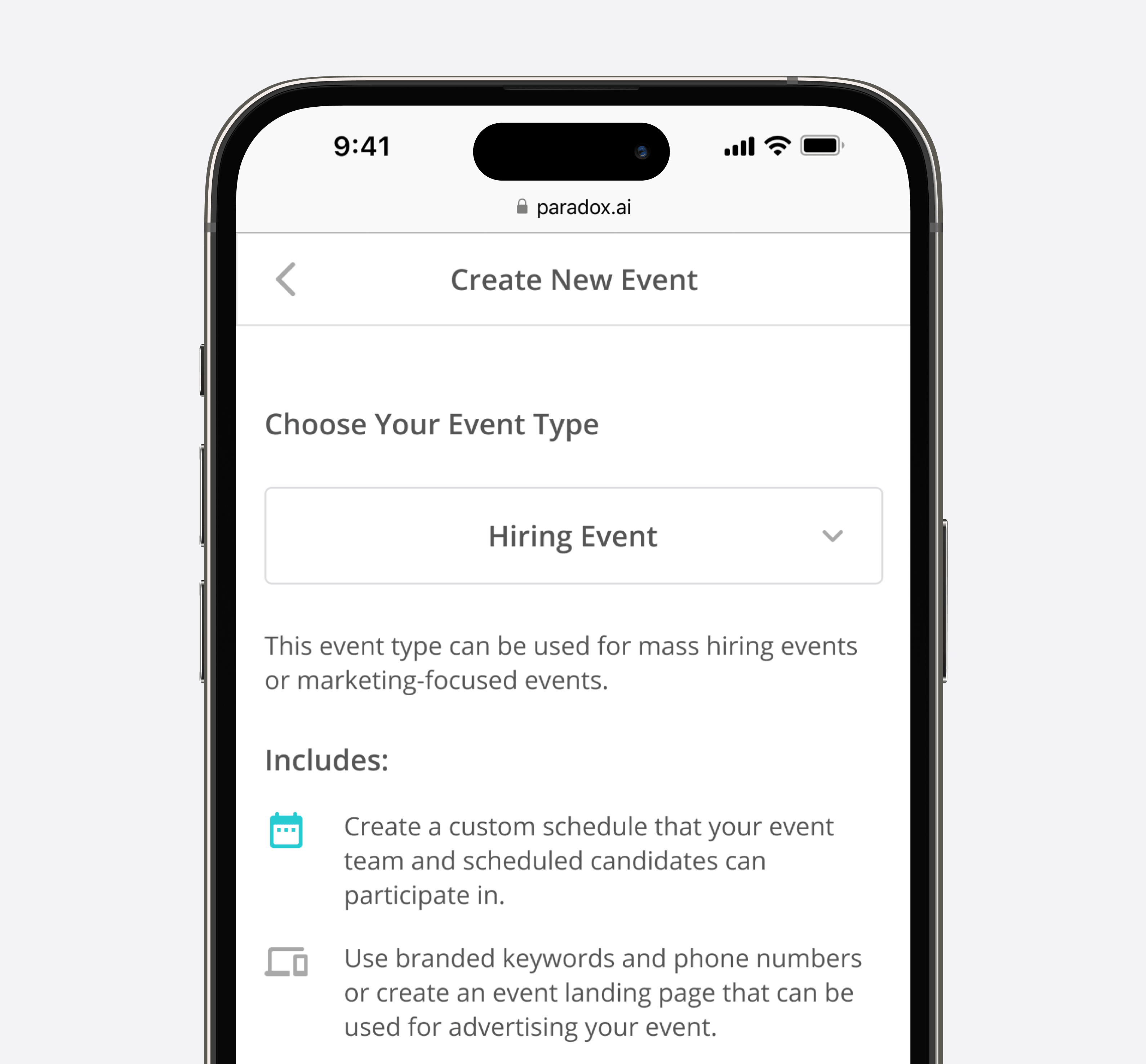
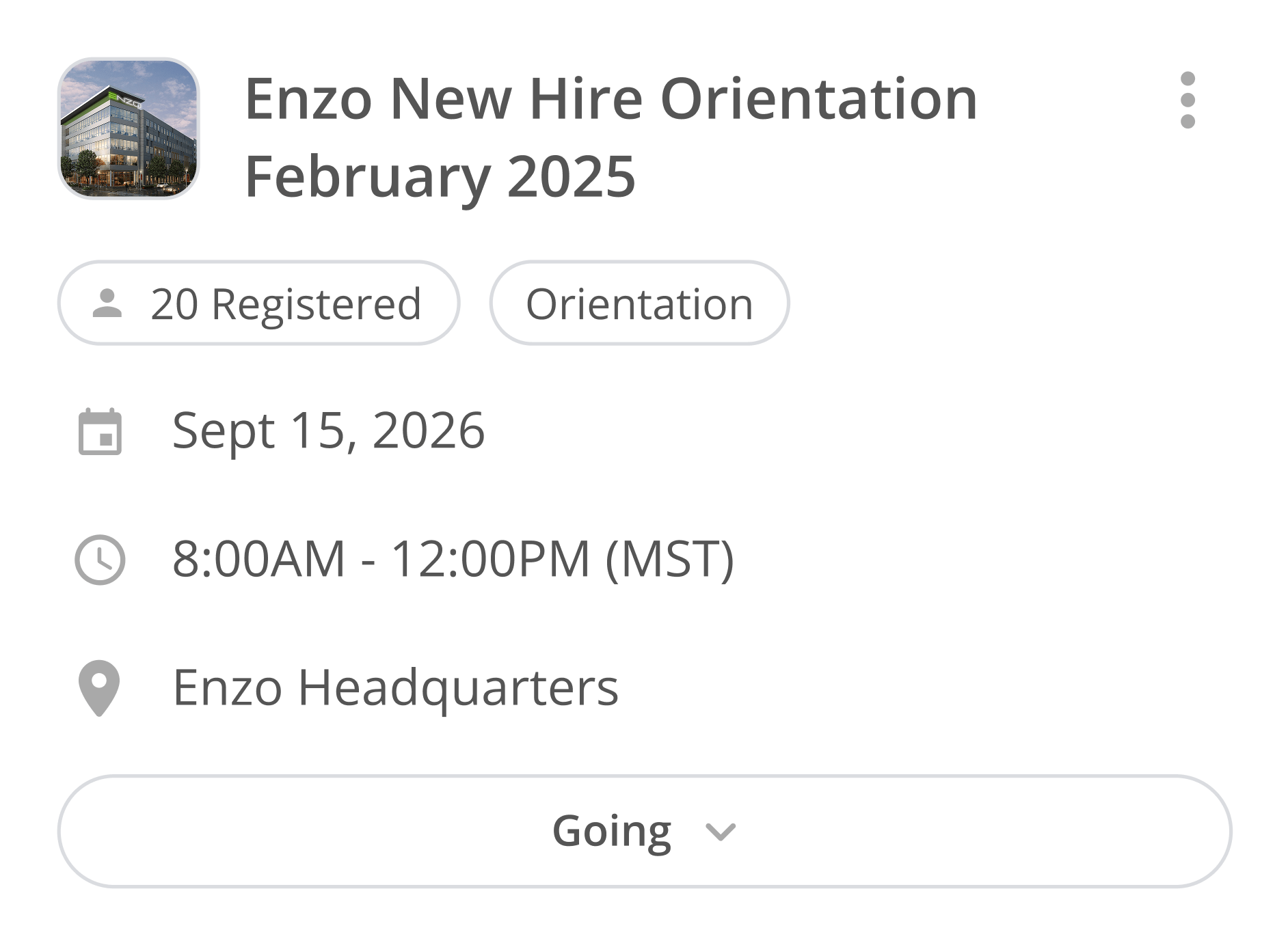
Automated Event Management
Drive more qualified candidates during high‑volume and seasonal spikes.
The only hiring event tool you’ll ever need.
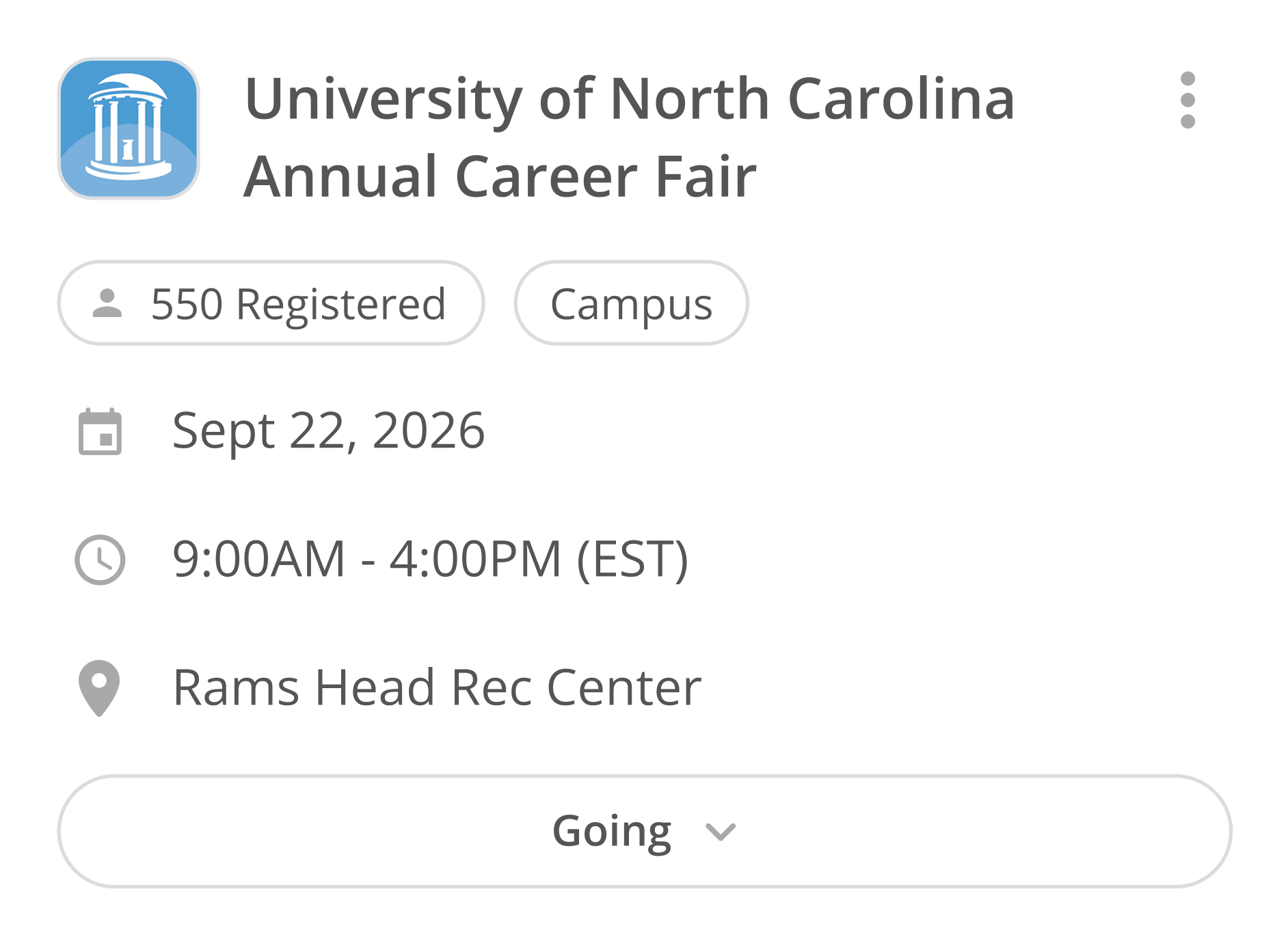
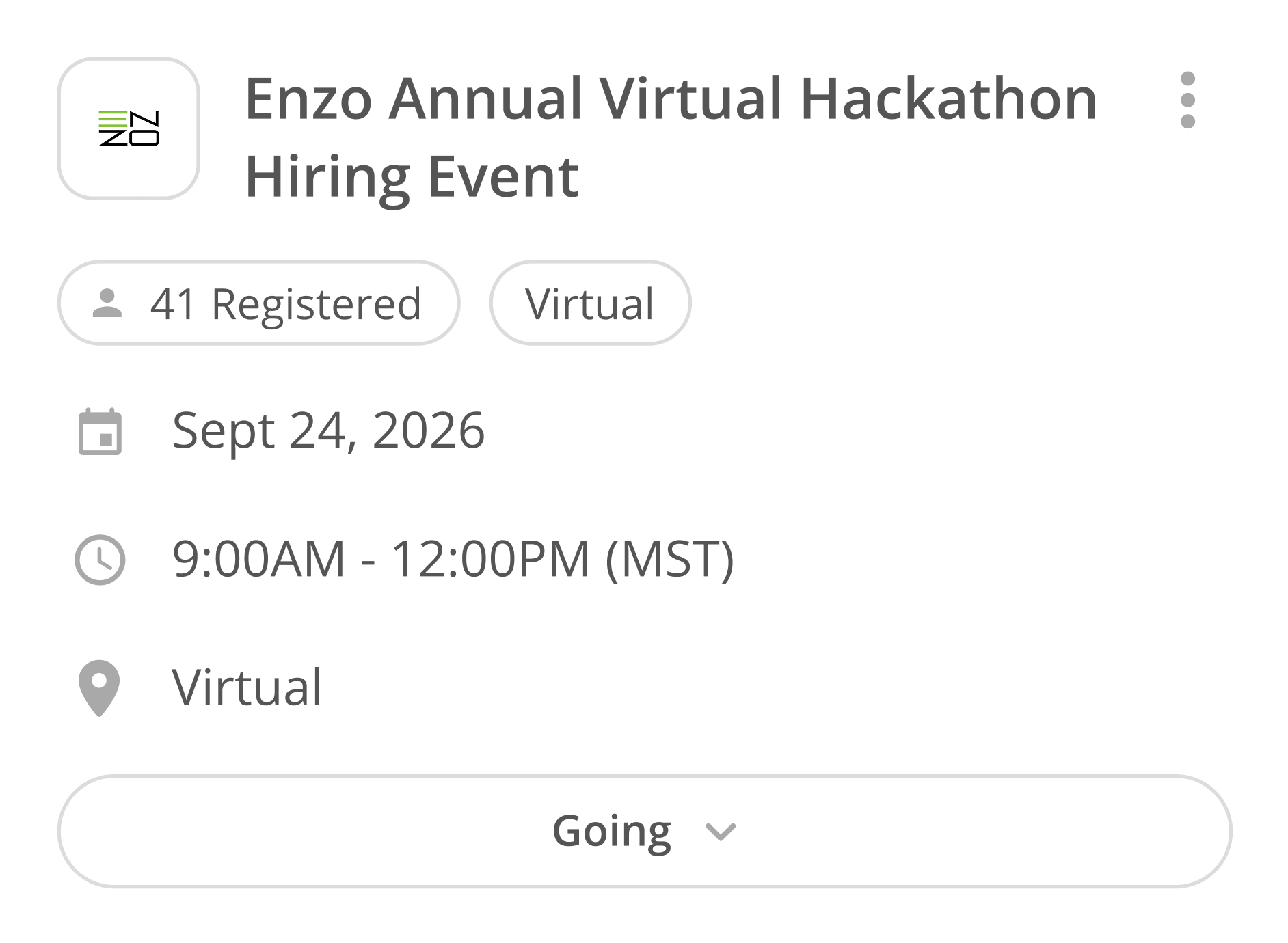
Need to hire hundreds of people for a seasonal push? We make it easy with events that can be built in minutes to make mass hiring a breeze.

Campaign
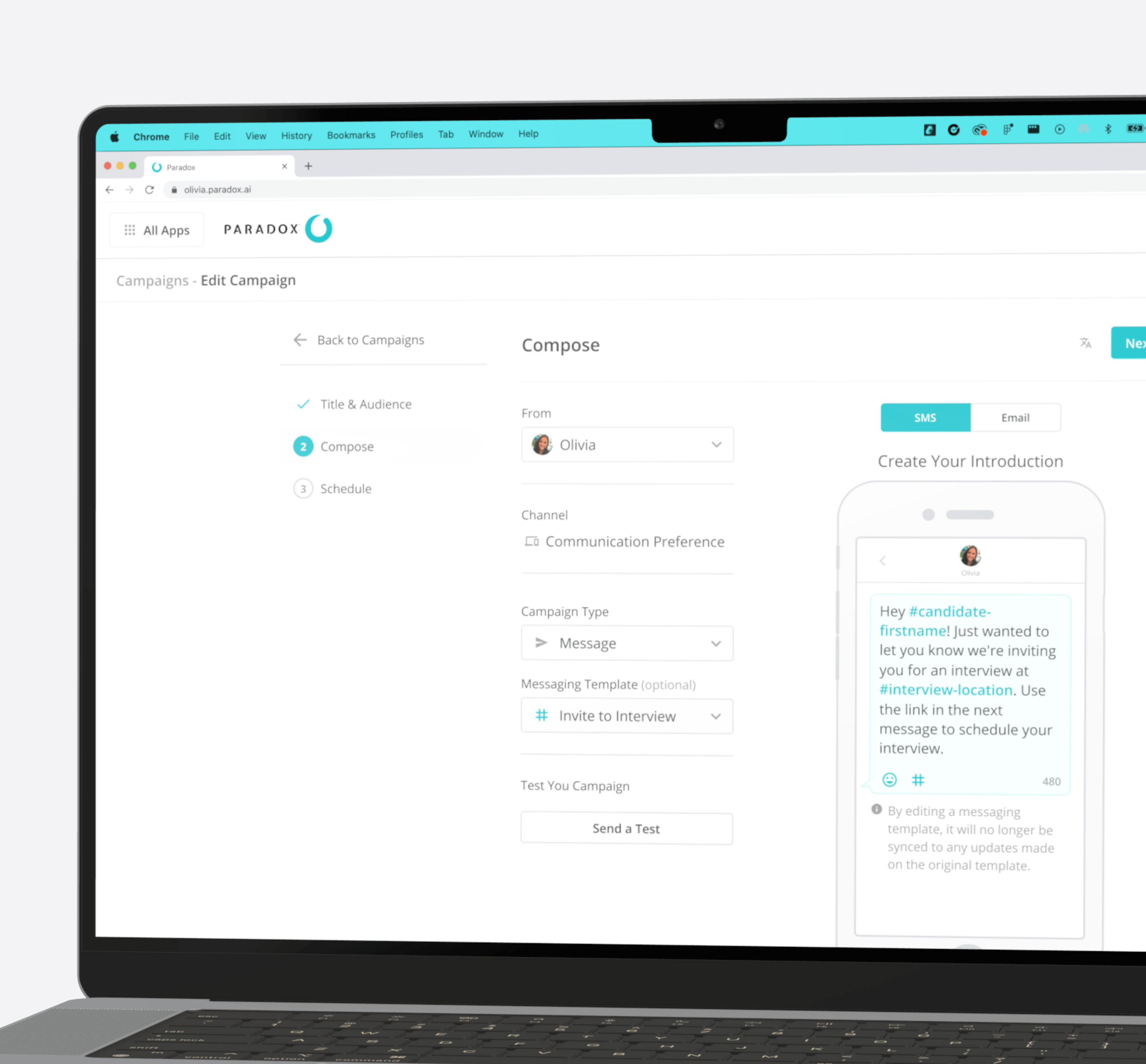
Send campaigns that actually
drive actions.
Automate and customize.
Save high-performing messages as templates to improve recruiters’ speed and output for campaigns and messaging.
Simply select a template, choose text, email, or both, and schedule. Done and done.
Job Management
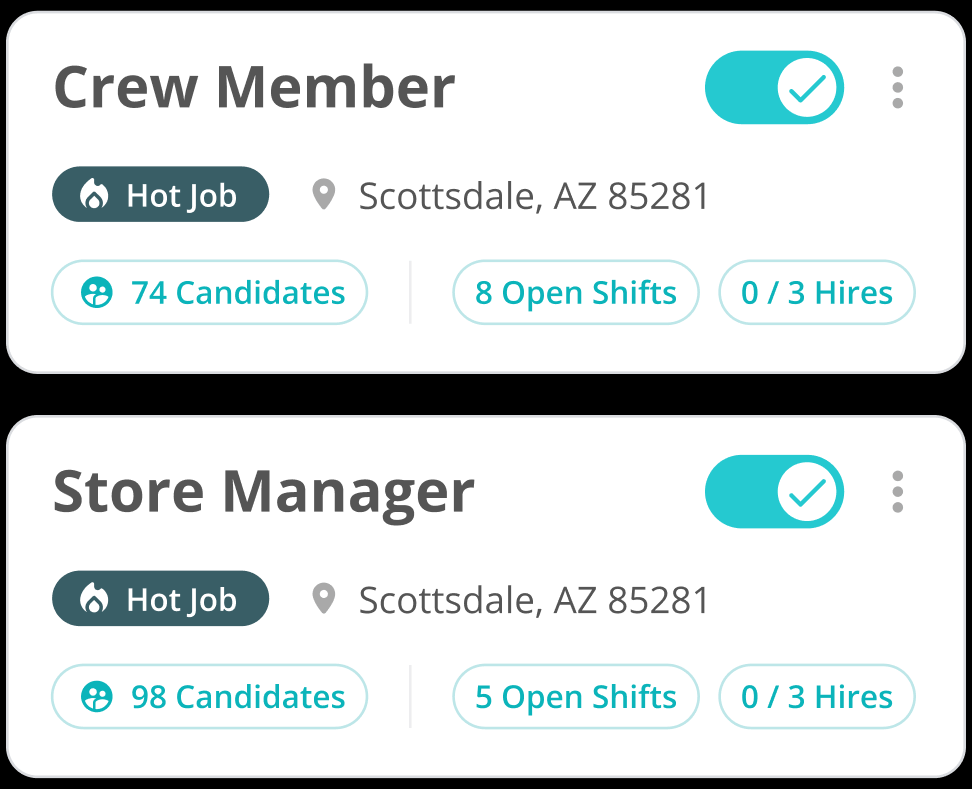
Post jobs and start hiring with a single tap.
Opening a job has never been easier.
Turn jobs on and off right from the Paradox mobile app or on desktop.
Amplify reach of open roles to ideal audiences across more than thousands of job boards with programmatic advertising.

Text-to-Apply
Skip the form, apply right in the conversation.
No logins, passwords, or accounts needed.
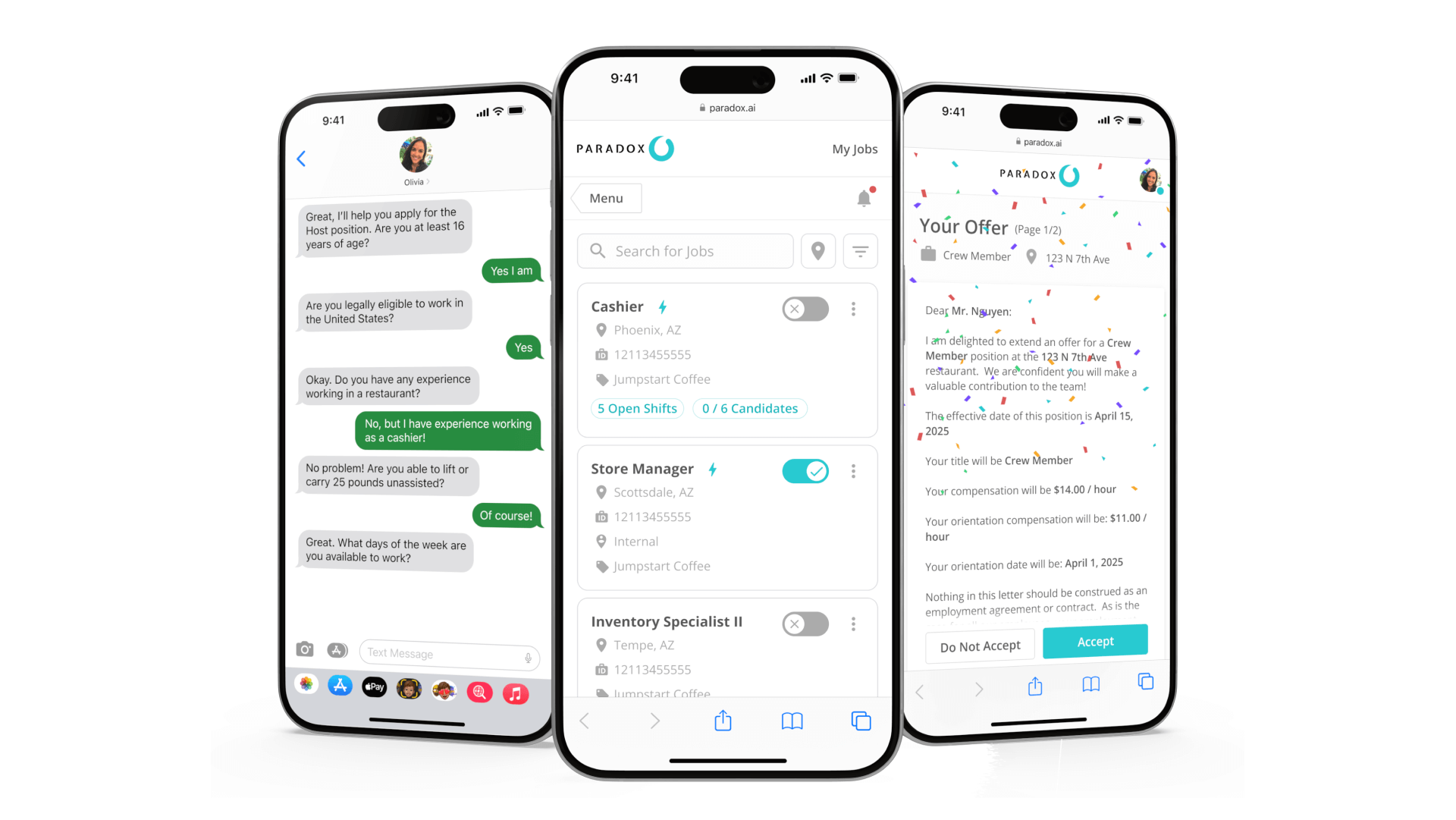
Applicants start the application & screening process through SMS, WhatsApp, or Facebook Messenger whenever they want, and can resume at another time if something comes up.

Hiring Goals
Automatically turn jobs on and off based on candidate volume.
Only source the candidates you need.
Allow recruiters and hiring managers to set candidate volume limits per job in order to limit over-sourcing and increase candidate optimization directly within the Paradox platform.

Interview Scheduling
Interviews scheduled within 10 mins. Really.
Automated 1:1 scheduling.
Sync directly with your calendar and Olivia can handle the rest by sending open interview times.
Rescheduling & reminders.
Decrease no-shows by letting Paradox take on the burden of reminders and rescheduling.
Panel & group interviews.
Olivia can handle even the most complex interview scenarios and easily navigate busy schedules.

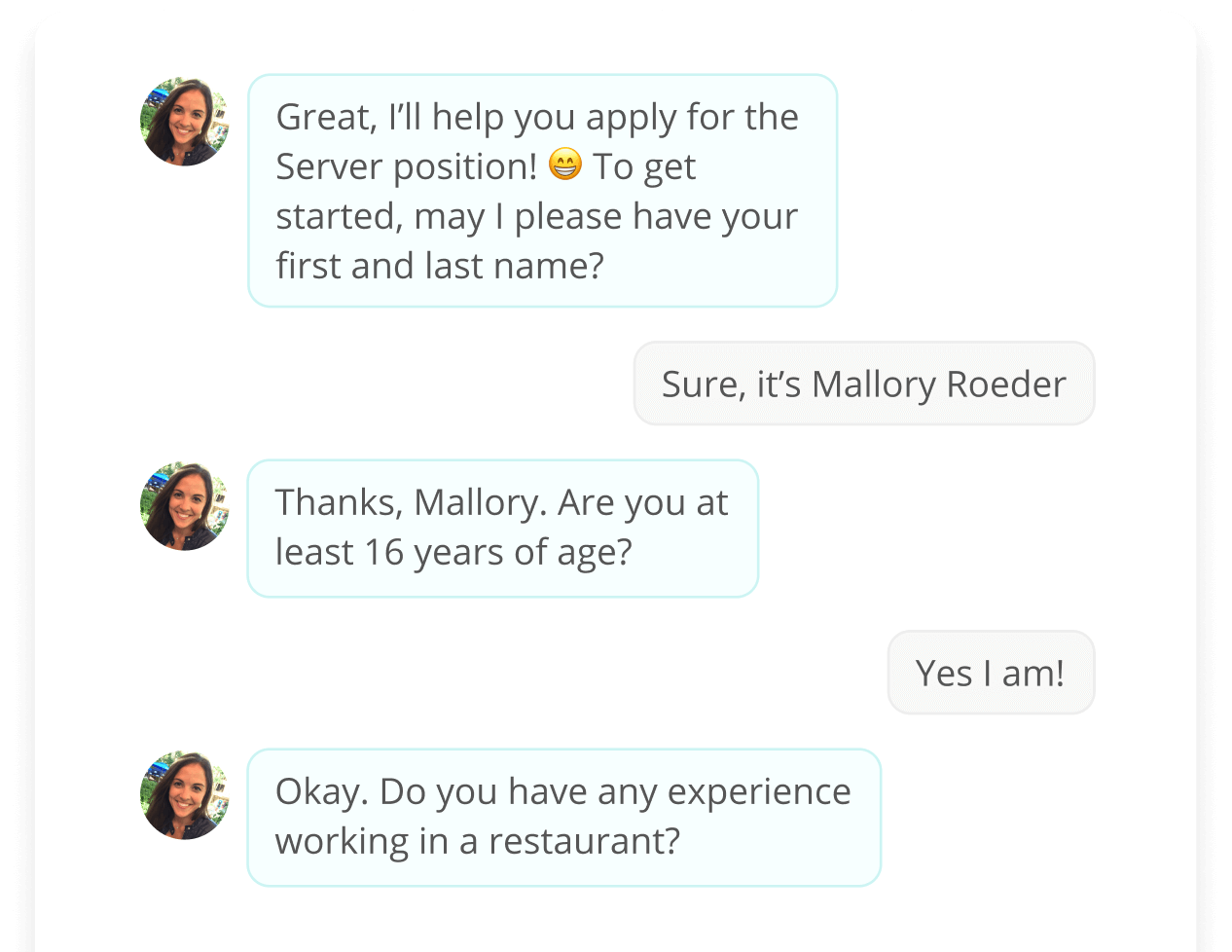
Candidate Q&A
Answer any candidate question 24/7, 365.
Provide candidates with the answers they’re looking for.
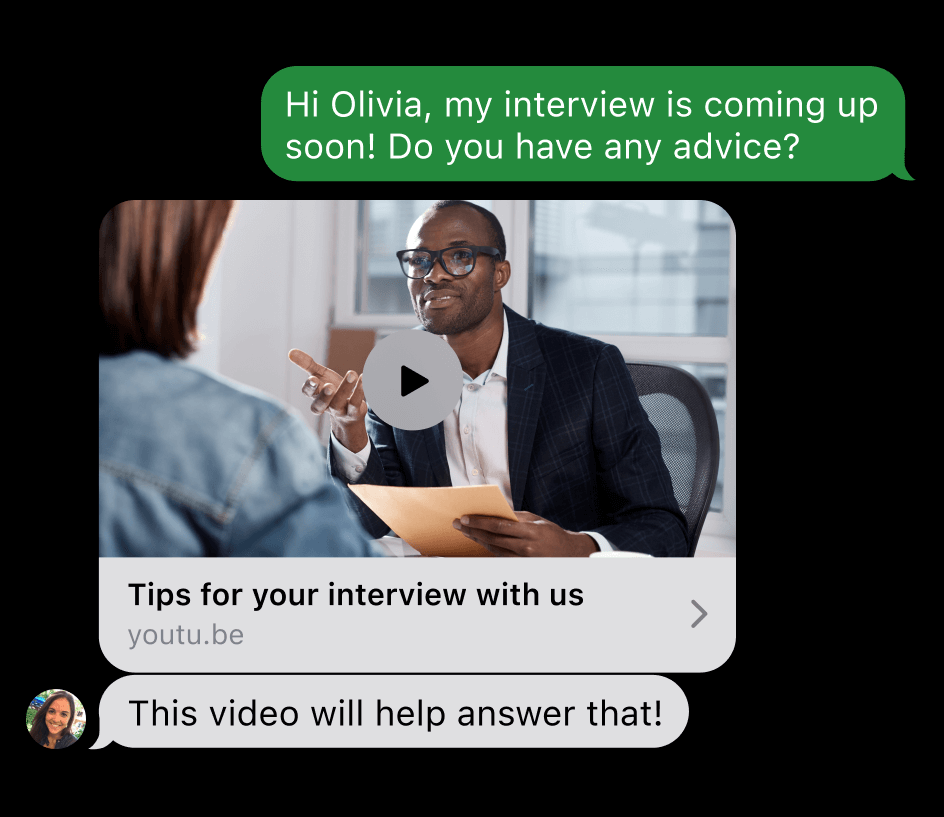
Communicate directly with candidates via automated SMS, WhatsApp, Messenger, or chat and 1:1 text messaging — ensuring people always have instant answers to their most important questions.

Candidate Management
Mobile app for frontline managers made easy.
A next-gen ATS with everything you need to hire faster.
Our simplified user experience encourages recruiter adoption – and is designed with ease of use for both mobile and desktop users in mind.


Offer Management
Automate offers with an extra special touch.
Every hire is the cause for celebration.
Templates make it easy to quickly send offer letters to the perfect hire. Candidates receive the offer letter via text and accept with a few taps.


Automatic Onboarding
Set up new hires for success, before day 1.
Keep new hires on track.
After offer acceptance, Form I-9, handbooks & onboarding forms are sent automatically to new hires, and text reminders drive completion before day 1.

See what the Conversational ATS can do for you.
Automated Event Management
Drive more qualified candidates during high‑volume and seasonal spikes.

Job Management
Post jobs and start hiring with a single tap.
Text-to-Apply
Skip the form, apply right in the conversation.

Hiring Goals
Automatically turn jobs on and off based on candidate volume.

Interview Scheduling
Interviews scheduled within 10 mins. Really.

Candidate Q&A
Answer any candidate question 24/7, 365.
Candidate Management
Mobile app for frontline managers made easy.

Campaign
Set up new hires for success, before day 1.
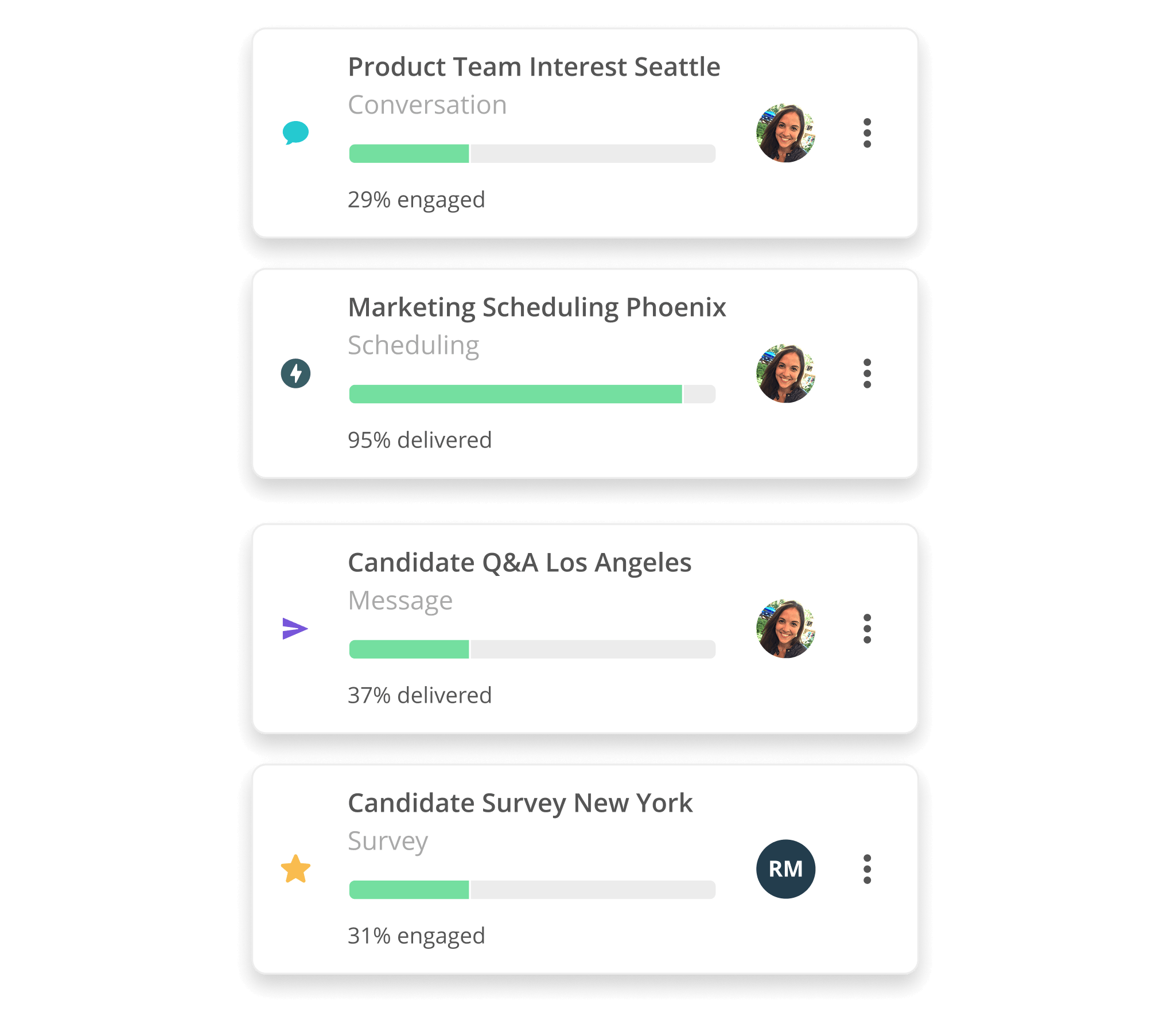
Offer Management
Automate offers with an extra special touch.
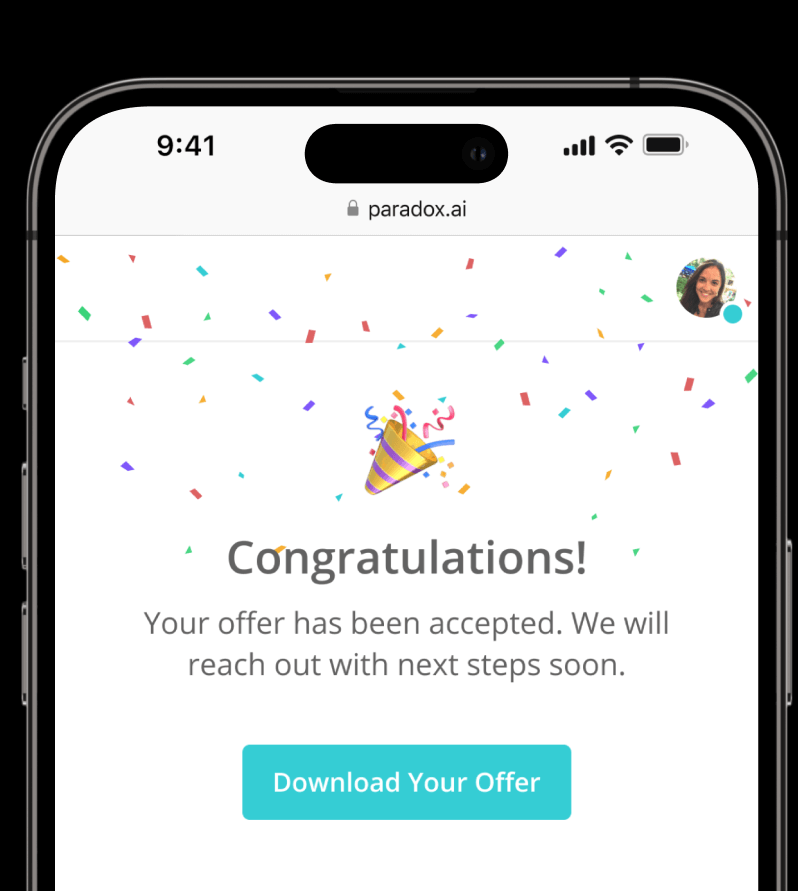
Automatic Onboarding
Set up new hires for success, before day 1.


An ATS built for candidates,
loved by hiring teams.
Indeed Apply
Supercharge every Indeed application.
Effortlessly distribute jobs.
Automatically distribute jobs on Indeed at the swipe of a toggle, enhancing overall visibility and broadening reach while delivering a seamless candidate experience.
Simple applications.
Increase the overall likelihood of your job being clicked by 21% and allow job seekers to complete full applications directly on Indeed job listings.

Accessibility
Experiences that are accessible for all.
All candidates deserve a fair hiring process.
Paradox is on a mission to deliver accessible candidate experiences to all job seekers.
In support of this goal, Paradox aims to ensure that its websites, applications, and content are accessible to individuals of all abilities and substantially conform to relevant, industry standard, accessibility guidelines.

Integrations
Make integrations simple with open API.
Integrate seamlessly with your tech stack.
Integrations should be simple. Through direct integrations and our open API, Olivia works with the leading systems and devices you already use.


The hiring platform that scales with your business.


What if you could completely
transform your hiring process?

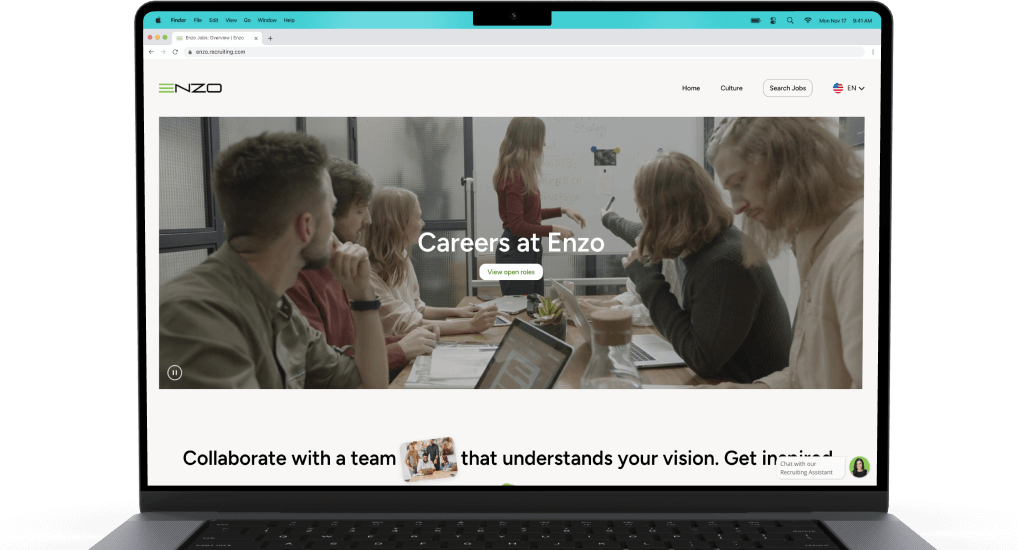
Go a layer deeper on product functionality.


Every great hire starts with a conversation.
Request demo


© 2026 Copyright Paradox, Inc. All rights reserved.
