Jada Reese (00:06): Some of the things that attracted us to paradox is the possibility of having two-way communication with not just candidates, but with also our employees. So we're looking at paradox beyond what we initially thought we would use it for, and we think it can help us reach our desk-less employees much, much better than we do today. During COVID, we went through a phase like most companies where hiring was very difficult, and I will say our turnover went up probably by about 20%. The candidate experience is everything, and they simply weren't being communicated with, connected with, and that's why Paradox was so attractive. We will really be able to speed up our time to interview, our time to feel we'll, be able to speed up the quality of the candidate. Not only hiring, but being prepared to do the work. I know that we will get a higher quality, we will retain better, and we'll be able to move the needle on some of our financial metrics. Our sales will go up because we'll have the talent sitting in house ready to serve those customers.
Rachel Allen (00:04): Paradox is the first solution that we came to that really knew how to do high volume recruitment, and it's been a game changer for us. In order for our store managers to be able to do their own recruitment, it's imperative that we provide them the right tools and technology and empower them with the resources in order for them to do what they need to do overnight. We went from over 10 days on average time to hire to less than five days, so it was an over 50% decrease in time to hire immediately. I think the coolest part is that we were able to give back to our store leaders over 40,000 hours a week that they can dedicate to what they need to do for their stores and automate a lot of the hiring process
(01:27): When it feels like they're just texting with a person, it speeds up the process. It has increased our retention and conversion rate from applicant to hire. If we start asking things in a conversational way, I think it's our shattering in how we do the entire recruitment process. So not just for the candidate experience, but for the recruiters too. I think where Paradox was best for us was really that high volume solution. This was the first time I've come across something that was like, yes, they get it. That's it. And this is the first time we've actually been able to solve for that. It's been really neat.
Aaron Einhorn (00:11): Hiring success looks like getting to the right candidate faster, getting them onboard your team and integrated to your team more quickly, and ultimately launching them into, I mean, ideally a career.
Sonja Breuer (00:26): And restaurant managers are not IT people. They're actually out running the restaurants. The problem that we had is that our previous a TS system, our managers had to check it daily and then make physical phone calls to get candidates in with our former a TS system. From time that the applicant actually applied to the time of hire, it was 13 to 14 days. Once we switched into Paradox, we actually got that number down to four days.
Aaron Einhorn (01:12): We average approximately 144% turnover across our organization, and paradox helps us address that concern by keeping candidates walking through our doors.
Sonja Breuer (01:24): We've had over 200,000 interviews scheduled since we've been with Paradox, which is huge, and we can schedule them immediately and our managers don't have to do anything, which is actually the beauty of Paradox.
Aaron Einhorn (01:37): If you've got managers that are satisfied and happy, you've got hourly employees that are satisfied and happy, that's going to translate right onto your customers.
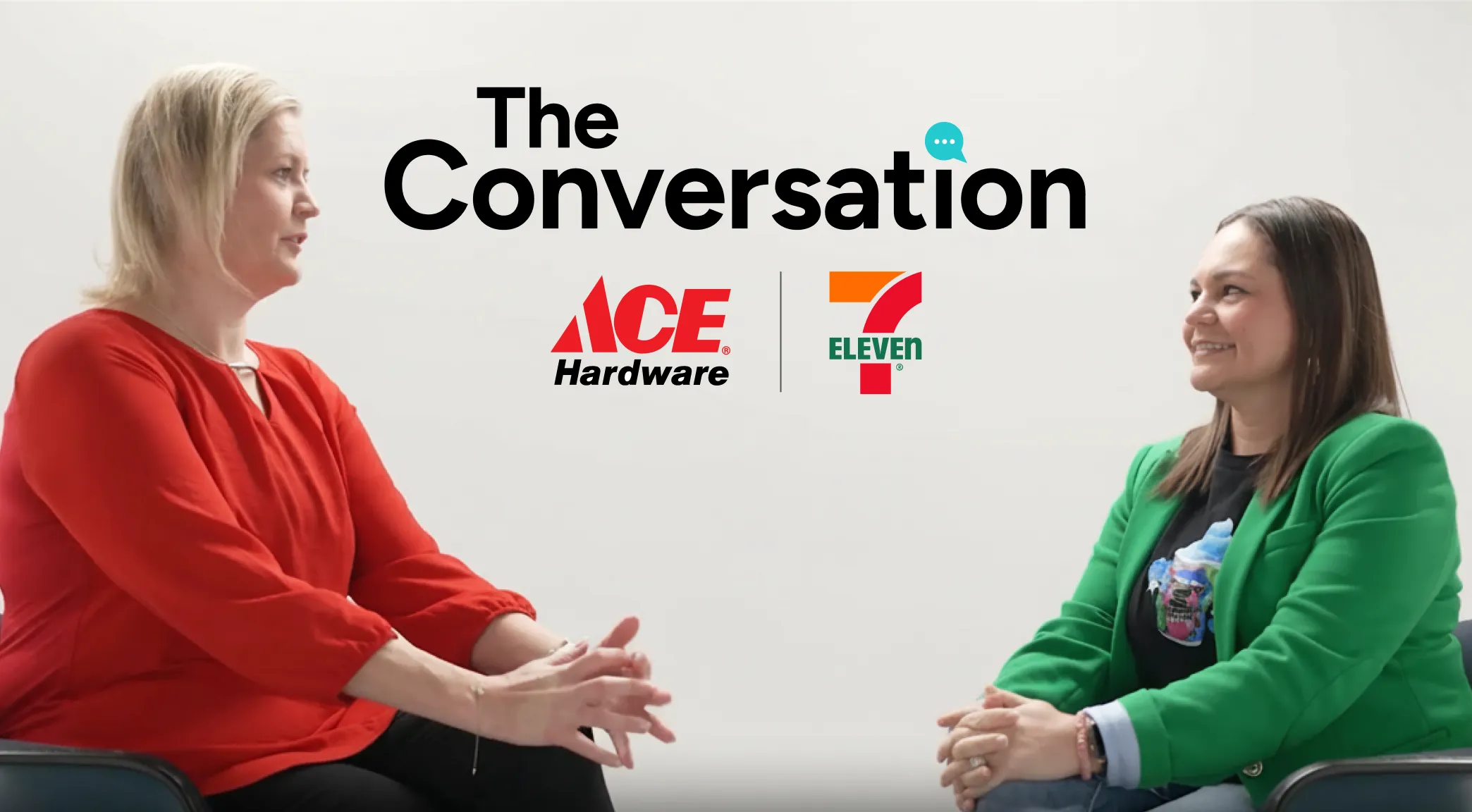
Stefanie Nikitas (00:18): Ace is known as the helpful place around the globe. Helpful is at the forefront of everything that we do. For us. It's not just something that we slap on a logo or that we put on our wall at the corporate office. It's something that is embodied into every single position across the company. We are finding ourselves in a situation where we went from regular seasonal peak. It's having to hire thousands of people in a very short period of time. The way we approached technology like Paradox was how would a recruiter think At the end of the day, we were trying to improve the candidate experience, and once recruiters understood that piece and they really got to play with it and see it in action, that's primarily when we started to get the buy-in. Less than even 24 hours, they scheduled over 200 interviews. From an administrative standpoint, there's several hours a week.
(01:02): They don't have to spend hunting down candidates. We want technology to be there to not burden, but to help. If we send out a request for an interview, it's a text message. They can be anywhere, anytime, not even in this country, in this time zone, and they can pick the time that works best for them. Every day is different, but what I love most is the interaction with people and technology. And for us it's how do I help a customer? How do I help a candidate at the end of the day? And that's honestly at the forefront of everything that I do.
Cassie Vasco (00:05): So I think that conversational AI has helped us in many ways, but one of the ways that I would say in this space is it's been able to greatly improve our time to fill and shorten it so that it makes us more marketable in our industry. Our frontline strategy team at Sodexo was really understanding that we needed to catch up. We knew that it was critical that we meet our candidates out there, where they were at, and what we were really focused on in the beginning was our lagging time to fill. Certainly bringing Paradox on and speeding up and getting candidates in as employees really changed that for us, and it made it quicker. In Sodexo's space, we have both recruiters and operators using paradox. Taking the job of connecting with a candidate for the first time out of their hands is a huge time saver and a value add. But the conversational ai, it allows us to communicate with people that speak many different languages. Diversity and inclusion at Sodexo is really critical, and being able to reach populations that speak multiple languages and feel comfortable in that space, I mean, that's a great opportunity to extend our philosophy and engagement.
(02:41): And so that feeling that a person is helping our candidates connect with our company is really leading in the marketplace.
Mark Gibson (00:16): The challenges in the high volume hiring in the restaurant industry are managers are trying to run restaurants, and the last thing on their mind is how they're going to take time out of their day to schedule interviews with candidates.
Carla Delich (00:29): Prior to Paradox, we were looking at our data. It was taking our managers in our restaurants at least three days just to view an application.
Mark Gibson (00:39): The light bulb moment for me was the first text message that I got that said, hi, this is Frankie from Flynn Group. Here are our next steps. It immediately changed the entire experience so rapidly for me, and it was the first time that I experienced something like that in this space.
Carla Delich (00:56): The speed to scheduling with Paradox has absolutely been a game changer, not only from just getting people in the door faster, but it's also saving our managers three to four hours a week. The ability to have it completely automated from the point of application to being able to schedule that interview all the way down to the offer and the onboarding. Since we've been on Paradox, we're seeing applicants from the point of application to interview complete. It's happening in less than three days.
Mark Gibson (01:29): With the conversational a TS, you feel like you are just having a conversation with a person on the other side. I don't think I could go back without having a negative experience in something that is kind of old school and is not using the conversational a TS.
Brad Williams (00:04): I think the light bulb moment with Paradox was when we went from nine days to get an interview scheduled to under four minutes, the fact that all we had to do was post a QR code, post a short code up on some of our POP, that was the win, and that's when we knew we could probably hit 90 plus percent of the system with this product. Our biggest day part in sales is late night, and late night for us is defined as after 10:00 PM If you're not able to staff your most profitable day part, then you're losing money. So Paradox has allowed us to staff that up and allowed our franchisees to be open later.
(01:33): When we deployed Paradox, we measured the ROI on that with really how much time it allowed our restaurant general managers to get back. We think we've saved about 35,000 hours using me and the conversational assistant and getting interviews scheduled. So the fact that we've saved that amount of hours in that time for our people actually running the restaurants, it allows them to be more hands-on with our actual guests at our drive-throughs. It's changed everything. It allows us to be more efficient. It allows us to save time. The fact that me is always on and you can point someone to a QR code, to a short code, they can schedule an interview and possibly meet someone the next day if that availability is open. It's just a huge win. I think paradox is going to be on the cutting edge of whatever's going to be next.
Shay Johnson (00:10): I lead our talent acquisition teams, and I really focus on entry level talent and then really coordinate with those teams to help those people grow their jobs into careers. For a company like us, we have, at any given time, 13 to 17,000 jobs posted, putting it on them to go and find their job. That's a terrible job seeker experience. A few years ago, we thought it was great if your application was just online, and now it's become all about how do you really recruit candidates? The volume that we're recruiting them at, how do you connect with them? On a personal level? Paradox fits into all of it. We use on-demand video interviewing. We use automated scheduling. Paradox owns and operates our career site environment. We've been using conversation as the foundation for how we recruit and how we interact at scale, and now the expectation for that conversation has just leveled up. It's not just call and response or chatbots anymore. They expect real answers and real time customized to them. What I'm really excited about with our career site today through Paradox, it doesn't matter where we're advertising our jobs or how we're promoting externally. We want to match job seekers to the most relevant jobs.
(01:17): Just having Olivia, assisting our candidates, helping them search for jobs and helping them through our apply process is one of the key reasons why we're able to get enough applicant volume to support our business and our growth, and without it, we would be pretty lost. We say this all the time at Compass Group. Anytime we have a question, a problem, something we need to solve for, somebody raises the hand and says, have we talked to Paradox about this? That's what the relationship means to us. We really look at them as business partners, people that can help us think through and innovate and solve for not only our problems today, but the problems that we're looking ahead to the next two, three years down the road.
Steffanie Chaviano (00:05): Before we partnered with Paradox, we were hiring on average about 400 behavior technicians a month. Pretty quickly, I would say maybe three months post implementing Paradox. We were able to get to 600 hires a month, and that maintained pretty steady. Within recruiting, we were dealing with just inability to figure out how to hit higher than 400 hires a month. We desperately needed to figure out how to bring in a higher volume of hires. It was a really manual, inefficient process when it came to the volume that we were kind of dealing with on a day in, day out basis.
(01:32): Our retention has improved pretty dramatically since we rolled Paradox out. We saw more than seven hours of time saved per recruiter per week. We've been able to move coordinators into recruiter roles because it really reduced the need for coordinators to go and do the paper chasing. By implementing conversational a TS, we were able to double our hires and our recruiters were able to focus on the work that they really love to do, and it's just been a game changer for the team. It's allowed us to increase our hiring without increasing headcount and just provide a better overall experience for our candidates.
Kara Eisenberg (00:04): American Tire Distributors has a very unique situation as far as pain points because we have a warehouse and delivery drivers as most of our openings. We were very low staffed two years ago in the supply chain. After we partnered, we saw a 313% increase in hiring this time last year compared to March of last year. To bring all those candidates into our database and be able to connect with them and immediately have interviews set up and get them into our funnel within hours has been really transforming for our business.