Accelerating healthcare hiring.
Learn how top healthcare systems are accelerating hiring and boosting retention by optimizing processes, leveraging technology, and prioritizing candidate experience.
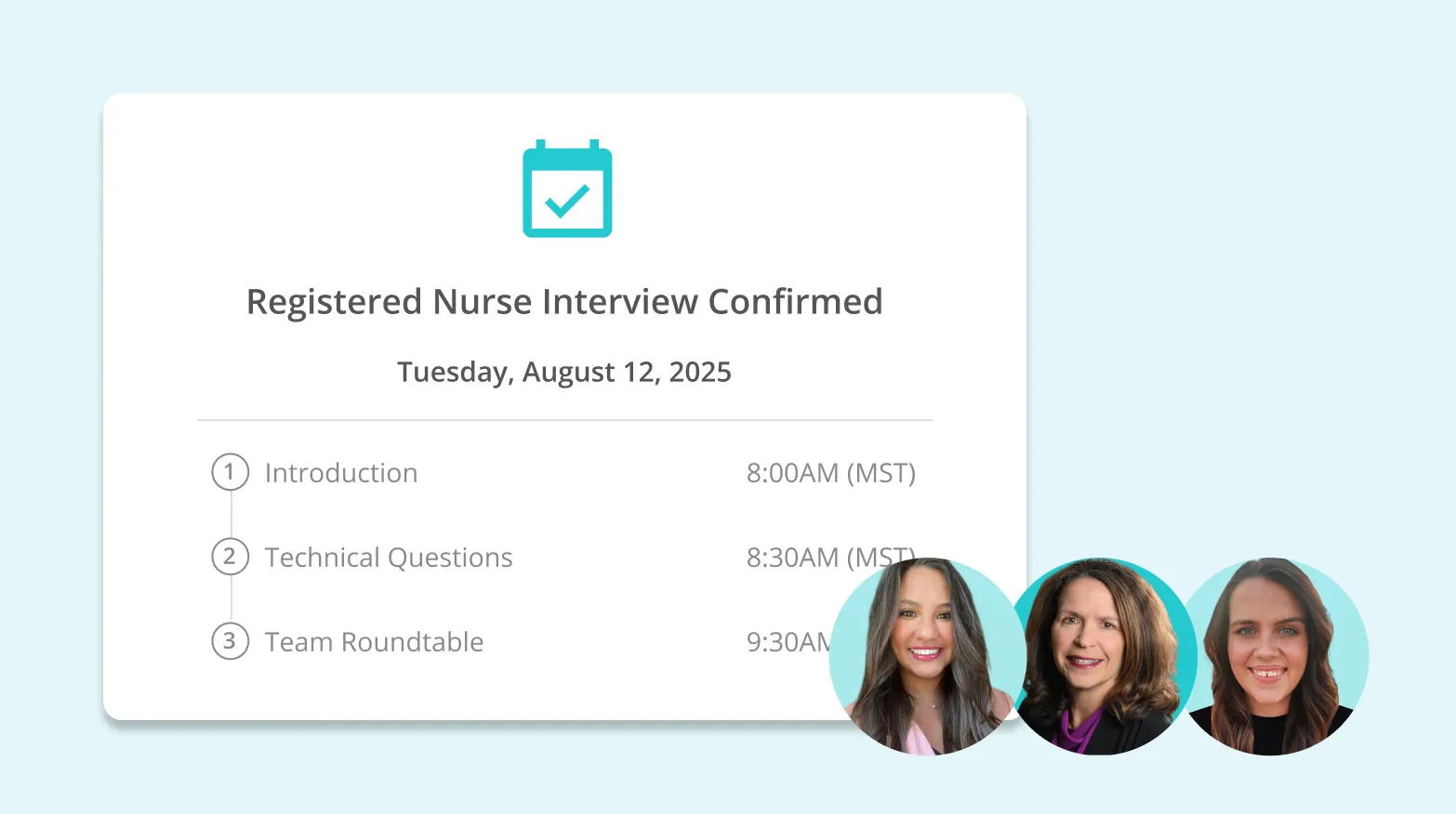
Accelerating healthcare hiring.
Learn how top healthcare systems are accelerating hiring and boosting retention by optimizing processes, leveraging technology, and prioritizing candidate experience.


This blog is part of a larger collection of client story content for these companies.
Meet the speakers.

Essentia Health
Essentia Health

Ochsner Health

Ochsner Health
Watch the on-demand webinar:

Tyler McEvilly (00:04):
Hello all. I'm seeing the attendee count jump up here, but we're obviously going to give it a decent amount of time to make sure everyone has a chance to hop in. Thank you. Thank you for joining for those just popping on. We're going to give it a minute or so here to make sure everyone has a chance to jump in before we get started. But thank you all for joining. I'm going to encourage you throughout the whole webinar today to use the chat and the q and a functions. It really helps us engage and answer specific questions from you or relate to you and offer information there. So if you want to get started by hopping in the chat with the company, you're with, your role, or even just kind of where you're hopping in from, we'd really appreciate it.
(01:28):
Awesome. Well, we will jump into our slides. Hey Dennis, thanks for hopping on all. Well, thank you all for joining. Like I said, my name is Tyler McEverly. I work here at Paradox on the marketing team, and I have the pleasure of working with a lot of clients like Macy, Adriana and Haley here and getting to help tell their story. So super excited today. This is kind of one of our first industry round tables in a long time, so we're getting to focus on the healthcare industry and two wonderful companies that we've had a chance to work with for a long time here. So really excited to help share their best practices, their strategies, their challenges, and kind of advice for any folks within a similar company or the industry. So today's accelerating healthcare, hiring strategies for speed, experience, and business results with conversational ai. We will get started with some intros. So while we'll have Macy introduce herself today, she's also going to introduce Essentia Health. Macy, take it away.
Mhesi Haugen (02:53):
Thanks Tyler. Hi everyone, my name is Macy. I'm a manager of talent acquisition for Essentia Health. I primarily help support our nursing and nursing support recruitment team. I'm actually stepping in today for Mr. John Higgins, who was unable to make the round table, but very, very excited to be here. For those of you who are not familiar with Essentia Health, we are, I would say mid-sized healthcare system based out of Duluth, Minnesota, and we serve in both Minnesota, Wisconsin and North Dakota, recruiting for hospitals, clinics, long-term care service lines.
Tyler McEvilly (03:35):
Awesome, thank you, Macy. And how long approximately have you been a client with Paradox?
Mhesi Haugen (03:41):
Yeah, great question. So I've actually been with Essentia Health for two years now, but prior to that I was with another organization, so I shared with Tyler and Eleanor yesterday that I've been blessed to be part of launching Paradox with two separate organizations and watching the impact of that automated scheduling system flourish within both of those organizations. So I can't quite recall when we went live with the previous org, but I've probably been working with within Paradox for three to four years approximately now.
Tyler McEvilly (04:16):
Awesome.
Mhesi Haugen (04:16):
Yeah,
Tyler McEvilly (04:17):
You kind of doubled the experience of implementation and you've obviously seen us as a company grow with our products. So grateful to have you here today and share your story.
Mhesi Haugen (04:29):
Thank you.
Tyler McEvilly (04:31):
Awesome. We will jump into our friends, Adriana and Hailey if you want to jump into your introductions.
Adriana Gutierrez Kriesen (04:38):
Yeah. Hi, good morning everyone. My name's Adriana Gutierrez Kriesen. I'm the vice president for a talent acquisition at Ochsner Health. We are a health system that's located in Louisiana. We're in Mississippi and we have some locations in Alabama and Florida. We're about 40,000 employees that we have. I've been with Ochsner for 15 years, just actually made my 15 year anniversary. And we have healthcare systems again located across all of those multiple states. So super excited to be here with everyone. We are a new client with Paradox. We started on our paradox journey last year, so we have been working with Paradox since 2024, so great to meet everybody.
Haley Childress (05:29):
My name is Haley Childress. I am a program manager for talent acquisition at oxner. So I have the pleasure of working with Adriana. I have about eight years of experience in talent acquisition, and three of those have been in Oxner and in my role I really focus on our data analytics and technology. So I really enjoy getting to be the Paradox rep for the team internally and work really closely with the Paradox team to make the platform meet all of our needs. It's a really exciting job.
Tyler McEvilly (06:04):
Awesome. Well, thank you both. Again, we're super thankful to have you here and it's been fun getting to know you since you're kind of on the newer side of working with Paradox, and we're already getting to chat about the impact that you've had. So really awesome to have you guys here today. And of course, before we jump into our last question, last but certainly not least, would love to have my friend Eleanor from Paradox, introduce yourself as you're going to be jumping into the discussion here.
Eleanor Vajzovic (06:37):
Yes, hi friends. Eleanor Vajzovic. I'm vice president and head of Strategic Solutions here at Paradox, and I've been with the company for six and a half years and since almost the start, but my role today is facilitating the conversation and digging in and learning more and making sure everyone has the story to tell, but also the impact that we've made as partners throughout the last couple of years and especially in the most recent. So excited to dig in and share the time with you all.
Tyler McEvilly (07:11):
Well, thank you, Eleanor. Well, we will jump straight into it with a fun one. Kind of just wanting to get a gut check from you all, Macy, Adriana and Hailey of how would you describe the current state of healthcare hiring? And I was joking with them before that we were going to have them describe it in one word, but I really don't think that's possible given all the challenges they've all been through and the successes they have found. So I'll offer it up to you guys to walk me through that.
Mhesi Haugen (07:43):
Awesome. Well, I can jump in first. And I took on the challenge of attempting to find the singular word, and I don't know necessarily if it is what we were looking for for this one, but when I think about the current state of healthcare hiring, the one that really comes to mind and I think we'll talk a lot about it today, is strategic. And so I think when we are thinking of just the state of the state, at least from a nursing and nursing support recruitment perspective, there have been so many areas where we've seen some, what I want to say are significant improvements in the past couple of years. And so being able to continue to build that momentum in those areas. But then also on the complete opposite side, when I'm looking at some of our rural healthcare spaces, trying to find those nurses to come to our really densely populated towns of 2000 people, we have that complete opposite side of, we're still really in the trenches of figuring out how do you eliminate that agency, find those permanent caretakers to come to your hospitals. And so for me it's strategy. And so really being able to hone in on the different strategies that need to be implemented to either continue to build the momentum or continue to solve something like rural healthcare recruitment.
Tyler McEvilly (09:07):
Yeah, I mean that's 100% what we're also seeing just with the data and relating to shortages in nursing and physicians especially hit harder in those non-metro areas. So yeah, a hundred percent. What we're seeing, Adriana and Hailey, did you take on the challenge or is it easier to describe it in a little bit more than one word?
Adriana Gutierrez Kriesen (09:30):
Yeah, I think I have more than one word to talk about it. I think it's just the pace of change is just so fast right now. And it's not just healthcare hiring, it's healthcare in general. Just there is so much change happening in healthcare today that's impacting our hiring. And I just, again, I think the pace of change in hiring within talent acquisition is just unprecedented right now. And of course, AI and the automation, there's just so much change happening with that and what we're seeing today is going to be different, we know in six to 12 months. So I think just all of that change that's happening. And again, I also do feel like it's about being strategic. So how are we a strategic business partner to the business and helping the business with all of these staffing challenges? I mean, we've talked about it. We know nursing continues to be a staffing challenge for us and Allied Health, another area for us that continues to be a challenge. So for me, it's this unprecedented change that is continuing to happen within hiring. And again, I do go back to that strategic piece. It's not just about filling roles, it's about how are we strategic with filling those roles.
Haley Childress (10:56):
I would tie into Adriana's point around the pace of change and automation that we're seeing. Technology is really changing the game in healthcare hiring, but I think that one thing that remains consistent over time is the importance of human connection and making sure that as we're adding technology and developing it, we're making sure that we use that technology in a way that enhances human connection. And so I think that it's really important right now that we're keeping that connection and building it and making sure that in making those changes and in keeping up with those changes, we're only growing the connection with our candidates and we're using technology in a way that is building an authentic connection rather than taking away it is taking away time consuming work in order to build that connection.
Tyler McEvilly (11:54):
Yeah, absolutely. Well said all, and I think there's definitely a through line in experience and a need to be strategic here, and it's clear that you all have top down leadership that has a aligned views on how to find that strategy. And I hope this is, let's see, just going to stop sharing the screen. We're going to jump into the rest of the questions here, but before Eleanor, you hop in on that next question. I kind of want to get a reaction from the group here. We found some data before the conversation about physician shortages and nursing shortages, projections obviously, but the US is projected to face a shortage of about 86,000 physicians by 2036 and by 2030 there's a projected shortfall of about 500,000 registered nurses. So I just want to go around the horn here and see is this exactly what you're seeing in your current day to day? I know Macy, you focus specifically on nursing, so maybe you can jump in on that specifically, but just want to see if that is one of your number one challenges with the group here.
Mhesi Haugen (13:19):
Yeah, I can speak a little bit first to the registered nursing side. I think that our teams are in a little bit of a unique space right now when it comes to our nursing staffing and vacancy percentages. We've really seen some significant improvements, at least in our more populated areas, not the 2000 populations, but the higher populated areas for our organization. So our main campuses in Duluth and Fargo, we were actually in a spot where we're really pipelining and having a significant number of newly experienced nurses and trusted in joining the organization having to be, again, really strategic in how we continue to nurture and nourish those relationships with those individuals while we almost await those openings that we can potentially provide to 'em. But I do foresee, and I do know some of the data does back that we are maybe in this spot right here when it comes to jobs and registered nurses, and we're going to probably start seeing that gap open up just a little bit.
(14:29):
However, I do know as well within the rural recruitment space a significant challenge. And so I think those are areas we continue to have to really look at how do we get people there, whether it's international RN hiring, relocation packages, being able to really market and sell, why do you want to be in those rural areas? When I think about some of the other spaces though, allied health, I will say surgical technologists fall within my team. Those have been a significant challenge where our workforce development teams have created an internal apprenticeship program to continue to help fill those gaps. Nursing assistants, of course, I always say, if I can solve the nursing assistant hiring situation, I can die happy someday. So I think those are areas that we really still continue to focus on when it comes to our strategies and our processes.
Adriana Gutierrez Kriesen (15:37):
Yeah, I mean I think we still, again, continue to see some of the challenges on the nursing side that you just talked about. I do think though, if I look probably the past two years, we have made some really great progress on our nursing areas, still continue need to focus on it, but I think really post COVID, I think we really kind of just took a little bit of a different approach and really kind of looked at how do we need to look at nursing differently? And so there was multiple things that we have been working on, and a lot of this is our academics team working more closely with the schools, the nursing schools that are surrounding areas. So really strong partnerships there helping us with building our pipelines. We have a workforce development team that also, again, where we've been looking at creating programs for someone who's an MA to go to an LPN LPNs going to rn.
(16:29):
So again, how are we building our pipeline and focusing on that piece of it? We have an Ochsner Scholars program, so I think there's a lot of work we have done over the past couple of years to help us with building our pipeline for nursing and stabilizing and getting nursing to a better place. And then I think really now is as we've been talking about, is the allied health. So how do we take a lot of these programs that we've done on the nursing side and then how do we put those programs on the allied health side, which we're starting to do, but we want to just move those things further along in regards to that. But I think multiple programs that we've been putting in place to help with this on the nursing piece, but we've done some great work, but again, we got to keep on working at it.
Eleanor Vajzovic (17:20):
Yeah, that's fair. And I think that's what here to talk about and getting into the details of not only developing the strategy, thinking about your technology stack and how it all fits together, and then tackling the problems that we're all facing. So you may see, and here's of solutions and programs, but now we're going to go right into the technology fit. How has paradox in this partnership helped evolve and solve those and maybe tackle those problems one by one to allow you to continue to move on to the next set of problems to solve. So let's talk a little bit about speed to quality. So I think when teams have thought about paradox, you think automation, you think conversation and you think speed, and I think once that's been addressed, speed to scheduling, speed to hire, how do you start to think, and Macy, we've thought about it from a strategic perspective, how do you think about the quality of hire and transitioning from, okay, we have the ability to schedule folks really quickly, but then how do you assess for quality to move them forward into the process? So how are you and your team thinking about that?
Mhesi Haugen (18:40):
Yeah, great question, and this is one that is very near and dear to me because this is one that I've worked with multiple teams on. And so once you implement these automated solutions that really help speed up the process, and don't get me wrong, speed is still going to always be how are we bigger, faster, stronger all of the time? How are we faster than our competition? But we've taken a piece of that and we've really sped up our process. And so now we can hone in on things like quality. We're no longer in kind of the stages of fill the seat with a body because we need to eliminate travelers, but how do we get the right body right in there? And you're going to hear me talk about it a lot throughout just these conversations here. But we're really going from transactional to relational or relationship recruitment if we weren't already there, in some ways we're going there more.
(19:40):
And so when we talk about quality, we can talk about things like the retention numbers, whether it's 30 days, 90 days, the one year turnover, but we also, we really focus in on strong partnerships and communication with the leaders from a recruiter to leader perspective, how are we best understanding your most successful employees that have sat in these roles before? And then being able to take that information to every single candidate review and screen that we have because we now have the time to be able to review, have those really strategic and critical conversations, the really critical review of those candidates. So we continue, I would say from our team's perspective, standard work has been a top priority. What does the process look like for us? But one of those pieces is really the front end of it all, and it's going to be those strong partnerships, intake sessions, reoccurring conversations and communications with leaders as we're screening and supporting those candidates.
(20:56):
But really then also getting to know those candidates, their experiences, and how do those all match together If we're on the phone with a candidate and we hear something that doesn't necessarily match the need to haves, the nice to haves for this position, then coming back and that collaboration piece internally to say good candidate, wrong position. And so being able to also decipher, is it a non-quality candidate because of that answer or is the quality going to match better in another position for us? So I would say that's really where our team's focus is how we're going from transactional to relational and relationship. And a lot of that is that extension of, I always tell my recruiters we want to be seen as an extension of that operations team. We might not be in that office or that unit with them, but we want it to feel like that for both them and the candidate.
Eleanor Vajzovic (22:00):
Right. Well, it intimately, right? Because you are the representative of the team of the day in a life of what you're looking for. And I love that connection. Back to what Haley had said earlier, yes, once you tackle the and you get rid of chasing and checking emails and navigating through calendars, you can have the personal touch again. And that personal touch starts with the business partner relationship that what are you looking for? The feedback loops that you always wished you could get, and now you have the time for, I think makes a huge difference in how you represent the team and the hiring experience. But then also the candidates understand and can better represent themselves with you too because you have time to nurture that relationship and get to the truth of who they are and represent them again back. And I love that beauty of that relationship starting from the beginning and then that throughput all the way through.
(23:01):
So continuing on with that, right? When we're thinking about transactional work and transitioning from the inefficiencies, I think one of the areas that you mentioned was contract labor and a few other areas of where we had to be creative because we had to get bodies in and we needed to fill the role so that we can service our clientele and our customers and our patients. So Adriana, we talked a little bit earlier in the prep session really around creative solutions that came from the need to hire quickly to hire on mass and evolving some of the traditional solutions out there to make it work for today in tandem with technology too. Can you touch on a little bit of that before we go into some of the other efficiencies with technology and processes?
Adriana Gutierrez Kriesen (24:02):
Yeah, I mean, I think, again, when I look at post COVID and really 2023 and 2024, we have a lot of agency within our system and we definitely saw it as an opportunity that we needed to get to a different place. And so I'm really proud of the organization and the work that we've done. I think in 2022 to the end of 2024, we had an 80% reduction in our agency, and that's because of the work of the talent acquisition team. But I go back to this word partnership, it was the talent acquisition team. We had a special projects team working with nursing leaders, working with our nursing workforce development, working with our executive teams on really kind of these project teams working on reducing agency within our system. And so again, I think it was the success of that was everyone working together to try to reduce the agency. And then again, you can see the benefit and we continue to reduce agency today. So huge, huge focus for us. In 2024, I would say we converted close to almost 300 nurses from the agency to full-time positions. And I think again, all of that work that our special projects team did, even our regional recruitment teams did, just everybody working together to make that happen. So again, I think just some great work there and just us coming together and working together as a team.
Eleanor Vajzovic (25:41):
That's amazing. And I think those are the stories of can we, and it oftentimes is a part of the strategic round table discussions of how do you reduce costs, how do you look at when you look at the financial strains of and drain actually of those alternative solutions, the contract, the travel nurses, the temporary staff, and the goal and end game really is to reduce that, find efficiencies in the system, and then create a family within your workforce as employees, right? Because they are sharing the vision and mission of what you're looking to build in each of your communities. And so I love that idea translating into reality for the team and working in parallel with then the next evolution and transformational experience of TA today, which is how do you think about processes and the efficiencies to gain? How does technology fit in and how do you now capture data that didn't exist before and use that to develop those insights for process even greater efficiencies.
(26:55):
And then now moving into people. So when we're thinking about transactional work, I think that's the part that's been exciting to hear throughout the morning has been around how do you go from transactional to strategic? I think that's always the dream and the vision when we talk to TA leaders, it's how do we get rid of the mundane? We didn't hire recruiters to be calendar shifters and review and keep spreadsheets up to date. We hired them to be people and relationship builders. So let's talk a little bit about the transactional work, an example or two around processes that you've either automated or streamlined and what has been the biggest impact for an efficiency gain for your organizations? And Haley would love to hear from you.
Haley Childress (27:47):
Yeah, absolutely. So Paradox has really been a game changer for us in terms of being able to eliminate those administrative tasks for the recruiters and let them focus more on strategic pieces. So since we went live with Paradox in April of last year, we've scheduled over 40,000 interviews that have been completed. So that's one right off the bat, just huge win for our team in terms of streamlining those scheduling processes. But we've also used the events platform and streamlined event that way. So one example would be our Oxner Scholars interview event. We use the events platform and paradox to schedule over 300 interviews in the span of just one week. And those were panel interviews. So we set up the event so that Olivia was able to send out an invite and let these candidates schedule with their correct panels and send those invites and everything, looking at those calendars for availability of all of the panelists and making sure everyone is coordinated and working efficiently there.
(29:03):
So that was a really huge win for us. And we did a similar process for our nurse intern interviews. Again, over 300 interviews, that one was over two weeks. And that one not only did the scheduling, but it was also conversationally screening the candidates before it scheduled them. So it was asking them questions, it was having them upload documents and then automating the scheduling from there. So those are just two examples of huge wins that we've had streamlining with Paradox for those interviews, but we're also expanding it. So that's really the beginning for us right now we're working on expanding it to our pre-boarding team under the same umbrella of talent acquisition at Oxner. We switch from recruiting to pre-boarding and pre-boarding really gets the candidates to the finish line. So they're working to complete their background checks and license verification and all of that.
(30:02):
And we're working on automating communications through Paradox to remind candidates about those tasks that they have. So sending out text messages that way. We're also working on automated interview scheduling. So right now, of course the recruiters are still going in and scheduling within Paradox and it's a very efficient scheduling process, but we're taking that one step further and automating that based on meeting certain criteria or certain jobs and really just expanding that tool. Paradox has been phenomenal for us in terms of being able to use those automations and let the recruiters spend their time more strategically through those efficiencies.
Eleanor Vajzovic (30:48):
Love that. I love sharing a little bit around events too. So typically it takes a team to go out and plan it for weeks or months, and then navigating the panels are a little bit of a, I mean, that's a puzzle in and of itself, so thanks for sharing that so much. Hailey and Macy, did you want to share some of the work that you and team have been living over the last couple of years?
Mhesi Haugen (31:15):
Yeah, absolutely. So I would echo a lot of what Haley said, right? With Paradox, we implemented Paradox in October, I believe, of 2023 kind of fully the automated scheduling piece. I think it goes without saying, right? We talked about the mundane, those technical tasks that you don't need a recruiter doing. Once we're able to eliminate those, not only did we see that time free up to then start that movement from transactional to more relational with our leaders and candidates, not only did we see that, but I would say we have even seen just an increase in the responsiveness of candidates. It's almost like we were able to now meet those candidates where they were at by implementing, we still keep some of the human in there. We still have a phone call scheduled every third day if someone doesn't respond to their interview scheduling tasks for our recruiters to make that attempt, but we almost don't need it.
(32:22):
I think on average right now, we're seeing our time from sending that invite to the time of the candidate confirming an interview at about 24 minutes, and then I think it's no longer than four days from the time of that confirmed interview to that interview actually taking place. And so speed, speed is just, it's out of this world when I think of that, just something that recruiters unfortunately can't do when you have so many candidates falling onto your plate that you're expected to also create this relationship with. But I also just want to speak to where we were able to build Paradox in a way within our system to communicate statuses back and forth from Paradox to Workday, which is our applicant tracking system. And within that we have different SLA reports that we have set up that really allow for recruiters to very quickly and easily pull up these reports within that Workday system and know exactly where their candidates are at at any given time. Do I need to reach out to these candidates to help with the interview scheduling process or, oh, I see this one's expired now I probably need to reach out just to confirm that they're no longer interested. So I just wanted to add that not only scheduling piece, but building your system around or together, I guess your systems together can really help with the efficiencies even more.
Eleanor Vajzovic (33:48):
Yeah, I
Adriana Gutierrez Kriesen (33:48):
Love that saw too on that one, which was so exciting. I think Haley, a hundred thousand questions that we've had answered using Olivia. So again, that's questions that we don't need to answer that we can get Olivia to help us with, which has been totally awesome and able to answer questions at all times 24 7, which is really, really great. And then I even think our average time is scheduled for interview, like eight minutes. It's crazy, eight minutes we can get an interview scheduled with a candidate. So it's been really great for us. I
Eleanor Vajzovic (34:24):
Love that. And speaking of efficiencies, when it comes to, you talked about the T of record and the greatest distraction for recruiters has been to do the dual screens, the multi screens, the too many systems to keep track of and then still manage the relationships both internally and externally with candidates. So having a Workday and with Ochsner, you also have Workday and you're able to manage and maintain a single system of record with the addition and enhancement of Paradox integrated. Well, Haley, how has that experience been from a data, data and technology perspective for you and team?
Haley Childress (35:11):
It's been really wonderful. It's a very seamless experience for our recruiters, which I think really helps with adoption of these types of platforms as well. So Workday of course has been a part of our stack for years, and then when we introduced Paradox, it was really critical to us that it integrated and had a good user experience for the recruiters to be able to continue working out of Workday and see those efficiencies. So the browser extension for Paradox that lives over Workday allows them to go in and review those candidates. And like Macy was saying, we have the SLA reports and everything where you can see all the candidates that are in the stages and how long they've been there. And so to just be able to work off of that and go in and schedule with those candidates and interact with them through Paradox, but within Workday is a really, really fabulous experience for them. And it does help with our data and everything. We've been able to track a lot more about the timeliness that we're seeing, not just in terms of scheduling, but in Workday we can also track the time in each stage and make sure that we're addressing that anywhere. We have opportunities to streamline that further. But paradox, living in Workday is just really essential for us, divide their mind if they're jumping back and forth between places, it's just disruptive. And so those efficiencies that we see from having seamless integrations are just really beneficial for us.
Eleanor Vajzovic (36:59):
Yeah, that's awesome. Thank you for sharing that because I think a lot of times when you've been partnered with a certain technologist, like, okay, is this it right? Is this all that we have and if they've been around for 20 years, are they evolving? And I think with the Workday and Paradox partnership, we've seen that they're open, they know that there's partners, and especially with Paradox, we're working with their product team to develop the solutions that make sense for not just their customers, but for the evolution of the next level of strategy and transformational thinking, especially with both of your company's examples. So with that, you're talking through, we've talked through a little bit of process change and streamline. We've talked through technology and how important that is not only in the criticality of speed and candidate experience and recruiter life, but when we're thinking about now continuing to think about people with that recruiter mindset, this is a change, a little bit of a growth mindset change and a trust in you of, okay, I believe you that you're going to help me, but this is still a change, right?
(38:18):
I'm releasing to automation, I'm letting go of parts of my job that yes, I've complained about it has been hard, but it's still disruptive to my life, what my day looks like. So are there specific skills or mindsets that you've looked for in even your recruiters that have helped to transition or helped to enable this change of strategy for you and your company and teams, but specifically in the recruiter persona that you're thinking of? Yeah, let's start with Adriana. Any thoughts on just what are you looking for? What has been helpful as a skill and mindset for recruiters?
Adriana Gutierrez Kriesen (39:07):
I think really a lot of our conversation as we've been talking about is how do we use paradox so that our recruiters don't have to spend time on transactional things, and then they can really work on being, as we've talked about earlier, a strategic business partner
(39:21):
And a consultant. And so we really have been spending time and we're still on that journey. So I would not say we are a hundred percent there, but we're working on that journey of how are we a consultant? And really I want our recruiters to be subject matter experts, understand market trends, being able to talk to leaders about what's happening in the market, being the subject subject matter expert, and being able to advise leaders on how we should approach with filling positions. So again, I think that's the transition and the skillset that we are working on to building with our recruiters. And again, I think having to spend less time on the transactional piece, they can spend more time with candidates as we've talked about, but also really spend more time with leaders understanding the role, understanding what's happening in the departments, what are the kind of candidates they're looking on. So it's really allowing for this conversation that's building trust. And I think that's also another really important piece is that we're having that skillset where again, we're establishing that trust between the recruiter and the leader working together on filling their positions and being strategic about it.
Haley Childress (40:42):
And on top of that, I think one of the biggest shifts that allowed us to make the transition was the mindset of the recruiters truly becoming data fluent in the organization. So the use of data really took us off the defense kind of in recruiting, and then it allowed us to lead with insights and gave us credibility to influence decisions. So for us, we use data and reporting to understand what we were looking at, understand the position that we were in, and to turn that into a compelling story to share with our leaders. And I think when we're transparent with the data in that way, and we're sharing both our wins and our challenges, it builds trust both the business between the leaders and the recruiters. The leaders appreciate that honesty and especially when we can back that up with evidence and have that hard data to support it.
(41:42):
So I think that through transparency and reporting out, we were able to get ahead of a lot of the concerns that the business was having and then highlight our achievements as well. So if you don't have the data and the story to tell about what you've been able to do and what you've been able to accomplish, then you don't have anything to back up and say, no, we did this, we accomplished this, we're doing all of these things and have answers to their concerns as well. And so I think that having the data to be up to date with not only our own data and numbers and metrics, but also looking at that from the bigger picture and understanding the trends in the industry, being data fluent in that way really allowed the recruiters to speak the language of the business and put them in a position to be advisors to the business rather than just providing a service. And so I think it really helped grow the role of the recruiter in that way.
Eleanor Vajzovic (42:50):
Love that. And that's transformational in itself. It really, really is. Macy, can you share a little bit about how you've transformed or Yeah, some more stories?
Mhesi Haugen (43:03):
Yes, absolutely. I mean, I would echo both Adriana and Haley here when it comes to just that approach and that mindset. But I think we're in this very unique space too, of helping our recruiters. We've always said it's all about relationships, but it's only been able to be about relationships, probably up to right here because we have all this transactional work. And so now we're able to eliminate some of that and we're really able to push that relationship boundary to say, this is it, right? This is our work. And so echoing Adriana and Haley, but I think what's on the roadmap for me when I think about now some of this freed up time I talked about a little bit earlier, but that candidate rediscovery piece I think is going to be so critical. So really working with the team on that growth mindset from we're focused in on this set of positions, this requisition, and we've got to fill this one, but how do we take now that proactive approach of we can be more strategic and instead of waiting until we decline a candidate and they feedback through your CRM as a rediscovered candidate, how do we tackle that on the front end from a candidate advocate perspective?
(44:20):
So I'm very excited to hopefully be able to take a look at not only that relational piece and continuing to build on that, but how do we become more strategic in that way as well, right? We're really functioning as a full recruitment team again versus that tunnel vision because we have more time to have those strategic conversations now internally with one another too, right? As the expert of the position recruiter one, I've got recruiter two who we've got a remote team, so you've got to be strategic in that. But creating those spaces where we can collaborate and find best fits for those candidates that are already active on our requisitions, even if that requisition is filled, where can we put 'em next?
Eleanor Vajzovic (45:04):
I love that they want to work for you with you right around you. You just need to have the time to find out, okay, if not this position, maybe there's something else. And in the last question I think I'd love to hear your thoughts on is really around if there was advice that you can give, right? We talked a lot about strategy streamlining. You talked about people process and the evolving nature of not only your teams, but each individual approach to the candidate experience and your internal stakeholder management and relationship building. But do you have a piece of advice that you'd love to share as teams are looking to transform and adopt? Right. Macy, do you want to get us started on this one?
Mhesi Haugen (45:58):
I can. I had so much noted down here and I know advice, but I think really taking a step back and taking a deep dive into your team and work from start to finish, Haley talked a lot about data. Data is significant in all that we do, but again, taking that step back, start to finish within your processes, where are our bottlenecks based off of this data that we may have available? Where don't we have data available and how do we need to fix that? But then I think the other big piece is really using your team, your expert level recruitment team. I always like that saying of if you're the smartest one in the room, you're in the wrong room. And so I always think we've got such a smart team that potentially we've got new recruiters, we've got long-term recruiters, where are they feeling that they need more time, more help, more support? But then also collaboration within spaces like this, I think have been significant. You can sometimes stumble upon a product that really works well, but being able to strategically and strategically go out yourself, partner with those around you who may be willing to share their experiences with different products to then help fill in some of those gaps you find through that deep dive. But again, the data and the SBAR in the end will be the ones that bring things from here to here, but you've really got to understand where are the opportunities within your process.
Eleanor Vajzovic (47:45):
Adriana?
Adriana Gutierrez Kriesen (47:46):
Yeah, I think just as I reflect, there's a couple of things that I think about making sure you have the right culture within talent acquisition where people feel enabled to go and execute and help with strategies. And again, feel very fortunate. I have a really great leadership team and a team that's supporting the organization and making sure they understand the impact of the work they are doing. And that is having on our business on that piece of it. I think that's one thing that's really important in kind of breaking down those silos is another really important one. Another piece for me is I keep on going back to this word partnership, but I think about external partnerships. I think about internal partnerships, and I think about this is like they say, recruiting is the new retention. But I think all the work we're doing, it's not just talent acquisition, it's our HR business partners, it's our compensation department, it's our nursing leadership team, it's our academics team, our work.
(48:51):
So it's all these different areas that are coming together to help. And it's not just falling on talent acquisition to fix this and figure out how we're going to hire. It's all of these areas within our organization coming together as one supporting each other that's helping us get some of these outcomes that we're seeing with reduced turnover. And we talked about the agency piece. So it's all those areas coming together, working together as one team to kind of come up with the results that we're seeing right now and that we're continuing to work on and how do we partner and solve. So I think that's really important.
Eleanor Vajzovic (49:32):
I love that.
Haley Childress (49:34):
I would say Adriana touched on investing in partnerships internally and externally, and I would say the same. Invest in the data and technology that you're using. Adopting tools like Paradox for us really enabled us to move faster, more efficiently. But beyond that, it's more than that. Those tools are all supporting the recruiter and they're supporting giving the recruiters time to focus on their high value work. And I think that the recruiters are the people that work most closely with the candidates and they're living those day-to-day processes. So I think that you should also make sure you're empowering your recruiters and respecting that unique perspective that they bring to the table. So I would say be an active listener, create feedback loops with your team and ask them questions. What's slowing you down? What are those bottlenecks? What tools do you wish that you had? How can we give you those?
(50:39):
And also do the same for your hiring managers. Listen to them and hear where are we misaligned? And get that feedback from the different team members and make sure you're elevating them. And by that I mean give them access to the data so that they can build their knowledge and credibility, give them the right tools and technology so that they can work efficiency or efficiently and have high impact strategic work. And then give them a seat at the table, make sure they're seen and see themselves as partners to the business. And I think with that, you can really transform a department.
Eleanor Vajzovic (51:21):
I love that. I mean, being a recruiter, being in the pit, and then being able to go from the pit to a leadership table, that's the path. I love that so much. Tyler, I know we have a few questions if we had time for a couple of questions, but I've loved the conversation and the sharing. And Macy, as you shared, it's being able to create a network of like-minded, similar challenges, similar problems, but different approaches related to whether it's the same tech stack of Workday plus Paradox or anything else. It's about how do you collaborate and hear and learn and take pieces from each other and get inspiration from those conversations. And so that is what our intention was today. I know we have a couple of minutes to either close out or to touch on a couple of questions, Tyler, to you.
Tyler McEvilly (52:19):
Yeah, absolutely. And again, I don't want to offer it up from my side of things, but we've talked before the webinar today about connecting with each other, and I'm sure folks would be interested in connecting on LinkedIn, so feel free to send those requests. But yeah, would love to jump into some of these questions. Thank you all for asking. The first one wanting to dive into is how are you leveraging AI differently across different roles in your organization? So kind of an interesting one, focused on maybe different hiring profiles. Anyone have an interesting anecdote about how you're using automation differently across different jobs?
Mhesi Haugen (53:08):
I'm happy to touch base on this one very quickly because we do utilize our automation a little bit differently pending the roles. One thing we didn't really talk to on this webinar is the chat to apply feature within Paradox. And while I don't know that we're seeing a ton of applications come through that method right now, when we were implementing Paradox, we did take some of our different roles. So our clinical roles split from our more entry level roles, think nutrition, food services, environmental services, and implemented different application paths. And so we were able to implement some automation regarding the way candidates answer those application questions and what buckets candidates fall into within our applicant tracking system to help our teams better prioritize those candidates. And so for example, for some of those more entry level roles, if candidate answers question A, B, C, DA certain way, we know that for any other purpose, these candidates are to be considered quality or qualified candidates. And so we can more quickly review and get those to the leaders while then going back to those candidates who fall into those other buckets. So we did implement that automation a little bit differently across our clinical and nonclinical roles.
Haley Childress (54:41):
I can give an example as well for us. So we recently went live with auto scheduling for our new graduate positions, but we're looking at expanding that to other areas as well. And the strategy we've discussed for that and plan to implement would be for our lower volume in more critical roles such as our nursing roles, our allied health, we're looking at automating the scheduling for that as well. And we can do that because the volume is not as high. But for our really high volume positions, what we've talked about doing instead of automated scheduling, which we couldn't support just due to the number of applicants we receive, is setting up recorded video interviews through Paradox. So we have that feature. We haven't built it out yet, but that's the plan for where we're going with it, is to kind of use it based on the volume that we're receiving and the types of roles that we're looking at would be kind of a pairing of either the auto scheduling or the recorded interviews. And I think with those, it'll really help us kind of maintain the volume and the experience that we're giving.
Tyler McEvilly (56:00):
Awesome. Well, thank you both for sharing your perspective there. I know we're probably running on time. This is a quick one to answer for Auctioner specifically, but are you guys using Paradox internally integrated or accessible through Workday? And what Paradox products do you currently have integrated with Workday?
Haley Childress (56:25):
So with Paradox in Workday, we really use the browser extension for that. So scheduling would be the one that we have integrated through Workday, and we're using it that way. Other paradox products that we do use, we use the events platform. We have Chat to apply on now. We're working on the recorded interviews, we're working on the surveys, so less of those are integrated with Workday. So some of those are through the Paradox website directly, but for the scheduling, it really is helpful having it in Workday as well.
Tyler McEvilly (57:08):
Awesome. And we probably have time for one more. If you have follow-up questions, everyone that attended or registered is going to be receiving the recording in an email, and that's going to be tied to a marketing email here at Paradox. So if you have a follow-up question, we'd be more than happy to answer and contact you specifically. But you mentioned the a hundred K questions answered by Olivia. How much work was it to bring Paradox to that point to answer those questions accurately?
Haley Childress (57:44):
A lot of the work was on the front end, and so we did make sure that we were giving Olivia A. Strong knowledge base to answer off of, we do use the generative AI from Olivia. So she's using that knowledge base to come up with her own answers. She's not just giving an answer out of an answer bank, which I think has really improved the accuracy of how she's answering those questions. Just makes everything make a little bit more sense in terms of phrasing the response in a way that reacts to the way that the person or the candidate asked it, which I think has been really helpful for her. But yeah, I would say the work, there was a lift on the front end making sure that we had everything in there, but once we did, it's been really easy to maintain and make updates as we needed. But she gives really strong answers for us, so we're really happy with it. It was worth the work.
Tyler McEvilly (58:42):
Awesome. Well, I speak for the audience when I say thank you all, Adriana, Eleanor, Haley, and Macy for giving us a great discussion and walking through not only your journeys, but your advice for folks going through the same journey in the future. I know we have some more questions, Andy, I noticed it tasa, we really appreciate it. But we do have to wrap up in a minute here, but we are going to make sure to notate all that and get back to you specifically. So thank you all, we really appreciate it, and we'll see you the next time.
Haley Childress (59:20):
Thank
Adriana Gutierrez Kriesen (59:20):
You. Thank you. Thank you. Thanks everyone.
Tyler McEvilly (59:23):
Bye.
Meet the speakers.
Essentia Health
Essentia Health
Ochsner Health
Ochsner Health

.png)