The Conversation with Hamra Enterprises and Compass Group.
Hamra Enterprises' Sonja Breuer and Compass Group's Shay Johnson went in on AI-led TA transformation, cutting time-to-hire from 13 to four days, saving $1.5M in recruiting spend, and why agentic AI makes hiring more human.
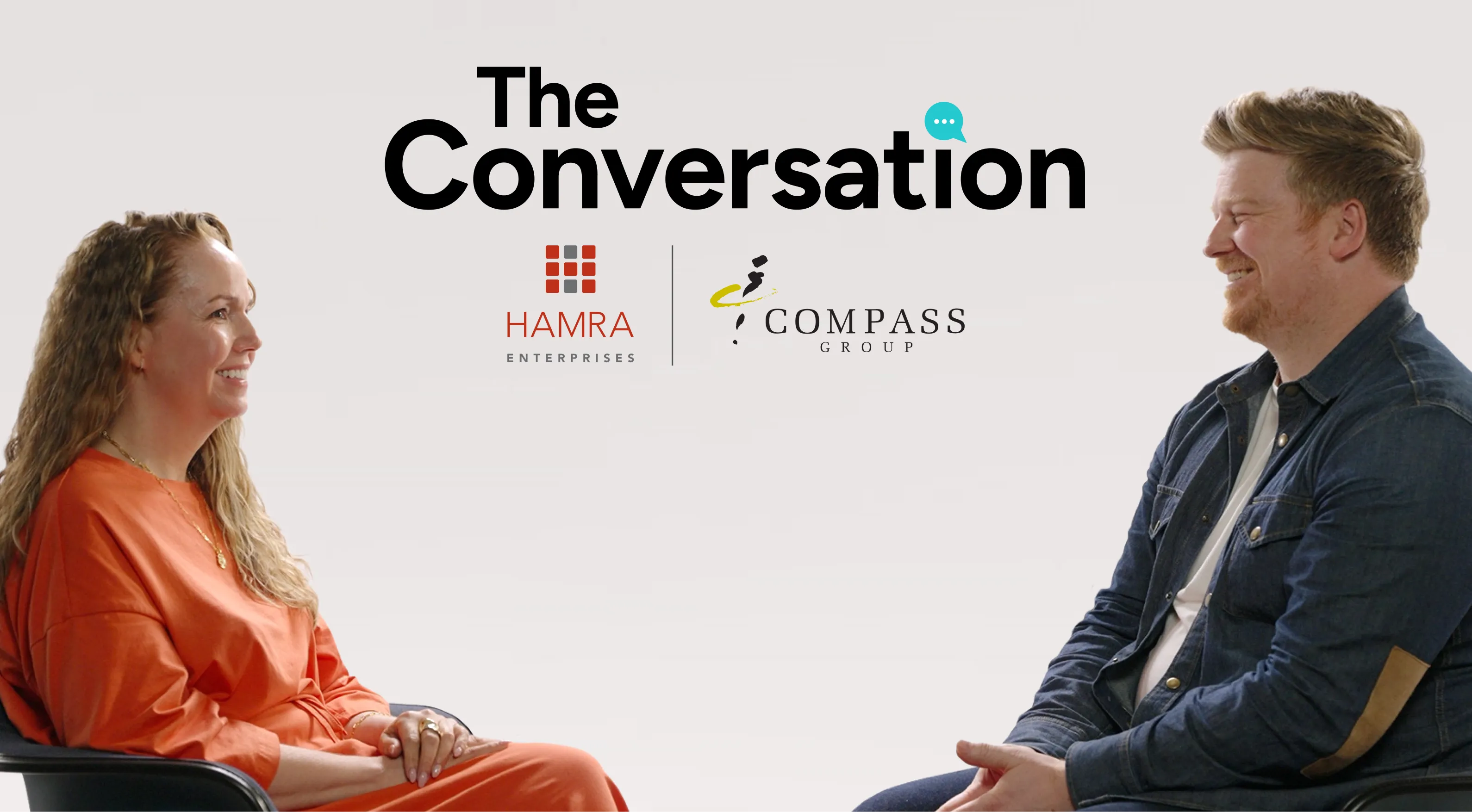
The Conversation with Hamra Enterprises and Compass Group.
Hamra Enterprises' Sonja Breuer and Compass Group's Shay Johnson went in on AI-led TA transformation, cutting time-to-hire from 13 to four days, saving $1.5M in recruiting spend, and why agentic AI makes hiring more human.


This blog is part of a larger collection of client story content for these companies.
Meet the speakers.

Sonja leads HR at Hamra Enterprises, a family-owned restaurant group operating Wendy's, Panera, and Noodles & Company across 11 states. A Paradox customer since 2021, she champions conversational AI to free up time for more human connections at work.
Sonja leads HR at Hamra Enterprises, a family-owned restaurant group operating Wendy's, Panera, and Noodles & Company across 11 states. A Paradox customer since 2021, she champions conversational AI to free up time for more human connections at work.

Shay leads talent acquisition technology at Compass Group, one of the world's largest foodservice companies, overseeing a large-scale AI-led transformation that processes 7 million annual applications and 150,000+ hires across 10,000-plus hiring managers.
Watch the on-demand webinar:

[0:00] Shay Johnson: Do you cook when you're stressed, or does the kitchen become your enemy?
[0:05] Sonja Breuer: I don't cook, I look for the sweets.
[0:08] Shay Johnson: Yeah, if I'm stressed out, I'm going nowhere near it, and I'm definitely staying out of my wife's way. That's a good thing, yeah.
[0:17] Sonja Breuer: So I'm sitting here with Shay from the Compass Group.
[0:20] Shay Johnson: And I'm here with Sonja from Hamra.
[0:22] Sonja Breuer: All right, so Shay, tell me what you're doing at Compass. What are you implementing? What are you up to? It's a big time right now.
[0:29] Shay Johnson: So yeah, it feels like a million projects all at once, but definitely a large-scale AI-led transformation. Good news is, a lot of that work was already in motion over the past few years. Some of that's building on strategy that we already had with legacy partners in place. Some of it is brand new to us. But I think the two biggest things right now that we're implementing — one is just a complete overhaul of our recruiting and onboarding. We do use Paradox, so we're currently implementing conversational ATS, making that the foundational recruiting and onboarding platform for all things hiring across the organization. For us, we do about 150 to 170,000 hires a year, 7 million applications, 10,000-plus hiring managers. So as you can imagine, that's a huge change management challenge — a year-long, plus about 18-month project all in. So for us, that's a big, big thing right now. And then at the same time, we're also just thinking through our employee experience layer. Once people actually come into the organization, what does onboarding look like, what does self-service look like? How do they get access to the information and the tools and the resources that they need? And how is AI serving that? So we've got to get our data in place, our intelligence layers in place, and really cultivate the best possible experience for both candidates and our associates.
[1:48] Sonja Breuer: All right, what about you? So Hamra is not as big as Compass, obviously. But we've been with Paradox since 2021, and we're one of the first ones to roll out conversational AI, which was scary and fun all at the same time — loading up your handbook to make sure that it actually spoke Hamra to our guests. And so right now, we're really looking at: what do we need to reach all of our current employees? We just signed to start employee communications, which is great because in our industry, our managers have emails, but our crew members don't. That 16-year-old that only works on Fridays — I want to make sure we can get a hold of them and teach them and show them all the great things that we have to offer. So now I can send out one text message and it will reach all of our employees and actually communicate with them. I know no one's getting missed, because I make these great beautiful posters and no one looks at them — they become wallpaper. But that 16, 17, 30-year-old person will look at their phone before they'll look at a poster on the wall. We're leaning into technology. I'm Gen X, and people thought I wasn't going to lean into it, and I'm leaning into it more than others. We're in 11 different states, we're family-owned, I want to still feel family-owned, and I can't be there to personally talk to everyone — so this is my vessel for how I'll be able to communicate with everyone.
[3:37] Sonja Breuer: So today, AI runs everything. What are you doing today that's different to really get that scoreboard?
[3:44] Shay Johnson: Yeah, I feel like the first step in making it so that AI can run everything is all of the enablement that has to happen before, right? So we're taking a really hard look at all of our existing processes, our models, our data, our partnerships, and just trying to get that to a better place. That's a lot of heavy lifting on the teams that own all that information — getting them to the point where they understand what are we doing today, and how could it be better? And that definitely just helps inform what are the AI use cases. Like what are we actually going to use AI for that is going to make our lives easier? But now the capabilities are moving so fast. The technology, especially in HR — it's kind of like we're in a time where it's not this five-year lag on consumer-grade technology coming out and then five to 10 years later you get the HR version of it. Now it's almost like a daily or weekly capability scale. So a lot of what we're doing right now is implementing, piloting, gathering our use cases, doing a lot of testing and development in-house with agents and custom GPTs. We've got our enterprise AI strategy, but every step we take is helping inform what we're really now being able to build at scale. I think we had a lot of resistance to this — a lot of people saying, is this really going to be worth it, or are people going to want to use this? And now there's tons of excitement because people are actually able to get in, get their hands on things, and build solutions in real time. So I think we're finally transitioning from that stage of hackathons and build-your-own solutions into: these are the things that really actually work, and it's refining itself into recruiting and employee experience. I think for Compass Group, especially on the TA side, we've got some really exciting exploration happening right now around AI interviewing, scoring, recommendations, skills assessment, coaching. Those all used to be completely separate products, tracks, implementations. And now with agentic capabilities, we're looking at solutions and saying — wow, we really thought this might just be an AI interview use case. We've pre-screened a candidate and now we want to take the conversation a bit deeper to actually understand: do they have the right set of experience or skills, does this translate into this work environment — and do that at scale for millions of applicants when you only have a finite number of recruiters and managers. We started with that use case and said, let's really flesh this out. And along the way, what we realized is, once you start to do that, you unlock a whole new world of capabilities. You can bake into that conversation questions and interactions that help inform how you want to drive skills throughout your process, how this might lead into development, how you could end the conversation and go back to the candidate and say, hey, now that we've had this conversation, I'm realizing you might actually be a really good fit for these other roles we have coming open — not the one you originally interviewed for. So you can actually start to build transparency and trust and provide a better candidate experience. You can start building a data set that's going to travel down line into the talent management or workforce management process. So that's just to scratch the surface — it's not that we're deploying it all in real time, but we're building up those use cases and that strategy so that as we implement and deploy things, we can touch as many of those capabilities as possible instead of tackling them just one by one.
[7:31] Shay Johnson: So what about you all? Are you feeling the same way — where once you introduce one piece of AI experience for candidates, you're unlocking new things, especially for frontline workers? Where do you see yourself going next?
[7:43] Sonja Breuer: Yeah, I never thought that human resources would be so tapped into AI, but it actually does so much for us. I've said this quite a few times — because we lean into the AI, I can be more human with my humans, because it gives me more time. It takes all of that work that we had to do on the front line — going through 100 applications to find that one person we wanted to hire — the system does that for us. So what we've seen is that we started in 2021 with just the interview scheduler. Very basic, and that was fantastic — that was life-changing for our managers, because managers in restaurants don't like to come off the line and make phone calls to applicants. We went from 13 days from the date they applied to the date they were hired. In our world, we lose them in those 13 days — they go down the street and work for someone else. Since we started with Paradox, we've actually cut that down to four days. So we've mastered that. Then we started to look at, okay, conversational AI — how can we have a better experience with this applicant and how can we get to the applicant that we know will actually work within Hamra? We're very much culture-based. Yes, we're Wendy's, we're Panera, we're Noodles & Company. But at the heart of it is really who we are, and we're a family-owned company, and we want that to come across when you walk into our restaurants. So we're able to lean into AI to actually make sure that they're human — which is really odd to say it that way. But it has cut down the time for our managers so they don't have to shuffle through hundreds of applications to find that one person. The system is doing that for them. But after they get through all of that, our managers can sit down in that interview and have confidence that now I just need to make sure this is that human connection. So it's very humanizing to have AI, which is a strange thing for us. Plus we have all the data points. I can pull when is our peak season, when applicants are coming in, when are they not coming in, when am I hiring the most. I get all of those data points. So I know exactly when I need to push sponsored ads and when I don't. And so it's simplified our world tremendously. Now, every time Paradox comes out with something, they always approach us first, because I'm like, yes please — give it to us, we want it.
[10:27] Shay Johnson: So you talked about going from 13 days time to hire to four. And obviously that gives people more time to be human in the process, right? Automation gets you more time. Are you seeing other metrics be impacted? Like when you look down to the store level at the top line or any other business impacts — are there things that jump out to you where you're saying, we didn't even expect this to be the impact, but here it is?
[10:48] Sonja Breuer: Yeah, one of those is retention. Our hires are better fit for our business. We went from 144% turnover — which I know people gasp at, but that's restaurant for you. QSR is typically about 200% turnover. Some of our locations are down to 80% turnover, which is still high, but in the restaurant industry, it's actually extremely low. And what we've also seen is that the managers are happier because they're not bouncing all over. Taking that interview side off their plates has given them more time to develop their own people. We've actually seen 70% of our people who get into management have come from those lower levels. That's because the manager is actually on the line, training, coaching, developing, finding those perfect candidates to be our next managers. And we know that if we develop our managers 70% from within, they're going to stay. Because guess what — they're already there. They already know us, they love working for Hamra. So our retention is definitely higher, turnover's obviously lower, but then that internal promote is the one I didn't expect.
[12:09] Shay Johnson: Yeah, it's amazing. It's amazing how when you're well-staffed and have an efficient recruiting process, everything else becomes easier.
[12:15] Sonja Breuer: Absolutely.
[12:16] Sonja Breuer: So at Compass, you've been using Paradox. What has been the result? What have you seen and where have you gone with it?
[12:23] Shay Johnson: Well, there's so many things we could talk about because there's been so many different deployments in different stages, and obviously the market has changed so much. But I think one of the most exciting things over the past couple of years has been how we are able to optimize our advertising strategy. So whenever you've got automation working in your favor and you're able to do things like candidate volume optimization — what I mean by that is saying, as soon as I have X number of applicants per opening, go ahead and turn my job off. I don't need it to be feeding to job boards. I don't need to be sponsoring my job. Maybe I can start to look internally to balance things out. I think this has opened up not only a whole new world in terms of how efficient you make the actual recruiting process and the experience, but at that top of funnel — when you no longer need 100 applicants to make a couple of hires and now you only need 10 or 12 because you're getting them through the process so quickly — that's had a huge impact on how we look at advertising and job sponsorship. We've worked with a couple of different partners beyond Paradox to really hone this in, but we've seen almost a $1.5 million reduction just in the past year or two in what we're spending going out there to actually buy and source applicants to send through our process. We're doing a much better job of getting them through quickly and using tools like Paradox to actually re-engage those candidates — make sure that if they didn't make it through the process in the first try, we're getting them back and inviting them to a hiring event, promoting other jobs that have just opened. So once you've got the candidate, really optimize and take good advantage of that candidate pool and don't always rely on advertising.
[13:58] Shay Johnson: So you were talking about how everybody's buying into this, right? I think you're reaping the benefits. So how have you all been able to go from the department of no — the classic "we can't do that" — to yes, not just yes, but yes and?
[14:14] Sonja Breuer: I actually work with IT more these days, and we talk the same language — which is something I never thought I would say. Because of them and because of what I now know, they have become the department of yes, because they see it as a partnership. So then I can get operations information and I can point to specific locations, specific districts, specific people if need be, that are using the system or not using the system correctly. It's blaring — it really stands out when you have all this data. You can say, you know, Joe Schmo right here is always understaffed, and let me tell you exactly why. And so we're starting to lean into so much more than just, you need to hire — let me show you how to hire and let me show you the best ways to hire. And the HR team is actually more available to our teams as well because we're not bogged down. So it's given us more freedom to actually help them in the areas that they need, and it's honed in on exactly where we need to go and what we need to concentrate on.
[15:27] Sonja Breuer: So at Compass, you're so large. Do you know where you wanna go with this technology? Do you know what you wanna build with it?
[15:35] Shay Johnson: Yeah, when I think of, especially the agentic capabilities and what's out there now — how quickly they change — it's just changed my way of thinking about technology in general. I used to think in terms of: here's a problem, let's build a solution using technology, and that's typically going to look like software. It's going to look like a tool that we need to build, we need to connect to things, and we're going to train people how to use it to make a process more efficient. And now we really get to cut that out and say we're building really fantastic workflows, we're getting great data, so we're getting a great intelligence layer. Now let's think about how you could deploy agents in the way that you always wish you could have — let's say your best recruiter work all the time. What if that recruiter could do their best work all the time with every single applicant instead of having to be hyper-selective?
[16:28] Sonja Breuer: Yeah, 24 hours a day.
[16:29] Shay Johnson: Yeah, 24 hours a day. So when I think about that use case, let me just go through an example workflow. We can actually build an agent that says, okay great, an applicant has applied and I have the context of the job description, the account, the hiring manager, all of that location-specific information, maybe some of the hiring manager's preferences that they provided up front — so it's like I did an intake call. You can have an agent that does the intake call with the hiring manager so the recruiter doesn't have to, because maybe they're focused on closing a candidate for another role, right? So now we're taking an agent and having it do an intake call, an interview, updating the system, re-enriching the data that's going to flow back down line and drive other automated processes. That's just the early stages of when you think of the very beginning of a recruiting process — how much an agent could come in and say, I can do this with 1,000 applicants at one time, the way that recruiters never could. We could never ask recruiters to do that, and we definitely can't build recruiting teams of thousands and thousands of people just to do those micro interactions. That's just one example, and if you want to dovetail down it, you can just see where it opens up — thinking about how you can really use agents to build the best processes at scale, that again enable your people to have the time to then have the real conversations with candidates: the closing conversations, the offer, the negotiation, the things that are going to be meaningful in getting someone into their role. And that's what I think is so exciting. You talked about how AI actually can make the process more human — and that's what I mean. Instead of the typical experience of a candidate applying, not hearing anything back for weeks, and then getting an automated message saying that the job closed, they're getting transparency. They're getting a conversation that's actually saying, I know what you're looking for, I understand your information, I want to help get you to the right place, and then I'm connecting you with a person as fast as possible instead of you never hearing back.
[18:21] Sonja Breuer: Right, we've actually had people think that SAM is real.
[18:25] Shay Johnson: Yeah, yeah, and I think they've become friends during the conversation, which always makes me laugh. And now you have to make SAM even more helpful, right?
[18:34] Sonja Breuer: Yeah, you need to make it so that SAM can help them through more of the process, because once they build a relationship — which does sound weird — but if candidates or associates build a relationship with an AI, then you have a great thing. They trust them, and they know to go to them for information. So how can we continue to build out that capability to serve them in more ways, instead of saying, oh, this is actually where you hit the wall with that AI, and they're no longer useful to you — you're no longer friends with SAM, right? Well, our SAM will extend, because we are leaning into employee communications, and we love SAM so much that he's going to service all of our employees going forward. So they can still be friends with SAM.
[19:12] Shay Johnson: What about you? I mean, you've talked about a really strong base layer and experience that you all are building. So what's next? Like if you look a year into the future, what's exciting you and what are you going to be building?
[19:22] Sonja Breuer: It's that communication, 100% communication. People have to be engaged. We all want to work for a company that we believe wants us there, that says, we're not just a number. And for me personally, I wish I could talk to every single person, but that's not physically possible. So we will be leaning into SAM to actually have those conversations with our employees — to make sure that they're getting their HR questions answered timely. If they want to know what the dress code is, if they want to know the vacation policy, those are great questions, and they're in our handbook. But handbooks — no one opens them. No one likes to open them. And so now they've got this little buddy called SAM that they can just reach out to and say, hey SAM, are we closed on Easter? And SAM has our handbook loaded, so SAM knows what our hours are and what our policies are. And it's just a great way for us to be able to reach all of our people, and that is so important to us. And the way that Paradox works is that then I can jump in if they keep asking a question or don't understand something. I have the ability to see that, and then I can hone in and say, hey Johnny, this is Sonja Breuer, real person here, let me explain this to you. And so it really does give our employees the ability to reach out. Because who wants to reach out to HR, right? When I was 16, 17 years old, do you think I would have called the corporate offices to talk to the HR person? Probably not. But am I going to talk to this little guy named SAM? That's really cute. On my app that got me this job, absolutely. And so that's the way that we want our employees to engage with the system. It's going to help with retention, it's going to help with job satisfaction. And we have a lot of really cool employee benefits at Hamra. We pay for an hour each shift to actually have them study. We pay for good grades. We have an employee emergency fund where we take people off the streets and give them homes. Does everyone at Hamra know about all of those great things? And if they don't, that's where I failed. And that's where I can lean into SAM — SAM can actually tell our employees about it and have them utilize those things to help their world.
[21:51] Shay Johnson: That's awesome.
[21:52] Sonja Breuer: So if you could tell someone what the future is of TA, what would that look like?
[21:59] Shay Johnson: Yeah, man, there's so much there. You talked earlier about how you never thought you would be speaking the same language as IT. And I think that's probably a common experience that more and more HR practitioners are having. And I think that is the future — there will be less functional department segmentation, where you have HR and you have IT, your lane is policy and your lane is tech and infrastructure. I think there's going to be a lot of flattening of the organizational layers, and we're going to gain more expertise in everyone's area. The lines are starting to get really, really blurred. It's kind of my call to everyone to be like, hey, take on a technologist mindset. It doesn't mean you're going to be a technology expert or someone that's hyper-technical in your role. But I think the more that people embrace these things and get out there and try a lot of these tools that are available to them in their personal lives, the more it will help it seem native and understandable to you, and it will help you relate to your colleagues that are going to be building these solutions. The faster that you build those relationships with your technical colleagues and you start to speak the same language, you start to build solutions together and own them together and take that credit together — the faster you get to deploy these things and actually let them make an impact in your company and in the real world, instead of them forever living in concept and just hitting the wall at design or implementation.
[23:30] Sonja Breuer: I've seen that, and this is where the IT thing — I'm speaking IT these days, and it's very unusual.
[23:37] Shay Johnson: Awesome, well thank you so much. This has been so fun.
[23:40] Sonja Breuer: Yeah, Shay, it was great to meet you. And you know, you're from the Springfield, Missouri area as well — which is a unique thing, small world.
[23:48] Shay Johnson: I know, it was great to talk to you. Thanks.
Meet the speakers.
Sonja leads HR at Hamra Enterprises, a family-owned restaurant group operating Wendy's, Panera, and Noodles & Company across 11 states. A Paradox customer since 2021, she champions conversational AI to free up time for more human connections at work.
Sonja leads HR at Hamra Enterprises, a family-owned restaurant group operating Wendy's, Panera, and Noodles & Company across 11 states. A Paradox customer since 2021, she champions conversational AI to free up time for more human connections at work.
Shay leads talent acquisition technology at Compass Group, one of the world's largest foodservice companies, overseeing a large-scale AI-led transformation that processes 7 million annual applications and 150,000+ hires across 10,000-plus hiring managers.