Hiring from the ground up.
Staffing a store? Hard. Staffing an arena? Harder. But staffing the equivalent of a small city? Easy, if you're Fontainebleau.
Hiring from the ground up.
Staffing a store? Hard. Staffing an arena? Harder. But staffing the equivalent of a small city? Easy, if you're Fontainebleau.


This blog is part of a larger collection of client story content for these companies.
Listen How:
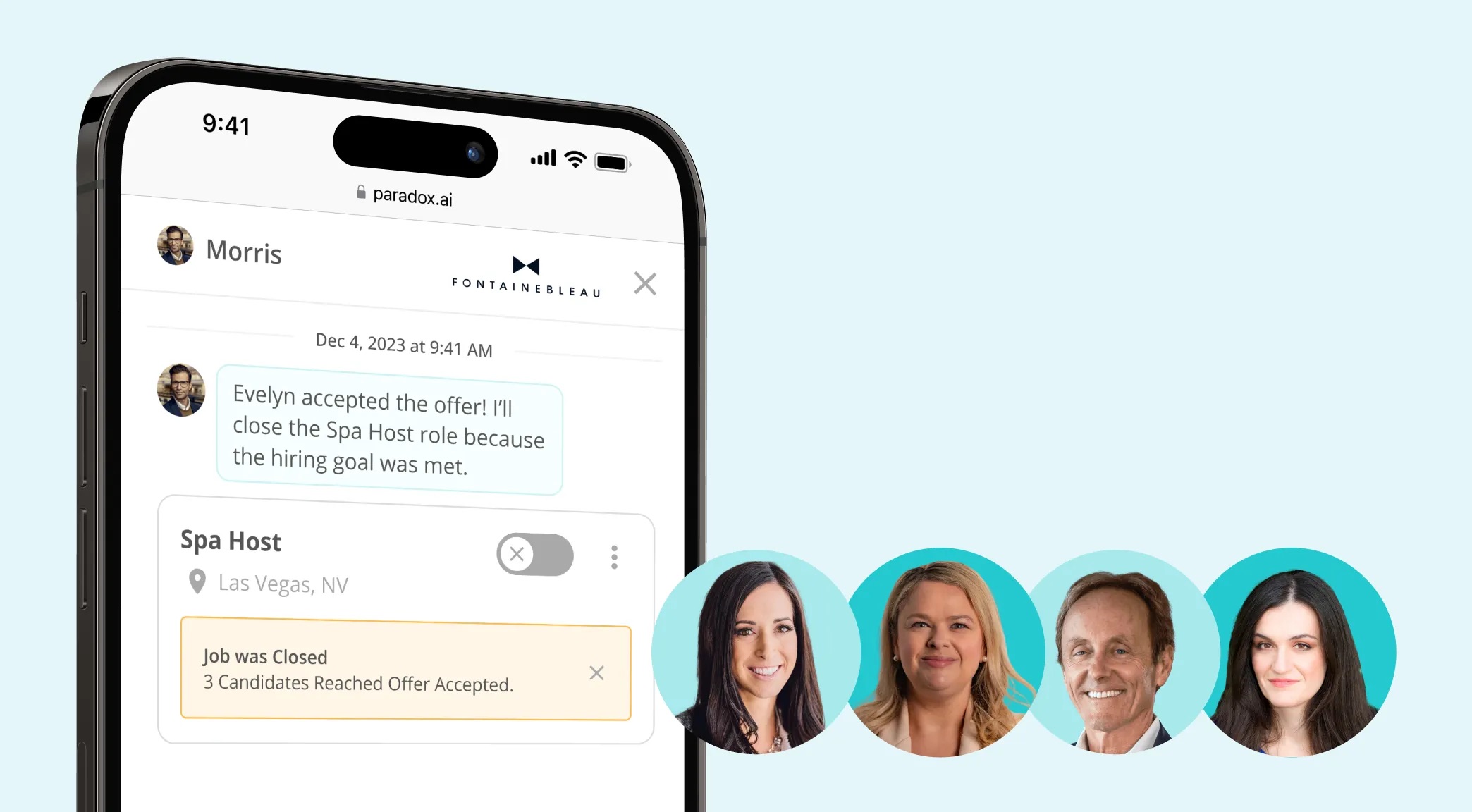
Fontainebleau Las Vegas needed to hire 6,500 people in just three months before opening in December 2023. To move fast, they partnered with Paradox and Shaker Recruitment Marketing to build a hiring engine powered by their conversational AI assistant, Morris.
Results:
Fontainebleau expected 80K applicants — they got 300K.
With the help of Morris, their AI assistant, every candidate had an instant response (in 30+ languages), even outside of work-hours — and they didn’t miss a single one.
- 6,500 hires in 3 months.
- 93% candidate satisfaction.
Meet the speakers.

Leading the talent acquisition process for Fontainebleau Las Vegas.
Leading the talent acquisition process for Fontainebleau Las Vegas.
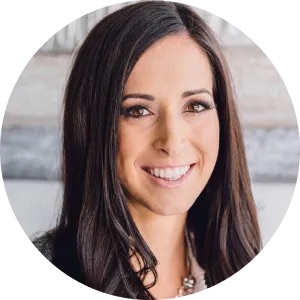
Strategic Human Resources professional linking the talent strategy to the company’s overall objectives
Watch the on-demand webinar:

Josh Bersin: Great, okay, you guys, thank you for inviting me. The… This is a such… I have been to the Fountain Blue. Fontainebleau. It is an incredible hotel, in Las Vegas. We had a wonderful experience there. We're gonna go back again this year. But, as you know, it's hard to get people to staff up an operation like this quickly. And we, so I think you're going to hear a really spectacular story, but let me give you sort of a higher-level picture. One of the areas of research we're focused on for the next couple years is what we call the frontline workforce, which hospitality is a huge part of it, and, you know, entertainment as well. It turns out, if you look at the workforce around the world, despite all of the AI fears and, you know, tribulations that everybody has and worries. the frontline workforce is in extremely high demand, and there is a shortage in almost every single industry. And entertainment and gaming is a particularly interesting one, because it's growing like crazy. So, in many of the traditional HR tools, recruiting tools. That were designed for, you know, maybe you'd call it white-collar hiring. Just don't really scale fast enough to deal with the issues we have in high volume. So, this is a really interesting story about, how to run a recruiting function in a high-volume, rapid hiring experience, about technology, about AI. And in some ways, this, you know, solution that Paradox brings to market, now part of Workday. is, an economic benefit for everybody in every part of the world, because most companies have frontline workers, even if it's not their primary workforce. So, we appreciate you guys telling the story and being willing to share one more time. You guys have been to our conference, I know it was wonderful having you there. And, and we're excited to be working with Paradox.
Ally Bonner: Awesome, thank you, Josh. Appreciate the introduction. So excited, to kick us off here today. I'm going to hop into the presentation, so hello everybody, Ali Bonner, Director of Customer Success here at Paradox, now a Workday company, as Josh mentioned. Very excited to walk through the story of Fontainebleau Las Vegas. They had to build up their employee base to about 6,500 in a 90-day window to get it ready for opening. So it's a really awesome story to tell, and Paradox was there, with… with Fontainebleau Las Vegas throughout the way, so very excited. I'm going to kick off by introducing Sarah Piper, who's the Executive Director of Talent Acquisition at Fontainebleau Las Vegas, Kim Vercioso, who is Chief People Officer at Fontainebleau Las Vegas. And lastly, Stella Ioanito, who is the Senior Research Director at Josh Burson. So, Kim, my first question is going to be to you. You know, Miami built such a strong brand of Fontainebleau, and that property was there for quite some time, and really well known in the market. So, how did Fontainebleau Las Vegas compete in a new competitive market?
Kim Virtuoso: Thanks, Allie, and we are so happy to be here. I know Josh mentioned we have had the opportunity to present on this topic a few times last year, and it's honestly one of our favorite stories, so we're so happy to be here and dive into this. Starting at kind of the high level, the strategy question that you asked, Ali, we have Fountain Blue Miami, if any of you have heard of that resort that has a long-standing legacy, established brand for nearly 70 years in Miami, Florida. They are essentially our sister property. But the challenge arose, they have a very specific target demographic in Miami. It's a very different market, and it's very different from how Fountain Blue Las Vegas would be positioned. From a people, culture, work environment standpoint, but also a lot of nuances to what we would be offering to our guests who also had a different, demographic and a different way we would be targeting them. So… It wasn't a copy and paste for us. Some companies, you know, that have larger footprints, or maybe a corporate infrastructure are able to pull over systems, pull over policies and procedures, and also bring a task force to have booths on the ground to support the stand-up of that new property. We didn't have that luxury, but a really exciting opportunity in front of us to have a fresh slate and build all of that from the ground up. For us, it was very important because we were entering the market with established competitors. For those of you that are familiar with the Las Vegas Strip, we compete with over 20 competitors who are essentially offering hotel, food and beverage, entertainment. So we had to stand out and make sure that we differentiated ourselves and created a competitive stance within the market. One of the challenges, one of the biggest challenges that we were up against, actually, was after years and years of evolution, this building stood dormant for over 14 years. And if you lived in Las Vegas. Everybody saw it, driving up and down the strip, going to and from work. And so. There was little confidence, both in the employer side of the market, but also the consumer side of the market, that we would, in fact, open our doors this time. The cool journey about this is that Fountain Blue Development, they were our original owners of the building, sold it, and came back and acquired it in 2021, so a really cool redemption story that we were able to open our doors with the original owners. But with that task ahead of us, we knew our primary goal was to build confidence in the job market, and we knew that we had to create a strategy that would entice people to leave very stable and secure companies. to take a risk on Fountain Blue, with the promise that we would, in fact, open our doors. And for us, it wasn't just about filling roles. We really wanted to build a community of members. Members are what we call our employees. And have a people-first culture where the folks that joined Fountain Blue embodied our values and also have a passion for delivering elevated guest experiences. And that was our primary messaging. One of the other things just to touch on, and we'll dive into all of the tactics throughout this webinar, we really flipped the traditional model of going to market and recruiting on its head. So… We were up against very, very, very tight timelines, and for budgetary reasons, we couldn't start hiring months out at a time. We had a very compressed timeline and window, as Allie mentioned, 90 days, to hire 6,500 employees. And we were ready to go to market in August of 2023. And that meant starting to build our recruitment marketing campaigns, launch our careers website, start posting positions. We did some really fun things with Shaker Recruitment Marketing, where we had radio ads, billboards, hosted really fun hiring events. But the interesting thing was, our marketing team was not ready to launch the Fountain Blue Las Vegas website. to our consumers. We hadn't… we didn't have any media, we didn't have any collateral, we hadn't done photo shoots yet, the website hadn't been built, the customer journey hadn't been designed, and hotel rooms were not on sale yet. So, we were taking a risk by putting ourselves out there and launching the careers website, because that would be the first time anybody had started to now hear that this is real. Fountain Blue is happening, and if we had any any missteps, any obstacles, any flops in the recruitment messaging, or created bad PR through recruitment, it would have a really negative downside for the rest of the resort. So we were very… cognizant of that, and our partnership with Paradox really helped us make sure that we went to market in a really high-powered way. So, we're excited to talk about that in a lot more detail.
Ally Bonner: Thanks, Kim. I still think one of the most interesting parts of the whole story is that Fontainebleau Las Vegas really had to build from the ground up, as if brand new, regardless of that strong brand in Miami, and you all just did an amazing job of that. So something you touched on, is how we had… you all had to build staff across such diverse roles. So maybe, Sarah, do you want to talk a little bit about how You had to hire from wok chefs to blackjack dealers, and how you really aligned your leadership team to move at the Vegas speed while this market was still rebounding from the pandemic?
Kim Virtuoso: Yes, I would love to, and I just want to say thank you so much for having me as well. This story is really unreal, and I'm sitting here kind of pinching myself. Did we actually do this? And yeah, we did, and reminiscing back on this time, it's like, wow, I mean, I can't even believe, you know, what we accomplished. So to start, we did a lot of strategic planning, in preparation for, mass hiring. Including backing into dates, backing into hiring numbers. If you think about the hiring funnel, we knew we had a certain number of openings that we had to fill. We assumed that we, in order to fill them with very skilled, high-quality candidates, we would need to receive around 80,000 applications. And so we sat down, we identified every unique position across the entire company, and you're exactly right. You're talking entertainment, food and beverage, hotel operations. You're also talking all your back health professional roles, like marketing, and finance. And we met with all of the leaders to determine what… what is it that you're looking for in these roles? And from there, we developed unique knockout questions for every single individual role. And then we also developed a Tradeify assessment, which is kind of like a personality assessment, and I'm sure Paradox, loves to kind of speak about all of the amazing things that Tradeify can do. But essentially, we developed what we would call, the perfect kind of fit for that role, and we used Tradify to ensure that we were hitting that cultural fit. And as long as the candidates passed both the knockout questions and the Tradeify assessment, they would then go on to the next step. And because we, in the spirit of technology, leveraged Paradox, to help us through their AI solution, we were able to have more meaningful, thoughtful conversations with our candidate pool because our recruiters were freed up to do that. And then it became, you know, what exactly… we knew that this… that the city was filled with extremely skilled workers. But we wanted to ensure that we were finding candidates that had that human element, identifying passion and empathy and reasoning and agility, and we wanted to do that through conversation.
Ally Bonner: Awesome, thank you, Sarah.
Stella Ioannidou: Well, talking about conversations, I was… I, for one, was very surprised. When we sat down, and, you know, we… you told me the story, and I wrote a case study on this, and Of course, the ask was gigantic, right? So many people, so little time, but what I was personally surprised as a researcher was the detail and the deliberate design that went into designing and including artificial intelligence into the whole, let's say, talent acquisition process, and what really struck me is when you both shared with me, and the question is for Sarah, you went through over, I think, 20 design iterations for your AI assistant, whose name is Morris. And Morris is not just some sort of standard chatbot, it's an experienced architect it has a full personality, with hobbies, with sports team, a background story. Why was it so important for you to give more… such a rich flair and such a rich story background behind, just, you know…
Kim Virtuoso: We…
Stella Ioannidou: And our chatbot.
Kim Virtuoso: We love talking about Morris, because he is not a standard chatbot whatsoever. We put so much thought into what he looked like, how he sounded, what his brand was, because it needed to resonate with our candidates. We have such a very unique demographic here in Las Vegas. And we knew we couldn't just… come out of the gate with something that wasn't resonating with them, that didn't feel transparent, that felt kind of clunky and not smooth. And so we put a lot of time and effort, into developing him, and I kind of… I'll turn it over to Kim, because Kim can really speak on all of the ways in which we enhanced him as well.
Kim Virtuoso: Yeah, so Morris's name was derived from Morris Lapidus, our designer and architect of the original Fountain Blue Miami, and a lot of those elements are woven into the design and architecture here in Fountain Blue Las Vegas. So, that was a way for us to give a nod back to our brand legacy and weave that into a really fun, modern, innovative way that is candidate-facing. Everything in terms of the voice, the language, the way he articulates the words, created an elevated, yet relatable approach that was important for us as well. And we wanted somebody who also looked professional. Elevated, but also not too stuffy, not too stiff, and so every component of the glasses, the sweater, everything had to be designed in a way that we knew would connect. Part of the reason why we did a lot of the deep dive in terms of where'd he go to school, what are his hobbies, what's his favorite food, favorite drink? Part of that was to make sure it was relatable to the majority of our target demographic. Again, we didn't want anyone to be stuffy, or too elevated, or feel like Fountain Blue wasn't within reach for them, while still keeping a lot of those brand elements within Morris. So we wanted to make that connection for the candidates. But also, internally. It created a lot of buzz and buy-in with our managers and with our recruiters. who nonstop wanted to talk about Morris, and all the fun facts about him. So that immediately bridged the gap and created a really fun connection with our candidates, and dropped the guard in the hiring process as well, so the hiring process didn't feel so technical and like they were just interacting with the system.
Ally Bonner: Well, at this point, Morris has already answered well over 1 million candidate questions, and that's going up by the second as we're here chatting, and candidates are out there chatting with Morris. So, how did you all ensure that he really stayed on brand while handling this mass amount of communication and interactions with candidates that was happening 24-7?
Kim Virtuoso: So, we sat down and we identified about 400 questions that we expected a candidate may ask. During the recruitment process, whether it be, what does the benefits plan look like? What does PTO look like? How do I get to the talent center? And then, of course, questions about the application process. We identified those very early on. And, essentially, sorry, I just lost my train of thought here. We really wanted, Morris' voice to be within our brand, and so we identified the answers to those 400 questions as we wanted Morris to explain them. Then, from there, we have now partnered with Paradox in what we're calling contextual AI, what Paradox calls contextual AI, which helps us adapt to the types of questions and the ways in which he's being asked these questions, so he can be asked the same type of question 6 different ways. And be able to respond very intelligently and uniquely to those 6 different questions with the same type of branding and voice that we want him to have, but also staying true to the answer. So we utilize Morris to adapt and learn how he's being asked these questions, and improve the conversation process and the dialogue as we proceed and continue.
Ally Bonner: Something else, Sarah, that I would say Fontainebleau Las Vegas did an incredible job of that we don't see across the board with all customers is… all… all the Morrises out there have the option to have persona-based questions, like the one that we're seeing on the screen, ask me what my favorite drink is, and Fontainebleau really took their time and was super mindful about how those questions were answered, which I loved that, and we were able to really see and showcase Morris' persona throughout the entire conversation with the candidates, so you all just did an amazing job taking time doing that.
Kim Virtuoso: Thank you, that was very important to us.
Ally Bonner: Yeah. Awesome. Well, we know that Morris not just is interacting with candidates, but is also screening across over 30 unique, different roles. So how did Fontaine Blue Las Vegas really determine which technical questions? For example. Nevada codes for Engineers, which one of those should be automated versus handled by the recruiter?
Kim Virtuoso: So those technical questions are very important, especially as it relates to regulation or compliance, and we would… we always hone in on those questions, just to make sure that the candidates we are considering do have the required skills for the job. But to be honest with you, we went into this Looking for… culture fits. We knew the talent is here. We knew that there are plenty of candidates in this city that have the required licenses, credentials, and experience to do the job. It really ultimately boiled down to culture fit. And personality. We tried to turn this minimum years of experience kind of on its head. Is that really that important to us, or are we more focused on people that are able to kind of, portray our brand and the guest service standards that we expect. And so it became less about technical ability and more about experience in terms of, helping our guests, not necessarily experience in the job itself.
Ally Bonner: And I think anyone that's been to the Fontainebleau Las Vegas property can see that by their interactions, with all these diverse roles. Fun fact, Fontainebleau Las Vegas has a sauna dancer, which is a role that I don't think we have any other customer that hires for, so it's just… Awesome to see all the uniqueness that's pulled into this.
Kim Virtuoso: Absolutely, if you decide that you want to go to a sauna and enjoy some entertainment while you're… while you're there, we offer that.
Stella Ioannidou: One of the things that struck me when we discussed the stories about the KPI aspect, how the things you've achieved, some of the amazing metrics, I wanna, focus on one of them, because one of the things that keeps CHROs and TAVPs up at night is the drop-off during application. You go ahead and, you know, you purchase amazing technology, you put together a great process and an experience, and yet people still don't make it through the finish line. Yet, you managed to develop a 3-minute process. How on earth did you simplify job requirements enough to achieve a 98% assessment completion rate? So people actually finished it at a 98% success rate.
Kim Virtuoso: Yeah, go ahead. Okay, good, good question. We'll tag-team this one. We… one of the great things is, a lot of our leaders came in from other competitors and had some really great intel into pain points. Across our competitive set. that was causing fallout. So part of it was, what are all of the steps that have been created in an application through the candidate journey, to the interview, to a job offer, and are they necessary? So we started there and peeled back the onion to truly rip out the things that were not value-add. And we had the opportunity, again, to do this from a fresh slate, which was really cool to say. we hear the candidates, we know these are pain points. Is this truly a requirement or a value add? And if it's not, let's pull it out. And the great thing with Paradox was we were able to create our own flow and our own journey And with Paradox, you're having a conversation with Morris, and the entire time, Morris, through text, on a mobile device, which is where most candidates are, over 70% of candidates are on a mobile device, not using a desktop PC. So Paradox really taps into that. It's mobile-friendly. And you're texting with Morris, and Morris is capturing your information through a conversation and parsing it into an application on the back end. So, in that experience, and having a conversation with Morris that just feels really casual, easygoing, and fun, it's capturing an application, and it truly happens within approximately 3 minutes, whereas other system providers that many of us have probably experienced. It's a long application form, usually not mobile-friendly, and you upload a resume, and it doesn't parse out all the information, and now you're having to fill it all out again, and the candidate is frustrated. or they're not being communicated with every step of the way. Morris communicates with our candidates every step of the way, and that was really important for us, was the communication and the transparency for them to know exactly where they are at every step of the way, rather than waiting to apply and then hanging tight and holding on until an interview. And not knowing what's happening behind the scenes. And that reduced fallout after the application. as well, which was very important to us. And the nice thing is, majority of our communications happen after hours. 41% of our candidates are talking to Morris, getting their questions answered about what is your PTO and time off package? What are your benefits? What are the hours for this position? What are the requirements for this role? they're getting all those questions answered instead of it going into an email inbox or trying to call a recruiter, and we just don't run a 24-7 operation. So that also eliminated that risk of fallout to get their questions answered in real time. One of the other things that we were very cognizant of was sometimes managers, with all good intent, they want to know, you know, I have 50 questions I want to ask that candidate before I meet with them, and make sure they hit every element of what I expect of them. And that's just not reasonable for a candidate to go through that type of process, and so… Our leaders bought into that right away, and we tried to have them narrow it down to a few questions that were critical and key to then decide if I want to bring that candidate in the door, and that also reduced fallout. Less questions, and it gives you the critical information you need on the front end. then let's bring them in and actually have those interviews. So, that truly, that flow and the way Morris interacts with candidates and using AI, For us, it was a very calculated risk, because this was new to our industry, new to the market, but we knew that building trust with our candidates was paramount, the communication was paramount, and it truly ended up delivering a very smooth and seamless process for the candidates. Yeah, and I would just like to add, this is really cool, we monitored it constantly. And so, if we found that Morris was asking a question that resulted in a lengthy answer, or an answer that wasn't resonating with the hiring managers, or maybe the question was no longer relevant. We changed it in real time, and to make sure that the application for that specific individualized position wasn't taking too long. We constantly were adapting and monitoring and making that process even better over time.
Stella Ioannidou: And another part, another angle of how you demonstrated that this was a really thoughtful approach, you did mention, Kim, that it was like a mobile-first approach. But it's not only that it's available on SMS, on the web, it's also that you open it up to multiple languages. It was, available both in English and in Spanish, and Reaching out to multicultural and multilingual candidates who often struggle with traditional assessment formats is actually a very big deal, and, you know, you also increase your range of candidates and the inclusivity. How did that approach, allow you To, hit your targets and, let's say, help you achieve, these amazing results.
Kim Virtuoso: Yeah, so, actually, Morris is loaded with 29 different languages, which is great. And I would say that sometimes candidates will start an application process, and they don't know that the application can be adapted to a different language, or it's very complicated to figure out how to adapt it to a different language. You have to click a button that's kind of hidden in a top corner. The great thing about Morris is that you just start typing in your own native language, and he picks it up immediately and responds to you in that same language. You don't have to tell him that you speak a different language. He automatically recognizes it if it's within those 29 different ones. he recognizes it and responds immediately, and that really only improves the process even more. Those that speak other languages aren't confused, they aren't wondering and figuring out, how do I figure out how to answer this in English? Let me go grab some help. We really did make it so that it would adapt to the candidate.
Ally Bonner: Kim, you touched on 41% of candidates' engagement happening after hours, so… Paradox considers that anything outside of 8 to 5 in the candidate's time zone, which most of your candidates are in that Pacific Standard Time. So, without Morris, what do you think that your team would have done to have to manage the night owl nature of the Las Vegas Strip market?
Kim Virtuoso: Yeah, I mean, it really was a game changer for us to have Morris available, because in this high-volume recruiting 90-day period of time, either two things would have happened. We would have Risked burnout from our talent acquisition team trying to manage the volume of communications coming in, whether it's pop-ins, in person. emails, telephones, that administrative burden would take away from where we actually needed them to add value with those human-centered interactions with our candidates. So burnout would have been a huge risk. The other aspect of that, we probably wouldn't have reached the candidate pool that we truly generated in such a short period of time if we didn't have these 24-7 hour interactions, because Everybody's working different hours. across the Strip, and that really is not even just the Strip, but hospitality in general. We had other theater markets we were looking at in California, Arizona, Utah. They're on different time zones, they're working different shifts as well, and we needed to be able to give communication in real time to those candidates. The other thing that probably would have happened was we would have had to double or triple the size of our recruitment team to handle the volume that far exceeded the 80,000 candidates we thought we would get to 300,000 candidates, and the risk of that would have been poor PR in the market for us, and we… we could not risk that. So this truly… the… the trust that was built through this process and through the communications was key for us. we could not let technology be a deterrent in that, and Paradox honestly was able to do that for us in real time, and For us, the main focus, especially when you're introducing AI, introducing new technology to a company. We were so focused on making sure that The system took on the tasks of the applications, the initial screenings, the interview scheduling that happens, automatically through the system, and it truly freed up our recruiters to focus on those human interactions, build relationships. And sell our employer value proposition, because AI, Morris, as much as we love him, he can't have those dialogue and sell the value proposition that we want to portray to our candidates. That's where our recruiters come in, and we need them to focus on that.
Ally Bonner: Yeah, you already have one. Go ahead, go ahead, Stella.
Stella Ioannidou: No, no, go ahead, Allie.
Ally Bonner: I was just gonna say, Fontainebleau Las Vegas already has, one of the leanest teams I've ever seen, so there is no way I feel like even doubling or tripling would have been a long stretch to be able to keep up with that volume.
Stella Ioannidou: Yeah, absolutely. And that actually is a great segue to the next thing I want us to focus on, because we talked a lot about AI, about bringing in technology, but there was a very specific, distinctive human element in the entire process that got me super excited. You did culture auditions. Tell us what these culture additions were, what you were assessing, and how that actually, achieved better results compared to a one-on-one technical interview.
Kim Virtuoso: Yes, I'm so excited to talk about culture auditions, and I think this goes back to what I was, saying early on, that we were looking for more of a culture fit than a technical, fit, specifically. And so we created something called Culture Auditions, where we brought groups of people together, and these were candidates. It didn't matter which position they applied for, we kind of put them all together in a room. We had a facilitator who showed a video that outlined what What our core culture values are, and how we, expect Our members to, provide guest service, especially that elevated guest service. And we allowed them to watch the video, we asked them a series of questions, and in doing so, we watched how they engaged with each other, we watched if their arms were folded, and they were not interested in the conversation. If somebody was talking, another person was interrupting them. These were all indicators to us of how they would also treat our guests. So the culture audition process was very important to us to be able to assess the type of service that we were ultimately going to provide. One of the things to add to that that, not a lot of companies do often, we also wanted to create a two-way dialogue with the candidate. While we're engaging with them, and we're asking them questions, and we're seeing their engagement and personality and communication come out in these auditions. We also share with them a video that provides a peek behind the curtains of what is Fountain Blues culture. what can you expect if you work here? Why would you want to work here? What is the culture values? How do we bring that to life? What are our service standards? What are our benefits? And how are we going to take care of you and truly bring to life the member-first culture that we're communicating? And that gave the candidates the opportunity to also look at that and decide if it was a good fit for them. And we did have some say, this is not for me, and I think that the process helped, because it allowed them to make the decision on their own journey, too.
Stella Ioannidou: I love that, especially the focus on putting guests first, and how that blends with the AI-enabled tools, where you identify preferred fit candidates. How do you prioritize those candidates for the final hiring manager interviews? What are you… what are you looking at in these candidates?
Kim Virtuoso: We had a high-level scorecard that would blend together their application, their experience and technical fit, and passing those handful of pre-screening minimum qualifier questions in combination with the culture auditions. And so the culture audition we were looking at Your communication, your, your interactions, your engagement, and so we blended all of that into a scorecard, and it would essentially allow us to be able to deliver that information, debrief with the hiring managers. And review the resumes and applications in tandem, and then be able to decide who they wanted to move forward in the hiring process. One of the things in pre-opening that we really focused on was our managers are… basically in booths and hard hats on property in an unfinished resort. They did not need the extra burden of learning a new system, being trained on a new system, having to go through the entire candidate funnel and click buttons and make decisions every step of the way. And so. We presented to them a high level, here's the system, here's our strategy, and here's how we anticipate Bringing the funnel down to get in front of you the top 3 qualified candidates that meet your expectations and our company expectations. And they trusted us to do that, and we were able to get that time window that they had to invest Decreased, so that they could come in, focus on the top, most qualified candidates, interview, make selections, and most of the time do job offers on the spot, because it was in such a compressed period of time. Speed was important, but through that process, we were able to also make quality just as, if not more, important for our managers. Lovely.
Ally Bonner: I want to go a little bit back to the very beginning. You both have touched on it quite a bit in today's session, how you expected to receive about 80,000 applications and actually ended up with over 300,000. As Paradox was going through this implementation with Fontainebleau Las Vegas, we would always say that we were working on building a small city, because that's truly what it felt like with you all. From the various restaurants that you have on property, to salons, to the casino, there was just so many different roles. Can you talk about how you leveraged Paradox, and what your TA team did To pivot and manage, four times the volume that you were expecting.
Kim Virtuoso: Yes, so definitely unexpected. We definitely relied on Morris to really get that funnel down, as much as possible. If you put it into perspective, 300,000 applications. 6,500 hires. That is a lot to think about from an application… from a conversion rate standpoint. That is a lot to think about, and so we obviously leveraged our team. We leveraged Morris, and we took it one step at a time to get through these applicants as quickly as possible, and the culture audition process helped us as well.
Stella Ioannidou: But you didn't really stop there, did you? Because it's not only about the volumes. You achieved a 93% candidate satisfaction rate.
Kim Virtuoso: Yes.
Stella Ioannidou: And you didn't say, oh, you know, most organizations, we would research and talk to them and say, you know, it's great numbers, it's amazing, and the conversation stops there, but you said. Now, how are we gonna get that extra 7%, because we want evolution of Morris into something, else, and we want a new, a revamped experience to get that, 7%. So what… what's next? How do you get that 7%, and how do you evolve Morris into more than your, candidate-facing AI-powered support?
Kim Virtuoso: Yeah, one of the things that we actually did after volume hiring was reimagine the entire candidate journey. Away from having to hire 6,500 employees and focus on speed in such a short window of time, that was one particular journey. We sat down with Paradox and mapped out, now that we're stabilized, now that we're hired, what does that new experience look like, and how do we level up Morris to engage at a higher level of quality and really continue to bring in the pipeline? Our pipeline is really, really strong. Candidates are still very interested in Fountain Blue, and we were able to, through all of the surveys, go in and dissect information to see where we had pain points. most of them, we were able to, in real time, pivot and make adjustments with Paradox, which is really cool, because most system providers it does take a couple months. You have to go through a design, development, configuration process that can take time going through the approval process, and then they might only have a certain window of time to deploy those changes. I think we've all been there and seen that in technology. Paradox is different. They were able to execute a shift in our candidate flow and journey. They segmented it out between frontline and professional roles, created a completely newly imagined journey and experience, so now Morris has elevated, and based on all the feedback we got in those surveys, we've shifted and adjusted a few of those approaches. For us, innovation is at the heart of the people department, and we want to continue to leverage AI to find efficiencies across the board, but most importantly, preserve the human connection in every single interaction that's paramount for us. So, for us, our future plans are including the expansion of this technology so that we can further personalize those experiences for our members internally. So, we have a really phenomenal candidate journey. Everyone interacts with Morris, has phenomenal things to say about Morris. He truly has made his mark in the candidate community. And it's funny, folks who come in to onboard as a new member actually ask to meet Morris, because it feels so genuine and authentic and such a great experience that it has to be a human. And we want to bring that culture of excellence and interaction inside to our members, and so that's on the forefront for us. We know technology is a powerful enabler, and we can do so much with it. Our people are what is bringing it to life. And if we can do that internally with our communications, the way we recognize, engage with our talent internally, we'll really be able to focus on retention and engagement, which is now The game for us, versus where a couple years ago, we were solely focused on recruitment and making sure we had all of our roles filled. Fascinating.
Ally Bonner: Alright, well, Stella, thank you for being an amazing co-host with me today.
Stella Ioannidou: Cool.
Ally Bonner: Kim and Sarah, thank you for sharing your story again. We hope everyone that has joined us for the webinar really enjoyed it. We have a QR code up on the screen right now. If you are interested in reading the full case study from Josh Burson, there's a lot more details about all the other things that the Fontainebleau Las Vegas team was able to do in such a short period of time, so please feel free to go get that a download. We do have about 15 minutes for Q&A, so we are opening the floor if there's any questions. I see so far we have one in the chat, so we'll go ahead and get started, but if you have any other questions, feel free to pop them in, and we will be answering them in the next 15 minutes.
Kim Virtuoso: Thanks.
Ally Bonner: So the…
Stella Ioannidou: And there's a couple in the Q&A box, so you can see them better.
Ally Bonner: So, the first question we have is, was Morris a contextual or conversational chat bot? Might be best for me to take this one, to explain the evolution of Morris. So… When Morris first started, and launched with Fontainebleau Las Vegas, it was purely considered conversational, so, everything was inputted by the Fontainebleau team and how they would like Morris to really interact. They've now taken Morris to the next level in what we call our contextual Q&A, which means that Morris is able to put pull out more information and provide an answer based on the context that they're seeing from the candidate. So, an example of this might be, that a candidate reached out to Morris and asked what the culture was like and what the benefits are in one single question. In the past, Morris would map that to one of the best answers. Now, Morris is able to pull in both of those answers. Another example might be, a candidate stating that they're very nervous for their upcoming interview, and Morris would be able to share with them, it's totally normal to be nervous for an upcoming interview, here are some tips and tricks to keep in mind. So, really enhancing that conversation to be more human-like through contextual. So. So, from a paradox lens, we have the option for both. Most clients start at that conversational and then progress to contextual, and I'm not even sure we had contextual when we first started the journey with Fontainebleau Las Vegas, and they are always one of the early adopters on new technology, so we love to see that. Alright, let's see what we have here. I'm making an assumption that applicants for a hospitality role are more open to interacting. How does one get diverse applicants being comfortable with an AI Connect versus Recruiter?
Kim Virtuoso: Yeah, I think… I'm happy to report we had very few people reach out to say that they didn't want to interact with Morris. We do have open office hours between 9 and 5, so if somebody feels like they don't want to participate in the Morris dialogue, they can come in to the Talent Center Monday through Friday, and we will help them through that process. But I'm going to be honest with you, we've had very little, negative comments. In fact, I think that's where we have… that's one of the reasons why we have such a high, survey, rating is because they really enjoyed the process, and actually, I think the process made it easier, and I think they were surprised by how much the process made it easier, and that it's kind of defined as AI. So my recommendation would be to just keep office hours open, or maybe some staff. Available to help walk through any candidates. that have any concerns about the AI functionality, but truly, we haven't seen much of that. We also kept a really close pulse on the communications between a candidate and Morris, and if there was frustration that we had a handful, a small percentage, that would respond to Morris in a negative way, or with frustration. And we, from a service standpoint, had a service recovery approach where our recruiters would lean in and reach out to that candidate right away, so that we could try and recover them, communicate the process, and communicate alternatives if they didn't feel like going through the chat process. And maybe, Allie, if you want to talk about… they don't have to go through the chat, that's not a requirement, there are other formats to apply and view the job postings, so maybe that would be helpful, just so there's that context.
Ally Bonner: Yeah, totally. I have a lot to share on this topic, so I'm glad you called that out, Kim. So… One, we, Paradox also has forms. They're mobile-first, a lot easier, for candidates to use on their phone or the computer that are more of a traditional, application style, but with much better UI. And then, a couple things in regards, to the call-out of if a candidate's unhappy. So. If a candidate might say, Morris, you're being unhelpful, or Morris, I'd like to speak to a human, we have several ways we can do that. So, we have an alerts, which was something that the Fontainebleau Las Vegas team took advantage of, where we can actually alert a real human on your team in real time, and they're able to hop into the conversation and intervene right then and there, which was something the Fontainebleau Las Vegas team, took advantage of. We also, during our hyper care period post-go-live, we're monitoring all of those to find out if there's any changes to responses or any additional Q&A that we need to add within the system in order to enhance whoever your Morris ends up being, and able to enhance those questions. So, there is a lot of customization and functionality based on the audience type of your candidates.
Ally Bonner: Alright, I think we have one final question in the chat. Can a Morris support elevation of candidates? For example, provide an input to elevating the clarity of comms? So I think this is saying, can Morris help provide that top-level candidate to, the recruiter? So we, recruiter or hiring manager. Paradox, we have several ways that we do that. One of the ways Fontainebleau really took advantage of all the different functionality that Paradox has was through that assessment result. Based on those candidates, that are the top fit, we can actually move those candidates straight forward, to an auto-scheduling status where they automatically get interviewed, and then maybe the ones that are acceptable fits can go into manual review, or not to fit their disposition. So there's a lot of ways that we can surface based on either the questions and answers that Morris is communicating with a candidate, or, that assessment can really help. streamline those preferred top-fit candidates to the top of your hiring manager's or recruiter's inbox. So we can really, workflow based off of whatever it is that your team wants to elevate, as that top-level candidate. So we have a lot of flexibility there, and something that we work on through the implementation process.
Ally Bonner: Alright, I think that's all of our questions that we had in Q&A. So, Tyler will be sharing out the recording of this, so any of you that joined, please feel free to share with your teams, and more than happy, if you find any of us on LinkedIn, if any questions come up, we'll be more than happy to answer. So thanks, everyone, for joining today, we appreciate the time, and have a wonderful Rest of your week!
Kim Virtuoso: Thank you all. Thanks, Allie, Stella.
Stella Ioannidou: Thank you, bye, everyone.
Kim Virtuoso: Thank you.
Listen How:
Fontainebleau Las Vegas needed to hire 6,500 people in just three months before opening in December 2023. To move fast, they partnered with Paradox and Shaker Recruitment Marketing to build a hiring engine powered by their conversational AI assistant, Morris.
Results:
Fontainebleau expected 80K applicants — they got 300K.
With the help of Morris, their AI assistant, every candidate had an instant response (in 30+ languages), even outside of work-hours — and they didn’t miss a single one.
- 6,500 hires in 3 months.
- 93% candidate satisfaction.
Meet the speakers.
Leading the talent acquisition process for Fontainebleau Las Vegas.
Leading the talent acquisition process for Fontainebleau Las Vegas.
Strategic Human Resources professional linking the talent strategy to the company’s overall objectives