The Conversation with Touchmark and Elevo Learning.
Two weeks to two minutes: Touchmark's Cameron Pickett and Elevo Learning's Megan Schuck went in on building a stronger candidate experience — from the AI screening that transformed Elevo's scheduling speed, to Touchmark's incoming rollout freeing recruiters to build real relationships.
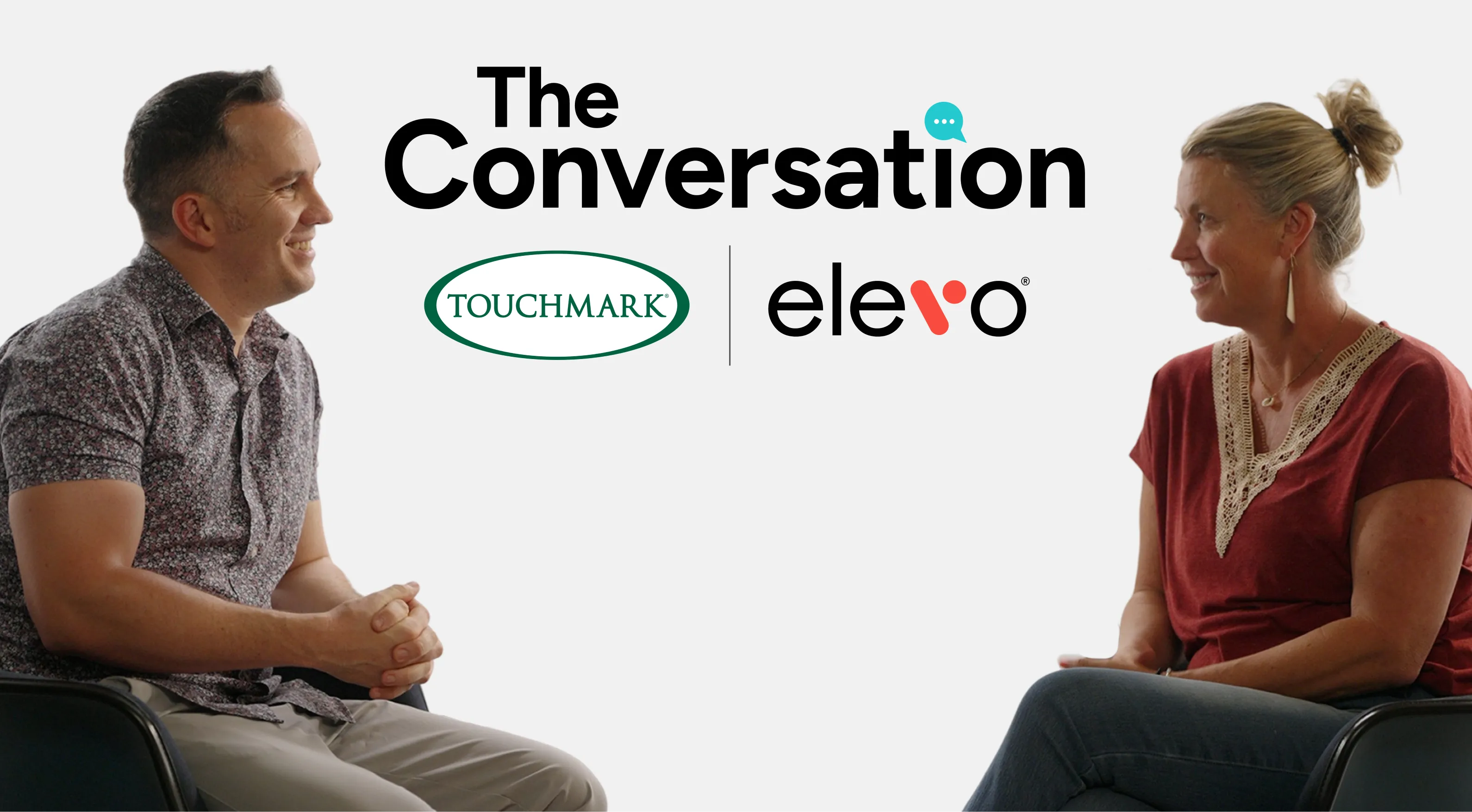
The Conversation with Touchmark and Elevo Learning.
Two weeks to two minutes: Touchmark's Cameron Pickett and Elevo Learning's Megan Schuck went in on building a stronger candidate experience — from the AI screening that transformed Elevo's scheduling speed, to Touchmark's incoming rollout freeing recruiters to build real relationships.



This blog is part of a larger collection of client story content for these companies.
Meet the speakers.

Cameron leads talent density strategy at Touchmark, a network of resort-style senior living communities across the Pacific Northwest, and is steering its move to Paradox to free up recruiters for more human, relationship-driven hiring.
Cameron leads talent density strategy at Touchmark, a network of resort-style senior living communities across the Pacific Northwest, and is steering its move to Paradox to free up recruiters for more human, relationship-driven hiring.

Megan leads talent communications and platforms at Elevo Learning, which staffs before- and after-school enrichment programs with coaches and teachers across California, and has helped cut candidate response times from two weeks to minutes since implementing Paradox.
Watch the on-demand webinar:

[0:00] Cameron Pickett: Any wineries in California? I'm currently in Oregon, so I'm in the Willamette Valley — which is better than Napa Valley wine.
[0:05] Megan Schuck: Yes, just kidding, I don't know — I have a lot of wine in California, but Portland is good too.
[0:13] Megan Schuck: All right, hi, how are you? Excellent, great. So this is Cameron from Touchmark — he's been with the company almost two years, and they work with senior living housing, correct?
[0:25] Cameron Pickett: Yeah, that's it — nice to chat with you today. Likewise, Megan — this is Megan with Elevo, in the educational space, based in San Diego, I believe? Yes?
[0:32] Megan Schuck: We're throughout California, home office in San Diego though.
[0:35] Cameron Pickett: I'm on the west coast as well, up in Portland, Oregon — the beautiful Pacific Northwest — but across the United States and into Canada as well, that's kind of our footprint.
[0:41] Megan Schuck: Awesome, lovely — I love Portland!
[0:43] Cameron Pickett: Me too — keep Portland weird, as they say. It's good to be a little weird, so, yes.
[0:48] Megan Schuck: So where are you in your journey to improve the candidate experience?
[0:52] Cameron Pickett: Yeah, and that was actually one of the key drivers for us moving to Paradox. We're in the process of implementing — our prior ATS had a situation where people had to log in, literally create an account to apply, which created a huge drop-off rate. We were missing out on a large part of the talent pool just due to the application process alone. So continuing down that stage, we also wanted to improve the candidate experience in other ways — things like how we communicated with them, automating much of that by leveraging some agentic AI pieces to keep them informed throughout the stages, with the intentional effort of much of what Paradox's mission is — reducing our time in software, spending more time with humans. So now we're spending more time actually interviewing and meeting and building relationships and getting to know them, because we're freeing up so much time from the application and scheduling component, which has been phenomenal. In my prior role using Paradox, and really anticipating that moving forward with Touchmark as well.
[1:46] Megan Schuck: And when are you planning on implementing?
[1:50] Cameron Pickett: Yes, we just signed a contract in January — a lot of wonderful customers moving to Paradox with the Workday acquisition. So we're starting next month, the project team is joining us, super excited, got all of our pre-work done. Really excited about next steps, and really again focusing on a variety of aspects with the candidate experience, which is largely driving a lot of our structure and decisions.
[2:12] Megan Schuck: Nice. Do you have a peak season of hiring, or are you hiring throughout the whole year?
[2:14] Cameron Pickett: Yeah, we definitely have somewhat of a peak — more so connected to the educational piece. Interestingly, college and high school students are a large part of our audience. If you think of a senior living community, it's got a whole situation — a few restaurants on site, more like premier, luxury, five-star resorts. So we hire servers, things like that, line cooks, and then housekeepers, caregivers. We do a lot of frontline, high-volume hiring that peaks in the spring to fall, and that's cyclical based on the availability of students.
[2:42] Cameron Pickett: I'd love to hear more about your experience, and what you guys are focused on as well, from that candidate experience perspective.
[2:48] Megan Schuck: Yeah, great — we've implemented Paradox a little over a year ago, so it's been amazing. We have a similar applicant pool, in that a lot of who we hire are coaches — we're teachers that teach across California, running before-, during-, and after-school enrichment programs. It's typically 18 to 25 or 26 that's the bulk of our applicant pool. Prior to Paradox, it was taking — we were doing a lot of cold-calling, finally getting people on the phone, but they wouldn't even be qualified to work the role, because we work in school districts where there's a very stringent onboarding path — they have to pass a live scan, they have to do all these different exams. So since implementing Paradox, we have incredibly improved our experience — they get a schedule within five minutes. So from two weeks to get a hold of someone on the phone who might not even be available for an interview, to scheduling them on our recruiters' calendars in minutes — it's been amazing. We've also been able to utilize Olivia — we call her Maya — to just ask those, we have about 10 questions that filter out and disposition them if they're not even qualified, and they don't get scheduled. So that definitely reduces people interviewing for a job they're not even minimally qualified for, so it's been amazing.
[5:15] Cameron Pickett: That's excellent — good time savings. Love it. Yeah, by the way, fun side note — I implemented Paradox at a prior company called Pacific Seafood a few years ago, and we named our virtual assistant Maya as well.
[5:26] Megan Schuck: Oh, really? What a coincidence, wow.
[5:29] Cameron Pickett: Yeah, it's got some meaning about the ocean, I forget what it was connected to — but she was also just very receptive, people wanted to chat with her.
[5:34] Megan Schuck: Great — and what's your naming survey going on right now?
[5:39] Cameron Pickett: I actually represent two organizations — one's called Amaterra, it's like a winery, vineyard, five-star restaurant that will be using — leveraging all the same platforms in terms of the CRM and the ATS — and Amaterra means 'for love of the earth,' and we're naming her Tara.
[5:53] Megan Schuck: Oh, that's good, I like that — Tara.
[5:54] Cameron Pickett: I like to think of the candidate experience the way we're framing it — making decisions on what we're gonna do and why. This is something from years ago that stuck with me — actually from John at Recruiting Toolbox, at a conference: if you had a friend or colleague ask you about their experience interviewing at your company, what would you hope they'd say? I think that puts us in the right framework to determine — we want them to have the best-in-class experience at every stage, and figure out how we make that come to fruition.
[6:23] Megan Schuck: Yeah, I agree — in my role right now, the Director of Talent Communications and Platforms, but I've only been in this role for less than a year, and before that I was the Director of University Partnerships, so I wasn't a huge part of the original implementation of Paradox. In my current role, what I'm learning is just the back end and the setup — making sure that Maya's messaging, depending on the disposition we're putting applicants in, is right. I'm currently learning as I go as well, and making very small tweaks to what I've asked Maya to say based on what candidates ask her — and that's been huge too, because when there is a slight error, if she's saying something that's not true, that's not a great candidate experience. So it's great for me to know — the planning behind what Maya's saying is super important, to make sure the candidates have the correct information and have a great candidate experience, so they're not getting different information from that human person that's on the phone. Because that's the same thing you just said — we love that our recruiters actually get to get on the phone and talk to these people, much quicker than two weeks.
[7:47] Cameron Pickett: No, I can relate — I know, Paradox has such phenomenal customer support. We'd have our QBRs and they would show us where people were dropping off in the process, which we would then use to improve our communications on the back end, to make sure there wasn't any more frustration or confusion and drop-off. So that's a great tool in terms of the candidate experience. I'd be curious on the time-to-fill piece — I'd love to share some of my insights on the impacts we've had, but one question for you would be, kind of the internal benefits you've seen from that, versus just the candidate — like your hiring manager, HR, whoever's involved in the various stages of the process — with that time savings and other benefits, kind of what have you seen as a result?
[8:20] Megan Schuck: Yeah, I mean, our recruiters get to be doing what they do best — they get to be talking to our applicants. We have two stages of interviews typically for our coaches and teachers — first a one-on-one interview, and then an in-person group interview, we call them field interviews. Yeah, I mean, we've just been able to get to know our applicants quicker, and see what their skill sets are, deeper, quicker, and hire more quality.
[8:50] Cameron Pickett: I can definitely echo and relate to much of that as well. Other benefits that we've experienced prior, and that I anticipate with this next go-live coming up on Paradox, are even things like — we all know that when a position is open, it mounts over time, right? People fill in for that role, additional stress on those folks involved, taking on more responsibilities. But the cost associated with the time, and all those different aspects, particularly the overtime component — when we can get people to that interview stage faster, get them offered, get them hired faster, it just has a ripple effect on so many other areas, and it just improves communication, engagement, cost savings, etc. So I think we often think of the candidate experience as probably one driver, but the impact it has, in a positive way, on every other stage and person involved is pretty phenomenal.
[9:30] Megan Schuck: Yeah, it's true — their first impressions are so important, so their first impression is with talent, and then we move them on to whatever department — typically with us it's operations, but then it's their hiring managers. And if you have someone that comes to you that's had an amazing experience, they're already a more satisfied and happy employee.
[9:50] Cameron Pickett: Yeah, so that's exciting — I'm gonna anticipate that's what's gonna happen for you as well. Putting in the good vibes.
[9:55] Megan Schuck: Yes, good vibes manifesting!
[10:00] Cameron Pickett: I'd love to hear from you, kind of a lesson plan on how you would prescribe to your hiring managers, and how we can improve the candidate experience with these new, wonderful Paradox tools that you guys are leveraging.
[10:07] Megan Schuck: Great — so our lesson plan at Elevo usually has four parts. But I would say, I mean, obviously we rely heavily on our customer success managers at Paradox — and I learn maybe a different way than somebody else learns, and so it's really important to make sure that the relationship you're building with your customer success manager, that they know what's the best way for you and your team to learn — is it through demos first, is it written, is it a video? I'm a very visual learner, and so I've definitely shared that with my colleagues at Paradox who are showing me the way, and then doing it myself, and then having the customer success manager make sure that we understand all the parts, and then training out to my team on what I've learned. And I think it's also a very important thing about implementing any new technology, to just know that there's going to be road bumps along the way. I have two things that I promised when I used to teach or manage international students — one is that I don't always have the answer, I don't know everything basically, and two, I will always help them find the answer, which just means that there is a solution to every problem. So implementing Paradox, if there were bumps along the way — of course, we're integrating it with many different tech systems that we already have, and everything wasn't smooth — but it's definitely improved our processes.
[11:43] Cameron Pickett: That's the kind of thing too, often we do the one-size-fits-all blanket approach, and you're customizing it with that prompt — and delivering it in the way that they receive it well, like yourself being a visual learner, that's fun. I'll also add, I can absolutely relate to that too — implementations never go as planned, there's always gonna be curveballs, so setting the proper expectations up front that things are going to happen, but we're gonna overcome them, and really instilling confidence, is a huge part of a successful rollout.
[12:02] Megan Schuck: Yeah, and then even maintaining consistency in positive results thereafter.
[12:06] Cameron Pickett: Yeah, and looking at the metrics, right — it's not gonna be perfect, but you can see you're going in the right direction.
[12:10] Megan Schuck: So reminding your team, your recruiters, hiring managers, that it's still not perfect — everything's not perfect — we're gonna keep improving as technology improves and changes, and AI and agents and whatnot.
[12:25] Cameron Pickett: So I'm excited — like snail's pace though, right? Isn't it?
[12:27] Megan Schuck: Yeah, just really slow. Yeah, no —
[12:30] Cameron Pickett: I'm excited for you and your company in the next month, and I know it's not gonna go perfect, but it's gonna improve your process. It's gonna be phenomenal, I can't wait.
[12:39] Megan Schuck: Yay! Thank you so much, it was so great to chat with you.
[12:43] Cameron Pickett: I'll come up and say hi in Oregon.
[12:46] Megan Schuck: Yeah, visit California, Oregon — we'll keep in touch and just keep sharing best practices and having success together, for our respective organizations.
[12:53] Cameron Pickett: Wonderful meeting you as well.
[12:54] Megan Schuck: Perfect!
Meet the speakers.
Cameron leads talent density strategy at Touchmark, a network of resort-style senior living communities across the Pacific Northwest, and is steering its move to Paradox to free up recruiters for more human, relationship-driven hiring.
Cameron leads talent density strategy at Touchmark, a network of resort-style senior living communities across the Pacific Northwest, and is steering its move to Paradox to free up recruiters for more human, relationship-driven hiring.
Megan leads talent communications and platforms at Elevo Learning, which staffs before- and after-school enrichment programs with coaches and teachers across California, and has helped cut candidate response times from two weeks to minutes since implementing Paradox.