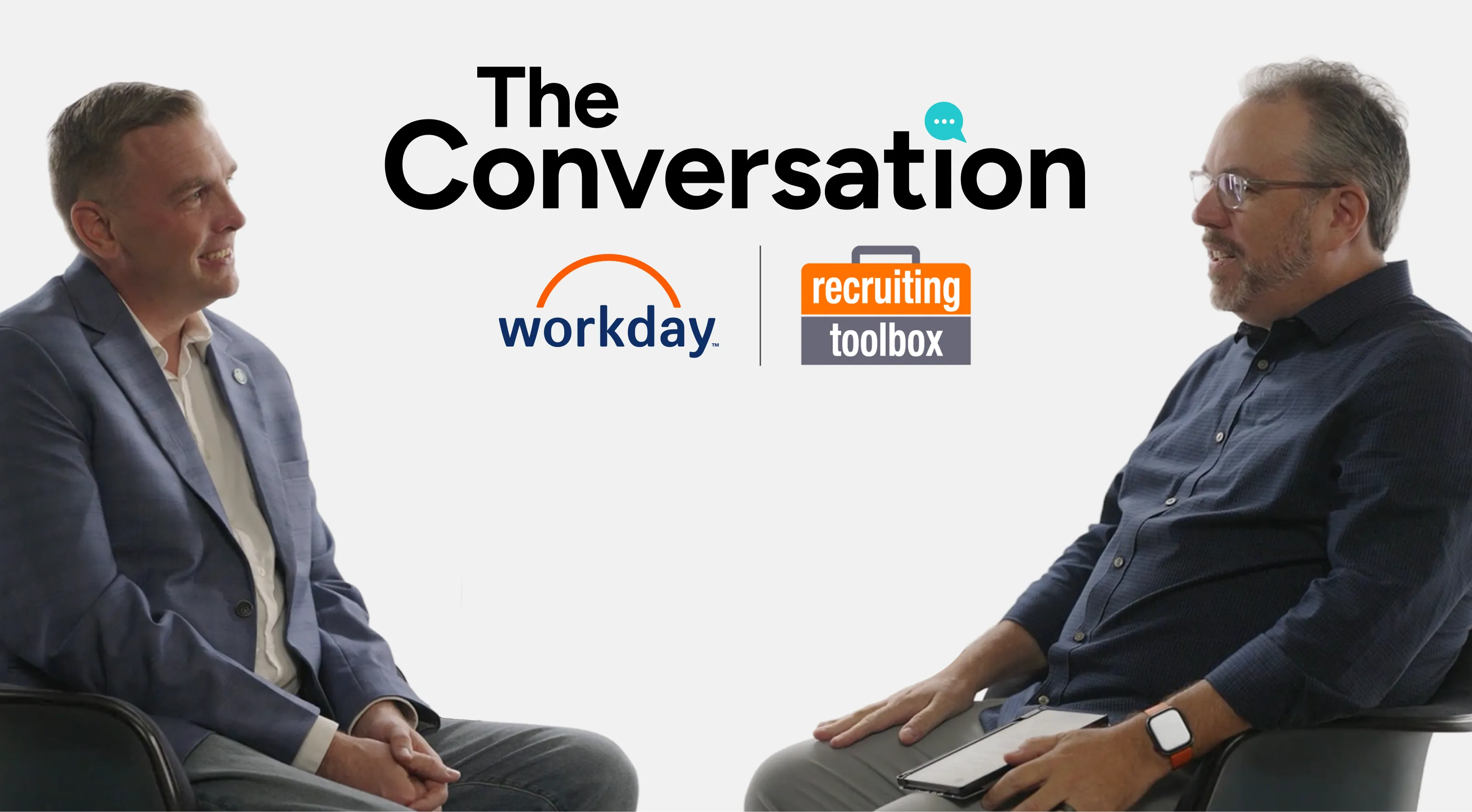
The Conversation with Compass Group and John Vlastelica.
Compass Group makes up to 180,000 frontline hires a year. VP Shay Johnson tells consultant John Vlastelica how his team decides what to automate, what to keep human, and why agentic AI is about to make candidate data 100x richer.
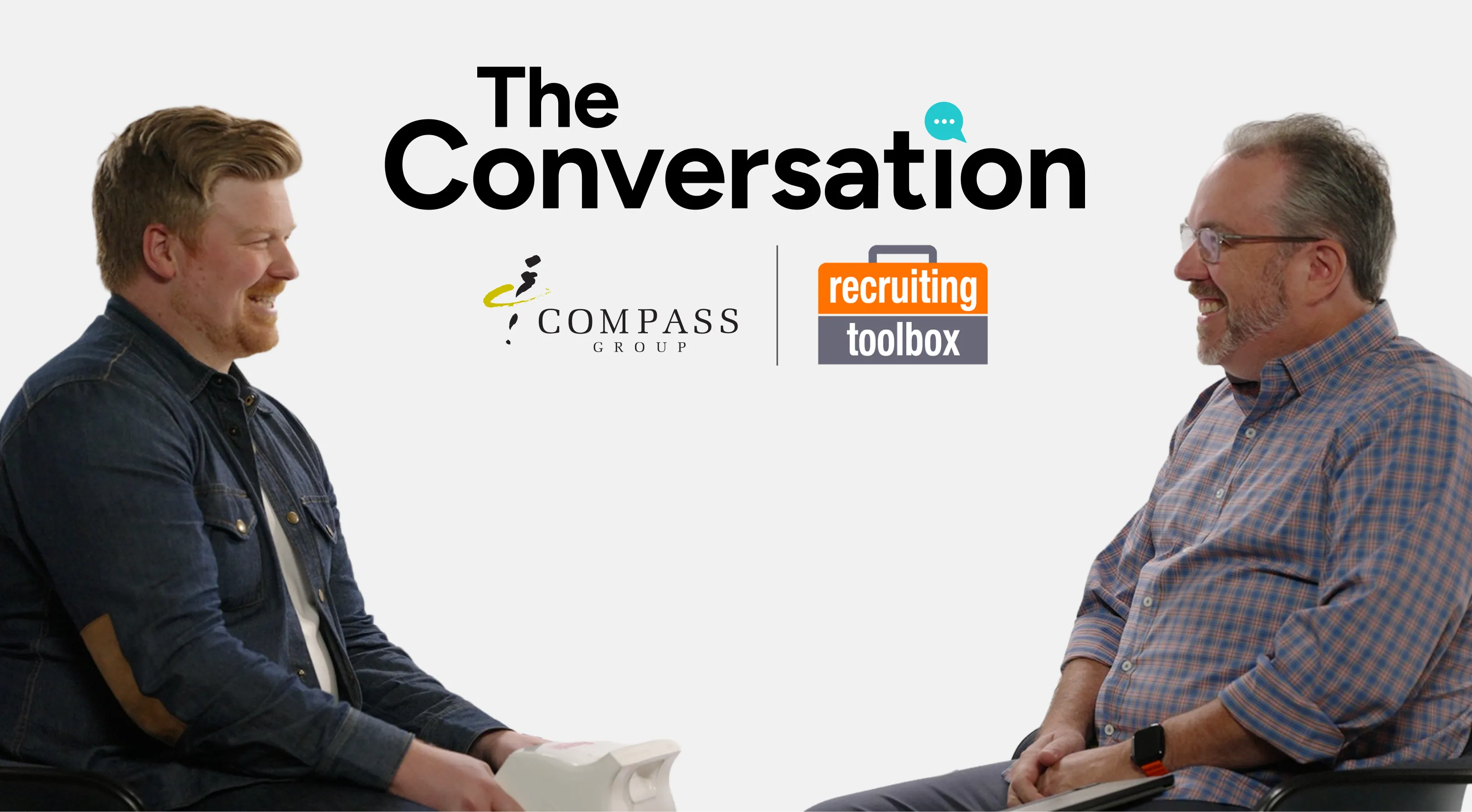
The Conversation with Compass Group and John Vlastelica.
Compass Group makes up to 180,000 frontline hires a year. VP Shay Johnson tells consultant John Vlastelica how his team decides what to automate, what to keep human, and why agentic AI is about to make candidate data 100x richer.


This blog is part of a larger collection of client story content for these companies.
Meet the speakers.

Shay leads strategic HR partnerships at Compass Group, where he's helped cut $1.5M in job board spend and boost apply conversion from 2% to 12% through automation and smart re-engagement.
Shay leads strategic HR partnerships at Compass Group, where he's helped cut $1.5M in job board spend and boost apply conversion from 2% to 12% through automation and smart re-engagement.

John is CEO and founder of Recruiting Toolbox, where he's spent over two decades training and consulting Fortune 500 talent acquisition teams on recruiting strategy and change management.
Watch the on-demand webinar:

0:00 John Vlastelica: Do you make decisions fast, or do you need to sleep on everything first?
0:04 Shay Johnson: I am a research the you know what out of it ahead of time. And then when it's time to decide, I'm very fast. How about you?
0:11 John Vlastelica: My answer would have been different for you before ChatGPT.
0:14 Shay Johnson: Okay.
0:18 Shay Johnson: Hey, guys. I'm here with John from Recruiting Toolbox.
0:21 John Vlastelica: And I'm here with Shay from Compass Group. So Shay, I have a question for you. You are the VP of strategic partnerships for HR. You have kind of a product-y kind of role. Very few organizations that I work with, and I've worked with hundreds of organizations, have someone at that level for that kind of focus. Was this a role created for you?
0:41 Shay Johnson: It was created for me, in a sense. I spent the first 10 years of my career, all of which have been with Compass Group, in talent acquisition. So, I had a journey through talent acquisition, and where I ended on the last five years was overseeing all of our frontline and high-volume hiring. And at Compass Group, we deploy a lot of technology and different tools and automation in that. And so, I managed a lot of the partnerships and the relationships with the vendors and the solutions that we were bringing in, how we were deploying those solutions. And so yeah, the evolution of my role just became, how can I do that across broader HR? So that as the candidate experience becomes the employee experience, you can really thread that through. And so, in order to facilitate that, we said, "Let's make my role partnerships and products." So yes, I'm involved in kind of the solution design and the implementations, but really it's about how do we select the right partners to build the right solutions for the problems that we have across HR.
1:38 John Vlastelica: Across HR. And give us a sense of just kind of size and scope of Compass Group, because when you put the high in high volume, you guys do a lot of hires.
1:46 Shay Johnson: Yeah. So Compass Group USA, just in the US, we're about 300,000 associates, about 600,000 globally. But in the US, we're doing anywhere from 150,000 to 180,000 hires a year, give or take, and that's not counting seasonal or temp labor. So that's true W-2 workers.
2:02 John Vlastelica: So I have a question for you. So one of the things that I've been seeing as a consultant is there is a lot of convergence, there's a lot of companies buying very similar products within categories. There's usually one or two or three kind of clear leaders. When I do a show of hands, when I get a bunch of heads of TA together, I won't name all the names, but a lot of them. Paradox, obviously, is one of them that just dominates. But talk to me about differentiation in a world where maybe you're people competitors, and you have very similar tech stacks.
2:28 Shay Johnson: Yeah. I used to worry about this so much. Selfishly. I used to think, we've got to have the newest, coolest, best, most frontier thinking thing. And now when I step back and think from a candidate perspective, or just from a consumer perspective, that is not what people want. People want there to be consistent experience across the different things they use. So, why does every major LLM or AI product look exactly the same now? It's because people know how to use the first one. It's familiar. Yeah. If you are checking out with shopping, I bet you love it when there's Apple Pay or Shop Pay or Link, or any of these things that already have your information. So now, I actually think it is not that big of a deal to differentiate yourselves, and in fact, if everybody does end up with similar solutions, even if they're not the exact same vendors or solutions, but a similar experience, what you're going to find is actually better conversion for candidates because they know exactly how to go through your process and what to expect, and they're like, "Oh, yeah. This is all feeling very familiar and easy to use." So, I'm starting to lean into that more and not worry so much about what other people are using and how we differentiate, but just how do we build the most connected, best experiences, and in some cases, play off of what people are already using to say, how can we harness that and thread that continuity of that experience through our own?
3:44 John Vlastelica: One of the things that I've heard some TA leaders talk about when they deploy Paradox is some of the differentiation is obviously in which tech you choose to deploy and how you deploy it, but then some of it might look like the human piece, right? One of the differentiators maybe for me as a company is I might decide not to automate this piece because I want to insert high touch, right? Or I'm deciding that I'm going to maybe bring the hiring manager in to do something, so there's like an escalation point. How are you thinking about differentiation with kind of the human parts of the process?
4:15 Shay Johnson: Yeah. Well, there's just so, so many different use cases and things that we could do. We're unique at Compass Group. This is a big challenge of ours because we have such a large organization. We're made up of 30-plus different individual companies and brands. They all have different preferences around how they want an experience to look and feel, how they want it branded, what things they want to automate versus not automate. What tools-
4:38 John Vlastelica: That makes your job fun.
4:40 Shay Johnson: Yeah, it does. Because, again, you're trying to build-
4:42 John Vlastelica: Because consistency across, that's not a thing.
4:44 Shay Johnson: And you want to build automated solutions, but you're trying to build at scale. Right? So I think for us, it's when you're thinking through how to differentiate and what things to do in the experience, we've tried to say, okay, we have a pretty standard sort of template or workflow that's pretty consistent across hiring. We all know these core stages, and I think within each of those, what we've tried to do is say, okay, some people are going to want to use a heavily automated workflow so that the candidate can go right from engagement to apply to interview scheduled, and now they're sitting with a human and getting an interview and offer, and they're on their way. Other roles are going to be much more nuanced than that, and so you want to give more control to a recruiter or a hiring manager to go in and say, "I'll actually step in at this point and take over that conversation," or, "I want to manually go in and execute the scheduling request because we're going to set up a panel interview and multiple stage, and there's going to be a case study." So I think what we try to do is make sure that we're building solutions that can solve for all of those different instances and say, for your most streamlined workflow and experience, and you want it to be quick and easy for the candidate and driven in that way, we can facilitate that. But if you want to have more control and more configuration and customization, we'll also give you the access to be able to do that. So solving for both of those is hard, and you have to have the right partners and the right solution to do that, instead of saying, "I'm going to go get one solution for this use case and a different one for this use case."
6:10 John Vlastelica: You guys are at the scale where I think I know the answer to this, but I imagine you're familiar with the concept of A/B testing, where you kind of run people through similar things. I imagine you could sort of A/B test and say, "Let's do 100% Olivia conversational AI version." And let's see the hiring manager that like, "I don't want to let go. I still want to meet everyone. I want to..." And you can test it, and you can measure maybe the impact on certainly speed. Quality's a little harder to measure, but maybe retention or onboarding, time to get onboarded or something. Have you done any of that kind of tracking at least and maybe analysis to kind of compare the two, and what are you finding? Do you mind sharing?
6:45 Shay Johnson: Yeah. We do this all the time. The great thing about it is we have so many different sectors, and we call our brands sectors, and they're different by healthcare and education and sports. So we do a lot of our testing in ways where we've got specific accounts or specific part sectors or brands. And we're saying, "This is how healthcare is doing it, and we're seeing a really big lift when they do it this way. People are liking it, so maybe this has application over here in the education space." Nope, we tried it, and it doesn't work as well for them because of their model of their teams and their seasonality. So there's a lot of A/B testing for us that also has other sub-variables unique to our business. I think the area where we actually do the most A/B testing and actual measurement is not in human-driven activity. It's in the way that we're deploying either automation in our re-engagement strategies, or now what we're starting to build with agentic layers. An example of that is we have a partnership with Dalia, who does our automated candidate re-engagement, and we have different ways in which candidates start that interaction so that Dalia can use signal to target candidates. So one example of those is we have a pop-up modal on our career site, similar to when you're shopping, and it pops up and says, "Hey, enter your email for 10%." We have a pop-up that says, "Hey, if you don't know what you're looking for, just give us your name and your phone number and tell us what you're interested in." And they're immediately in a talent network that is now going to match and prescribe them to jobs in real time, depending on their activity. And what we've done is we've found, let's A/B test. What if that popped up for every candidate as soon as they hit our career site? What if it only popped up-
8:17 John Vlastelica: Versus forcing them to search and browse, understand how to translate the title they're interested in to what you guys call it. Why are there 17 openings with the same job title in the same location? Do I have to apply to it?
8:23 Shay Johnson: Yeah. It's helping to solve for that kind of stuff. But we've tested. What if it popped up for everyone? What if it only pops up for certain roles in certain regions? What if we don't present that at all, and instead, we only re-engage with them once they have done a post-apply? So we test all the time what is actually translating into the best conversion, the best re-engagement, the best through. So we're very data-driven in if we're going to deploy things that are sort of invisible and automated and don't require a human to touch them, let's constantly refine them so that they're the best that they could be.
8:58 John Vlastelica: I want to shift gears a little bit. What are the things that you think, if you were giving advice, if I were a TA leader looking to get the most ROI out of these big investments, what is the key to unlocking the value of this?
9:11 Shay Johnson: Yes. There's two different approaches, and this is why I tell you, I think a couple of years ago, when I was still a TA leader specifically, and working with those teams, and we started to experiment with what are going to be the best use cases right now for AI and automation, is we just sat down with those groups, and we even asked, "What are the things that are taking up a lot of time for you today that you hate?" We really just dissected, okay, this is where we want to focus on productivity gain. Automating things that recruiters shouldn't be wasting their time on. They could be automated, they could be accelerated, and we're giving that time back to recruiters. But the whole point of that, I didn't see as how do we make them more productive. It was more of, how can we start to change the nature of their role? Because-
9:52 John Vlastelica: Focus them on the highest value work.
9:53 Shay Johnson: Yeah. So a great example of that is our business would come to us, and they would say, "Hey, we're about to open 10 new airport lounges, and one of them is going to be the Delta One lounge at JFK. Premium, big in the media. This is going to have a lot of press around it. We want to make sure that we're staffed up." It used to be if they came to TA and said, "Can you guys come out and support hiring events? Can you help us with some advanced recruiting locally?" It was more like, "No, we can't do that. All we can do is get your-
10:21 John Vlastelica: Capacity.
10:22 Shay Johnson: ...get your job posted."
10:23 John Vlastelica: Capacity constraints, right. It's capacity constraints.
10:24 Shay Johnson: Yes, it's capacity constraints. So now-
10:25 John Vlastelica: And poor planning. But your business is like professional services. You guys win a contract, and it's go time.
10:30 Shay Johnson: Yes. So now that is the nature of that frontline recruiting team is saying, since we've taken so much of this tedious lift off this team, they have that capacity and that bandwidth to say, "Let's send five people for two weeks to go and really crush this." And you don't have to then pull HR practitioners from the region or operators off of their day job to support this because TA said, "Sorry, we're too busy clicking buttons." Now it's absolutely, this is what we should be doing. This is the recruiting work that is important right now and in this time. That is how I see when you're looking at ROI, it's not just about a metric. It's about what new opportunities have you created to serve the business that weren't there before.
11:05 John Vlastelica: Yeah. Tools like Paradox are actually eliminating some of the crap work, right, and getting us focused on what can be much higher value add, but not just day-to-day at the rec level, but to your point, actually being able to say to the business, "We can actually react to this need you have." One of the things that is a... hard is just change management in general, right? And I imagine the hard part of your job is probably not the RFPs and finding the tech. But it's probably more around getting people to change behaviors. Is there anything that you've found makes it easier for people to kind of digest the change and kind of get on board with the change? Give me some insights on that.
11:44 Shay Johnson: Yeah. Some of it does go back to what I talked about earlier, where it's like, if you actually take the time to ask them not just what is taking up your time, but what do you hate doing? And what do you wish you could do more of? You need to bring that back around when it comes time to execute the change, right? You need to say like, "Hey, I-"
12:01 John Vlastelica: You asked for this, guys.
12:03 Shay Johnson: A lot of what you said you wanted was this, and yeah. And let's focus on the net positives of like, now you're not going to get that pressing question from managers anymore. You won't have to answer that email 100 times. You don't have to get on a call and reiterate this over and over again. I think this whole problem will go away, and I think that is how I try to look at it. It's less, like I said, it's less about let's create efficiency. It's more about let's really create a transformative solution where maybe we've got this whole laundry list of things that we're constantly meeting with HRIS to say, "Hey, we want to enhance this. We want to fix this. We want to make this better. Recruiters are complaining about this." It's like, what if you implement a solution that is so transformative that you're like, we just knocked out 90% of that list. None of these are even a problem to discuss anymore. And there's always going to be new things, always continuous improvement. But that's the thing. I think if you are implementing something where the change has been done with all of that feedback that you had from them in the first place, to say, "Hey, there's going to be some change with this. There's going to be some nuance. There's going to be things that we have to figure out together, but we're doing all this because over the last two years, these were the biggest things that we were hearing from you, you wanted to solve for, that the business wanted to solve for. So here's the big step we're going to need to take to get a lot of that off the ground." And I think then they're like, "Okay, great. We're open to that."
13:20 John Vlastelica: Is there a future where a guy like you in a company like you're in, where you will start to really do a lot more kind of build versus buy? And if so, is it vibe coding? Is that going to get decentralized down where maybe directors in TA are going to build some of their own stuff? How do you manage that? I want to get a feel of kind of your philosophy on build versus buy right now, and just kind of where you think that might be going.
13:46 Shay Johnson: Yeah. I'm doing everything that you're describing, but not deploying anything. So a lot of what I do today is, it's in my personal time as I'm thinking through a solution is, yeah, I do a lot of vibe coding and a lot of design. I kind of sit in an interesting... I do a lot of technical, solution design and development, but a lot of UI/UX creative, like how is this going to look and feel and come to a consumer grade point. But I think the way that I've used it personally is I do a lot of prototyping and designing. So a good example of this, and I even do this with Paradox and their product team, as instead of describing business requirements for an enhancement request, like we want the ability to do this, I actually just have built a copy of my Paradox instance. I've coded it, and then I now have it so that when I have an idea for how I want something to work-
14:34 John Vlastelica: You can show it.
14:34 Shay Johnson: ...a feature, I actually build it, and I demo it, and I send it to their product team. And so the idea isn't that I'm handing them the code, and they're going to input it. But it's a really great way to actually apply what's in your mind as a solution and kind of build it. I think that's just one great example, is like if we are still a few years away from truly being able to vibe code solutions that you're going to deploy at an enterprise level, and have all of the right security and-
14:58 John Vlastelica: Makes me very nervous, by the way.
14:59 Shay Johnson: Yeah. Very nervous. Yeah. And I think there's going to be steps that we get closer and closer to that reality. Maybe not as it looks and feels today, but there will be a world in which, yeah, you've got practitioners that are forward deployed solution engineers, and people that are creative and have a solution mindset will have much more capability to say, "Let me actually build a vision for what I want to deploy." And maybe you're not actually deploying it, but how fast that accelerates a solution or a vendor that can take that and say, "We can now bring this to life for you" - it's like 10X. And so we are already doing that with a couple of partners where-
15:34 John Vlastelica: So it speeds up that kind of let's get aligned on what we need piece.
15:37 Shay Johnson: Yeah. We do product jam sessions.
15:38 John Vlastelica: Really fast, yeah.
15:38 Shay Johnson: I get on with a product team from one of our vendors, and we actually sit there and ideate out a product, and they're like, "This has been fantastic. Let us take this away." And two weeks later, they come back to me with an actual product that we could deploy that's built in their code base. It's got all the architecture, the security that we've actually vetted and passed. Now we can deploy it. I didn't have to build it. All I had to do was conceptualize it.
15:59 John Vlastelica: Sure. That's a great model.
16:01 Shay Johnson: Yeah, the prototyping, slash kind of wireframing kind of piece of it is just so much faster. So I think there's a good hybrid world in there in which it's not like I'm going to vibe code the solutions that we deploy, but I could vibe code the ideas that partners-
16:15 John Vlastelica: That you can then hand to-
16:15 Shay Johnson: ...or the internal team that does truly build and own it is able to deploy.
16:18 John Vlastelica: One of the things that I think a lot about is kind of the order of operations of things. What are the things you would say, if I were giving advice to a TA leader who's about to go big on this, make sure you do these two or three or five things ahead of time. What are some of those things for you?
16:32 Shay Johnson: Yeah. When possible, and I know this isn't always the case with large enterprise solutions, but I think vendors have to become more flexible to this, have to run pilots. You have to say, instead of positioning this as a three-year contract, we're going to build and design and deploy this huge solution, can we start with six months? We're going to do something, maybe it's not fully integrated. It's proof of concept. Let's get feedback from our recruiting team that's going to be using it or our hiring teams. Let's just make sure that people actually feel like this is a good solution. And their only feedback that you hope to hear is, "This is great." "If it were fully integrated and automated, it would be 10 times better." So you know you have legs under something and that you're going to get buy-in. So that's key number one in the order of operations. And then when it comes time to actually scope out the work for the implementation, and you're going through design, I think you need to hit pause before you actually start building your business requirements and kind of designing your solution. And this is feedback that I've given to Paradox and a number of other vendors recently is, can we hit pause, and really, really demo your product for it, different components, let us ask questions so it's not just your sales product. Let's get into an instance. It can be anonymized, it can be a sandbox, but really walk us through exactly how this could be configured or what this looks like in full end-to-end process. I know that's time-consuming, but the more that you understand the product that you're going to be using before you actually build it to your spec and your processes, the better you will be able to design it, build it, and implement it. And so I think that's hard. I know it's hard with big implementations. But if you have the luxury of time, if you're not up against a deadline of deprecating another product, take that time and be like, "Hey, we want to sit with your product team and really, really understand all that this is going to give us before we start building so that we build the best possible solution, and we don't get two thirds of the way through build or implementation, we're like, 'Oh, well, I would've done it totally different if I had... You're just now showing me this for the first time.' And it changes the nature, and now I feel like, should I go back and redo things?" So I just think that's another really important component is if vendors have the bandwidth and your team have the bandwidth, demo, demo, demo. Understand the product as in-depth as you possibly can before you deploy it. Because some of the little choices, yeah, and some of the little choices you make on configuration have big downstream impact.
18:52 John Vlastelica: What is something, Shay, you're excited about that you think is coming up next?
18:55 Shay Johnson: Yeah. It is the agentic AI capabilities, especially how good it is getting across modalities. So if you think, a great example is voice, right? I'd say a year or two ago, voice models were getting better but still felt clunky. There was latency. And now with Eleven Labs and the advent of all these APIs, it is so natural and so good at-
19:18 John Vlastelica: It's coming to CarPlay, I hear. It's coming to CarPlay where I can just be driving down the road, and my wife can now say, "Shut up. Talk to the AI if you have a question." Yeah.
19:25 Shay Johnson: So just those general AI capabilities, voice models, video models, and the agentic building capabilities. I think all of this is so exciting because you can finally... It's not thinking about an AI replacing a person, but it is in those moments where you're like, this was automated, but it was very just like forms, data, chat, deterministic. Now you can really say, let's deploy all these different models and capabilities to create an experience for someone in which you're not only giving a good experience, but you are building the capability to serve tons of other things downline. So I've given this example a couple of different times, but if you are going to build an AI that's going to have a voice conversation with a candidate, the amount of data, the richness of that data that you're going to get is 100X of just a simple chat conversation or definitely like a form-based conversation. So we're dreaming of all the different ways to not only say, like, how do we create the best possible voice interaction, and what are all the things that could happen in the course of that where it's, I'm verifying not only someone's availability, some of the basic things that you do in the screening conversation. Let's go deeper. Let's talk to them about what is it that they're really looking for? What do they think they're good at? What do they see as probably the next year, and where are they looking to grow if this was just the entry point of their job? You can have all of this information that would take 100 different steps in a talent process condensed into a 15-minute conversation. It opens up a whole new world of possibilities, especially for internal mobility. When you say, okay, if this person comes through the door and gets hired, and that's just now a part of their employee profile, I don't need to ask them to fill out or create an employee profile. This is just this richness of data that we have on this person that we're going to continuously update through conversation over time, so when it comes time to succession plan and look back, we aren't just relying on performance reviews, static one-on-one conversations. This is something where you can have continuous touchpoints through an AI layer. There's just so much opportunity. So yeah, as I'm talking to people, I love asking people about how much they've explored or built in this space, because the capabilities that were just built three months ago are enabling things that we never dreamed of before, and so now my next two years is already stacked-
21:37 John Vlastelica: It's already stacked with that.
21:37 Shay Johnson: ...with use cases that we're trying to build for.
21:38 John Vlastelica: Yeah. That's amazing.
21:39 Shay Johnson: But yeah. I think this is one of those things where you're going to continue to see this in the news over the next year or two, especially as just from a consumer standpoint, there's so much warfare going on right now about just AI in general. So it becomes very important, how will the story be told when it's used in the right ways, and it's actually to candidates' benefit? It's not all about creating shareholder value and for company benefit. It's getting on the news, and it's actually telling these great stories of candidate experience and giving them more transparency and agency. And I want to see those stories being told instead of just the doom and gloom of resume robots, and nobody's actually going to talk to a human. I do hope that that narrative starts to shift as companies get ahead of this and start really building the things that help.
22:23 John Vlastelica: I'd love that, because you're right. The story of like, "It was overwhelming. I've been looking for a job for three months, and then I went to Compass Group, and this little thing popped up and asked me my interest, and then it matched me to jobs, and now I'm working." Those kinds of stories are great, especially in this kind of economy.
22:39 Shay Johnson: So yeah. And as we've deployed some of the AI interviewing solutions, we poll candidates. It asks them as soon as their interview ends, "What did you think of this? Was it comfortable? Did you like it?" We've got 95% positive feedback on some of the agentic interviewing solutions.
22:52 John Vlastelica: That's amazing.
22:52 Shay Johnson: And people are like, "I've never had this thorough of an interview with a person before, for a role like this. And it enabled me to get connected to a job that I wouldn't have known about otherwise. And then I got hired." So I think to close, I just think those are the stories that I hope are prominent-
23:08 John Vlastelica: I love that.
23:08 Shay Johnson: ...a year from now, as companies start to actually be able to develop and deploy these things.
23:12 John Vlastelica: Yeah. Yeah, awesome. Shay, this was awesome. Thanks, man. Thanks for all the insights. That was fantastic.
23:16 Shay Johnson: Appreciate it.
Meet the speakers.
Shay leads strategic HR partnerships at Compass Group, where he's helped cut $1.5M in job board spend and boost apply conversion from 2% to 12% through automation and smart re-engagement.
Shay leads strategic HR partnerships at Compass Group, where he's helped cut $1.5M in job board spend and boost apply conversion from 2% to 12% through automation and smart re-engagement.
John is CEO and founder of Recruiting Toolbox, where he's spent over two decades training and consulting Fortune 500 talent acquisition teams on recruiting strategy and change management.