The Conversation with Adam Godson and John Vlastelica.
Adam Godson and John Vlastelica discuss the shift to automated recruiting processes, navigating the "build vs. buy" software debate, and how to effectively manage change on TA teams.
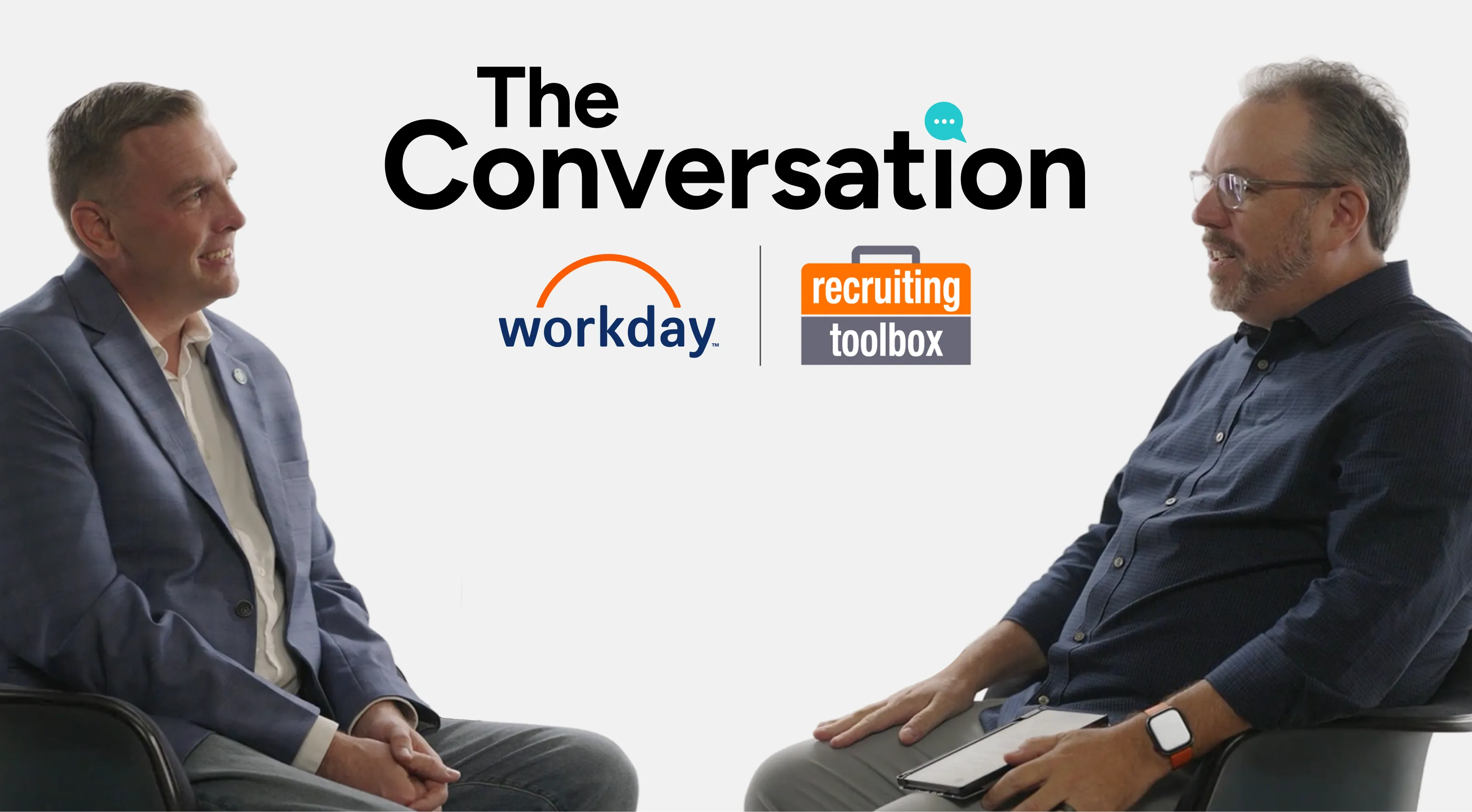
The Conversation with Adam Godson and John Vlastelica.
Adam Godson and John Vlastelica discuss the shift to automated recruiting processes, navigating the "build vs. buy" software debate, and how to effectively manage change on TA teams.


This blog is part of a larger collection of client story content for these companies.
Meet the speakers.

Adam discusses the evolution of recruiting technology, the transition from manual delivery to agentic software, and how simplifying process design accelerates hiring and drives revenue.
Adam discusses the evolution of recruiting technology, the transition from manual delivery to agentic software, and how simplifying process design accelerates hiring and drives revenue.

John is CEO and founder of Recruiting Toolbox, where he's spent over two decades training and consulting Fortune 500 talent acquisition teams on recruiting strategy and change management.
Watch the on-demand webinar:

John Vlastelica: Travel tips. The best one I have. I'm one of those people that if it gets light in the room, I don't sleep well or I get up when the light comes up. And so what you do is you go in the closet and you take the hanger that has the clips for your pants and I close the blinds, right? And you often wonder, who's clipping so many things to these hangers? There you go. What's making teeth marks in the curtains? That's me.
Adam, we're here at Client Board. This is like my fifth time maybe coming or something. True veteran. And I gotta say, it's so interesting to me because I've had the opportunity to sit next to so many of your clients and some of them are just like crazy evangelists for your product. And beyond kind of the conversations in between sessions kind of stuff, there's opportunities for a lot of peer-to-peer sharing. And so there's community that doesn't feel fake, and there's kind of a "we're building this with you." It's almost like you have a bunch of shareholders in the room. It has that kind of vibe like "we're all in this and we all win when we all win" kind of thing. I'd love to hear you talk a little about the philosophy of the format and just how it's different from other things. You and I have been in the industry for a while. And why it should matter to someone who's not a conference producer but wants to copy your best practices or something like that. Tell me more about it.
Adam Godson: And honestly, the fact that you said shareholders is kind of exactly what we're going for. Is someone that is invested in this success and that wants to see things be better. So for us, we wanted to design something different. And that's easy to say, of course everyone wants to do something slightly different so that it's unique. I think we've seen real magic in building the company from its early days with the collaboration of our clients. Bringing together a group of technologists and people with the subject matter expertise that were adventurous and wanted to build and had this desire to change the world and saw technology as the way to do it. And that can be a dangerous proposition because you can build the wrong thing. So we were fortunate enough to be able to get signal from some of the right people early. And then it became, okay, how do we build a community out of this that is durable, that is lasting for us, not just a one-off project or the thing that we want to build these features for, but how do we make that a durable motion and something sustainable?
And then I think being in this industry for some time, there's a desire for connection. That in every talent acquisition team, they're in a business that does something and they're the one that does talent acquisition and they can't go talk to the person two doors down. And so it was wanting to do something different to bring together real community. And that co-build motion, that we want to be able to solve challenges in the real world. That's the only lab that matters is being able to do that. And having the technologists and the subject matter experts in the room and building that community has been an amazing way to make that happen.
John Vlastelica: It is. And I would say as someone that's been to a lot of events, there's always the "hey, I'm sitting at a table and I get to know this other head of TA and we share maybe after." There's some interesting things that happen here that I've just not seen before. And they're wonderfully surprising. Like, we have quite a few shared clients here, but like I'll see someone from Marriott who you guys have put in a booth and they have some text on the screen and a video thing and it's like, "Here's how we're using Paradox to improve our whatever." And it's not run by you. It's not run by sales or marketing. It's run by them and they're flying across the country to come here and share. And what I find that's interesting as someone who has watched several of those iterations is, they're not like 100% pro-Paradox on everything. I mean, they're being honest. And they're like, "This is not ready for production. But we're guinea pigging it and we're really happy that we are because now we're able to kind of influence where the product's going in." And it's so interesting to me that they're voluntarily doing this stuff to help their community of peers learn some of the hard lessons that some of them literally had to spend money or time or political capital getting killed because this didn't work the way we... whatever. How did you get them to do that?
Adam Godson: I think one, people are proud of their work. And they want to share. And they're proud of the fact that they went first or they're proud of the fact that they were able to lead early. And I think they're proud of their ROI stories. And I think there's an altruism about people that go into this industry too, where they are willing to tell the next person to help them. Because if we all do a better job, we create net good in the world. People get hired faster and there's food on their tables and economic success. And so I think we're all rooting for each other. And I think there's a simplicity in our philosophy, which is if you do good work and you allow people to tell their story and you serve your clients well, like good things flow from that. And like gosh this business is complicated sometimes. And sometimes it's really simple. And we think it's pretty simple. If you do good work and you make those connections, that good things will happen. You don't have to force it. And people want to do a better job. And if you can show them a better way, then they'll do it. And it's real. It's not scrubbed and PR approved... just being able to be really vulnerable and I'm clear that I'm very imperfect and all of our clients are like, "Oh they've got... you know there's always something that's imperfect about what's happening." And just being able to be really authentic about that I think has been part of the voice and the story we want to tell.
John Vlastelica: I worked at a company years ago where a hiring manager, director level guy built an ATS from scratch in a weekend. And it became the default ATS at Amazon. It was surprisingly welcomed because it was built by someone who thought about hiring and the recruiting process through the lens of a hiring manager. It was also officially unsupported, and there were all kinds of issues. And so I fast forward to 2026, and I was mentioning to you earlier and a couple of people, like just in the last couple of weeks I've seen posts in some popular recruiting communities like, "I'm a VP of TA and I built an ATS over the weekend. I vibe coded it with AI." So I would love to hear from you because I think there's going to be business leaders that are going to just build stuff and say, "Hey recruiting, you know that problem you have? You're welcome. Here you go." And I think there's going to be TA teams, I think there's going to be engineers and all kinds of people aligned to like, let's solve one of the biggest challenges. Talk to me a little bit about your thinking around kind of at least where we are today on kind of build versus buy.
Adam Godson: Well, we see lots of experimentation in this. And I think because the barrier to the actual build is decreasing rapidly with AI coding tools, the barrier there is low to be able to make something and have that be working software to a degree. You know, I think many people come to the recruiting problem because it's a pretty accessible one. And they see a technological solution and they're like, "How do I think about that? And I'm going to apply it to recruiting." And oftentimes, you know, we see them be able to make a simple solution. This is even before vibe coding. But certainly now in this era. And not really understand how deep the water is. That this is a domain that is full of compliance. There's a global aspect to that... organizations are complex, who can see what, roles and permissions, security models, data privacy rights, all those things get hairy really fast. So I think making a simple solution down market? Yeah, absolutely. I think there's SMB capabilities that absolutely can go in a weekend. When you're talking about enterprise software, that water gets really deep, really fast. But I also think there's a hybrid model to that as well. So Workday Extend, for example, and our built-on programs are examples where we're not going to solve every corner case. And so if there's some weird and wonderful thing that someone wants to do to solve a unique business challenge, like that is the right solution. And taking advantage of the security model and the roles and permissions of some of the core systems and having that complexity solved. That's where we can really make magic is having that core, but then also new things. And I think teams are certainly seeing that at Workday, is teams taking advantage of those kind of programs. And it's going to be interesting. It's a heck of a time to be alive.
John Vlastelica: And I imagine I'll put some words in your mouth, but I imagine you would encourage the experimentation.
Adam Godson: Absolutely. If nothing else, to realize what's easy and what's hard.
John Vlastelica: So tell me more about RecOps.
Adam Godson: Yeah, I mean RecOps certainly is really important for the future of how we design this new agentic world where frankly human beings are moving out of the delivery aspect of this. So I think, you know, like my background was in outsourcing. And it was taking the processes and having human beings execute them in often a low-cost geography, applying some tech, and then having people stick it together. And today, it's really more about outsourcing to agents and software. And building those processes together that require some design. And the thoughtful design of that. And so I think in the past we've had a lot of, frankly, recruiters that are doing delivery work. And a lot of delivery work involves manual things. And I think the job bifurcates where we're really doing process design and operating at scale in a more sophisticated way using agents and software together, and then some intentional use of human beings to do things that are uniquely human. Convincing people to join and having the conversations that are in outreach to get someone to engage, and some of the things that really deeply need to get designed into the process. But I think the part that's going away is humans that wish they were engaging with people but are actually just clicking stuff in their ATS and doing that delivery work. You know, if we do it right, the design, it is going to be the agents do all of the work, they abstract all the boring stuff away, and we have connections with people. And that's what's left. Is those core moments where people are connecting with people, and everything else—scheduling, notifications, paperwork, all that stuff—chasing approvals, all abstracted away. And so I think in that transition, we're getting more process design roles and we're getting more air traffic control of like managing exceptions, understanding processes, and that's becoming a more technical role.
John Vlastelica: And what should be human and what shouldn't? And why? And what's your philosophy? I know when you and I first met, and we've talked about this before, but I wrote an article about segmentation in TA, and it wasn't like executive versus hourly, it was more like think about candidate preferences and what candidates are going to want. There's an opportunity I guess as we think about where humans are going to need to kind of reinsert themselves after we get enough data and realize, "Oh, this is not the kind of person that will order from a kiosk as an analog, right? This is someone that like, you need to engage differently." And I think that's going to create some full circle stuff. And I think there might need to be some muscle rebuilding in some of the outbound sourcing and selling and some of the stuff that like is going to be frankly some of the higher paid recruiting jobs.
Adam Godson: Those are absolutely going to be the higher paid recruiting jobs. The relationship management, the people that can get... think about professional sports or college athletics or the AI engineers that are making tens of millions on foundation models, like really valuable talent, frankly the people that can convince them to join an organization. And I was actually remembering one of the very first fully automated processes that I designed, probably 2017, '16 somewhere in that range. We actually inserted a phone call towards the end of the process by a human being because candidates didn't believe they could get hired that fast. And so it was, we would go through the fully automated process, we would have them answer the min qual questions, take an assessment, schedule an automated interview, someone would listen to it, make a decision and say we'd send them a "you're hired" in a couple of hours. And no one believed it. They were like, "This has got to be a scam." And so we actually inserted a human step after looking at the data that said, "Hey, my name's Adam. I just wanted to welcome you. We're really excited for you to start on Monday." And it was counterintuitive, we were trying to take the people out. But we ended up putting the people back in just in a different spot that didn't exist before. And so that was just those interesting learnings you get from doing it.
John Vlastelica: There's definitely an efficiency focus when it comes to recruiting. The number one metric has, and I'm hoping in my lifetime is not true anymore, has been time to fill since the beginning of time. And you said something like there's a lot of benefits around hiring faster, but you framed it in a way that said like, there's a high cost when you're slow. Talk to me a little bit more around like what happens when you're slow, what happens when you're fast? Because it's not just "it's better time to fill and now we have someone making revenue." There's other things that happen when we go faster.
Adam Godson: Yeah, certainly the revenue is important there. But there's lots of just other things about answering candidate questions and people that didn't get hired. And this idea that you should store them in your CRM and then email them later for a job that, you know, some other point in time. I was talking to Workday Rising to Mark from Rituals who was here as well. And I was excited that they had taken their time to hire, they presented their goal was to get to 30 and they were at seven. Wow. And so I was excited about that. I was like, wow, so fast. But what he was excited about was about the customer experience of their customers. It used to take 80 applicants to get a hire, and now it took 13. And so now there were 67 people that didn't get an expectation of getting a job or they had to disappoint. The black hole or the communication gap. Or whatever. And simply taking that time to hire down, you remove some of that externality.
I think the other thing that's really important is actually with your hiring managers is to improve confidence that the TA team can deliver the talent. And what we see, and I've seen with other of our companies in the past, is hiring managers can have a talent hoarding behavior, and then that can have all sorts of negative effects. The one we've seen regularly is with, for example, part-time workers, you hoard talent because you are afraid that the TA team can't deliver. And then the talent doesn't get enough hours. Because they're all part-time, they're like, "Oh I'm only getting 16 hours a week and I need more than that," so then they quit. And then the only course solution to that is to hire more people who also don't get enough hours and also quit. And you end up in this downward turnover spiral, which seems like it's a problem of something else in your workplace, but it's actually an over-hiring problem. And that over-hiring is caused by confidence in delivery problems. And the confidence in delivery is also connected with like the predictability of this.
John Vlastelica: One of the things that I've learned over the years is there's so little data available to truly diagnose like time in stage, like what's really going on. My point with that is when I think about the data that is automatically collected by Paradox now, I just think about the power of that and how as someone who is not a practitioner in a job, a head of TA job anymore, but I would kill for that kind of stuff. The opportunity there is also to point out things as they happen when you have time to do something about it. Be able to really do that. And I think that's the job of the future is to unstick things. And that's the RecOps person that you're talking about is to be able to see those and to guide the planes onto the runway.
Last thing I want to ask you about is there's a whole bunch of efficiency gains that are not the ROI story that TA leaders need to tell. So what advice would you give to a VP of TA who is like, "I'm spending the money... and I gotta hurry up with this ROI." Like is there any suggestions of things you've seen that people that are doing a really good job of this?
Adam Godson: Yeah, I think piece of advice number one is always what you said, which is get as close to the cash register as possible. And think about how your company makes money and start there. And that's part of the reason we're so passionate about frontline. And probably one of my favorite moments at Paradox was when one of our clients came to a Client Board event and he says, "I gotta show you this." And it was a graph of how we driven 30 million in revenue. And so that was just a good case of, sometimes I'll say like start where it hurts, but like start where you can drive revenue. Start close to the cash register so you can get some of that ROI.
And then the second is really focusing on the process design and think really clearly about how to unthink some of the things you think you'd learned. I think that was some of our early unlock on frontline hiring was people start with this giant application, they ask you to fill out a bunch of useless things. Like what was the address of your job two jobs ago? Who was your manager's name and their phone number? Like three references. Right now! And you haven't even been interviewed. Like who cares about any of those things? And so we simplified that to be like, well, are you 16? Can you work these hours? And when can you start? Great, here's your interview, fill out a couple things before you come, it's tomorrow. Right. So just doing the process design. And I actually think that's why over the last nine years, what we do has been difficult to copy. Where certainly people have looked at us and said like, "I could do that." And someone's vibe coding it probably in the last hour. Exactly, exactly. And because people thought it was the tech. But it was really the tech reflected in the process and the choices you're making and the consultation and frankly the community and other things that you bring together to make a holistic change. And the tech is a key part of that, but it's all the things working together in concert that actually drive the change.
John Vlastelica: I was talking to a Big Fortune 500 company TA leader and I was talking about change management and I said, "You've had some really good success getting people to move from this process to that process." In a culture that was not super change hardy and not the most tech savvy and blah blah blah. And I was asking him about what's been the secret. And he said, for me, and it's just kind of validating what you said, he said, "Too many times in change, you kind of straddle the old world and the new world. And so you'll give a recruiter and say, 'We're moving to this, but also remember you still got to do it the old way in parallel until we fully deploy or turn it on or turn that off or whatever.'" And what happens is both things end up sucking. And then your ROI story is like, well, we never really got to the point where we were fully in second gear, we're kind of stuck in first gear the whole time because we still had to, because we still offered manual scheduling versus... And so his advice was you kind of gotta rip the bandaid off kind of like what you said and he said you gotta get both feet on this side of the line of "the new way is what we fund, the new way is what good looks like, the new way is there is no more... this is what we're doing." And it's gonna suck and there's gonna be pain and we're gonna get escalations and if we're in a nice people-pleasing culture, it's we're gonna feel it. It's gonna suck, it's gonna suck. But the alternative is you do both things really poorly and then you're no longer the head of TA. Because you just spent a whole bunch of money and you half-assed both things and nothing worked. And now blame the tech because that's your narrative when you interview for your next job. "Well, the tech sucked." No, maybe you sucked. I mean... but I really like that advice because I've heard that same thing and I kind of wish I was back in... I never work in a practitioner role again, but if I did and I was doing something like this... I was like, that is a lesson I've learned the hard way too. Unfortunately, I was a guy who like kind of let people do both things and made things too optional and I needed to... It's not that I didn't get there eventually, but in the beginning I should have just said, "We're defunding this. We're fully funding the 2.0. And the 2.0 will become the new 1.0. There is no more 1.0. Effective whatever, and we're just gonna live with the pain of that." And the second part related to that he said you need to over-resource the new thing. Just temporarily, overdo it, overdo it. You're gonna get a lot more calls, you're gonna get a lot more... Don't run a lean team on this thing. You can cut back later, but right now it's got to be a win, it's got to be a win. Yeah, so it's so much easier to over-resource it and then de-resource over time, really hard to start under-resourced and then try to climb out of a hole. You take a lean team and be like, "We're gonna double your workload but promise in six months it's gonna be amazing." And then it's like, that succeeds at zero times. Exactly.
Hey, this has been really fun. Thank you so much for the chat again. We could talk about a hundred topics. I've had a thousand questions, but thanks for your time.
Adam Godson: Yeah, so good to talk to you. Yeah, thanks.
Meet the speakers.
Adam discusses the evolution of recruiting technology, the transition from manual delivery to agentic software, and how simplifying process design accelerates hiring and drives revenue.
Adam discusses the evolution of recruiting technology, the transition from manual delivery to agentic software, and how simplifying process design accelerates hiring and drives revenue.
John is CEO and founder of Recruiting Toolbox, where he's spent over two decades training and consulting Fortune 500 talent acquisition teams on recruiting strategy and change management.