






After years of being considered a "cost center", the talent acquisition function is finally getting its due as a viable business driver. Burlington, the off-price retailer with around 1,000 stores nationally, is looking to double its number of locations in the coming years. And their catalyst for growing at scale? An AI-powered hiring process that’s so efficient it propels the business forward.
We recently got the chance to talk with Burlington VP of TA Tracy Aguilar about how TA is changing the way Burlington operates at scale — now and in the future. Enjoy.
Ally Bonner: What were your biggest bottlenecks before implementing AI scheduling?
Tracy Aguilar: As we were embarking on this journey, there were two main points specific to interview scheduling that we were looking to solve for. One was that we really only had a one size fits all interview approach, and with a growing fleet of stores that can create challenges. Markets are different and nuanced, you have new stores, smaller stores, a range of volume, et cetera. The second piece was that interview scheduling was not owned at the local level, meaning there were two to three manual steps that needed to happen in order to be externally facing for the candidates that were applying. So it was time-consuming and we just thought, “If this is what we're doing at 850 stores, what's it going to look like when we get to that 2,000 stores?" So that's what really drove our exploration process.
AB: Was there a tipping point that ultimately led you to adding a scalable solution?
TA: I'm lucky to say that we weren't broken and seeking a fix, and that changes a mindset when you're embarking on a project. We weren't on defense, we were on offense. We knew the growth that was coming. We knew our process wasn't broken, it was currently working. We weren't fielding a lot of complaints internally from our internal customers or even from a candidate experience. And so this was really a self-driven exploration to understand how we can make sure that we have a scalable solution to 2,000 stores. When you think about exponential store growth, I thought about my current size team, they were doing a great job, but what's the reality of being able to do two or three times the work to get to 2,000?

We just thought, 'If this is what we're doing at 850 stores, what's it going to look like when we get to that 2,000 stores?' So that's what really drove our exploration process.

So I don't know if there was a tipping point as much as some basic math that indicated we had to bring in technology to help us if we wanted to reach our goal. And so that's really what that underlying curiosity factor was for us. We knew of Paradox, and it felt like the perfect storm of a challenge matching with a solution.
AB: What impact has the new AI-driven process had on candidate quality and volume?
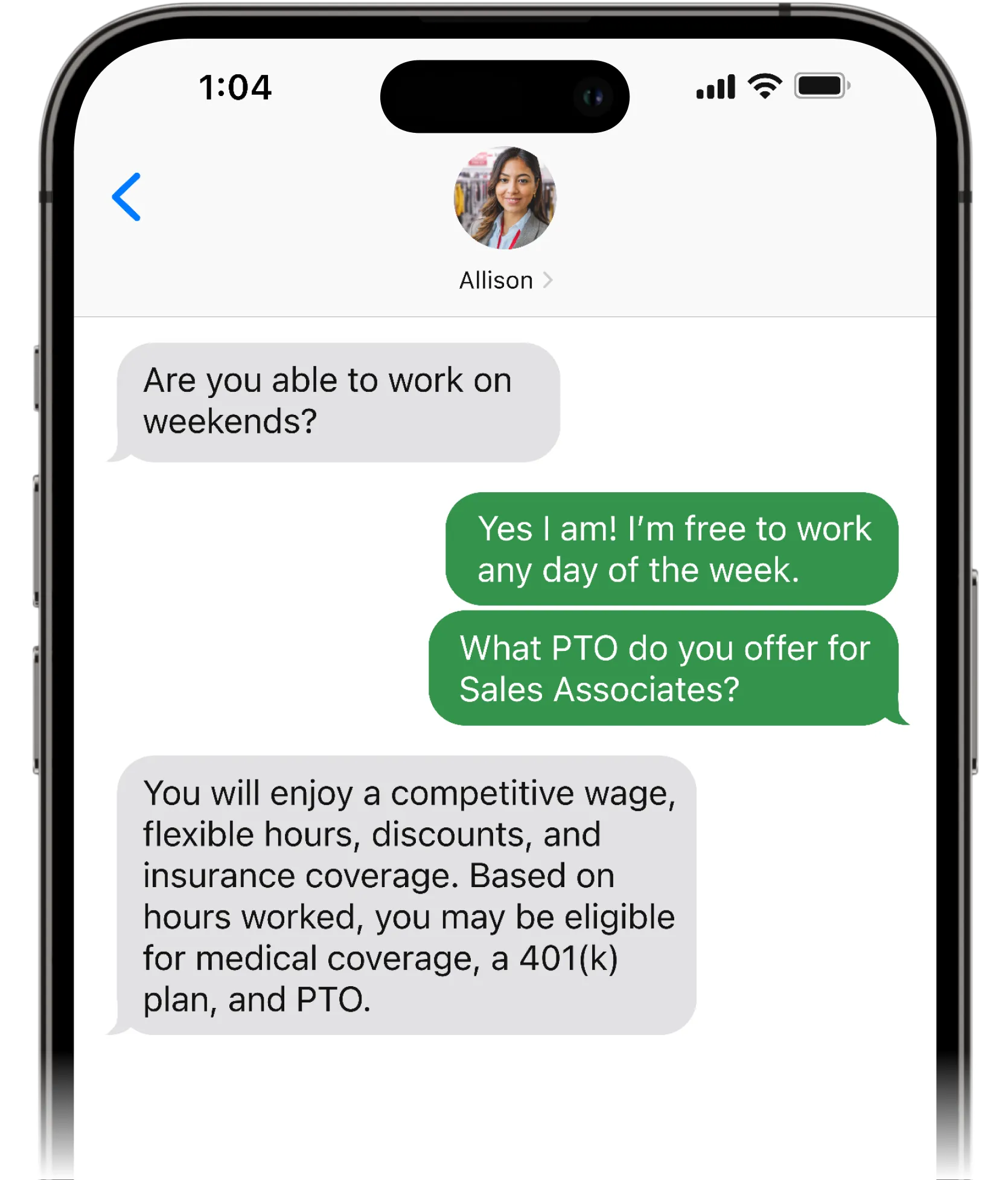
TA: Brace yourself — because the candidate volume didn't increase. If anything, it decreased. And it's okay, because a big part of the Paradox platform is that it’s allowed us to get the best candidates, the most appropriate candidates, to come through the process. When you think of a candidate funnel, we don't have a challenge at the very top with candidate flow. What was challenging was making sure that we're maximizing the best candidates to extend our jobs and offers to. As an example, we were able to layer in questions about scheduling, availability, and rate of pay, and by getting those answers upfront, it allows us to just help prioritize who we chat with first. So although a decrease in volume could be seen as a negative, the reality is it was really allowing us to optimize our leader's time and the candidate flow we did have.
AB: Do you have any advice for keeping an implementation on schedule?
TA: First of all, buy-in at every level is crucial. It's harder to dig in and roll up your sleeves on a project if you've got some folks that aren't completely bought in. And so for us, we had that advocacy cross functionally and from our internal communications team to help us make sure that we built out an appropriate change management message, and from our senior leaders that were helping us navigate some of the nuances. We also partnered with our business partners, so they were part of the journey and the build. Early on in my time at Burlington, I learned how monumental it is to get the feedback and partnership from the end user, as well as the key leaders that you need to lean into for a successful implementation.
AB: What’s the impact of adopting the right tech and finding the right partner?
TA: I can say confidently that introducing Paradox to our tech stack was transformational, not transactional. But depending on how you tackle the to-dos and the change management, it could feel like its intention is transactional.