

Ace, "the helpful place", needed a hiring process that embodied their mission to provide superior customer satisfaction — this time for candidates. Enter an unlikely ally: AI. By leveraging conversational AI atop Workday Recruiting, Ace hasn’t just been able to increase their candidate conversion rate to 86% and save thousands of hours. They’ve freed their store managers to help out more customers than ever before.
We recently chatted with Ace Director of TA Stef Nikitas on how AI has delivered on making the retail giant even more helpful, and the many “aha moments” they encountered on the way.
Ace is a brand built on familiarity. What was the reason you decided to make major changes to your hiring process?
Stefanie Nikitas: During COVID, we had a lot of challenges across the board like a lot of retail companies did. It didn't matter if it was at the corporate level, if it was at the distribution level — interaction with people looked different. On the corporate side, we started to do everything digital, starting with using Zoom or Microsoft Teams. In a warehouse environment, that obviously doesn't work. You don't have candidates that come to Zoom meetings. You're lucky if you get them on a phone call. So we really had to rethink how we engage with people, but it couldn’t be at the detriment of slowing down our own operations. Because of COVID, we found ourselves needing to hire a lot of people across the distribution network in a rather short period of time. While people were stuck at home doing more home improvement work, which was a blessing for the business, at the end of the day, all those products needed to come out of the distribution centers to our customers.
And so our processes really weren't broken, but they needed to improve in order to support the increased demand that we were facing.

We really had to rethink how we engage with people, but it couldn’t be at the detriment of slowing down our own operations.

Ultimately, you decided to bring in Paradox. What was the reaction to using AI?
SN: It was quite a shock to our ecosystem as an organization. We had a lot of pushback at first, with people asking, "Why fix it if it's not broken?" So change management was the first thing that we had to address, and it wasn't just the regular cycle of change management. We had to really make sure that people understood it and got what we were trying to accomplish, because at the end of the day, we were trying to improve the candidate experience, and once they understood that piece and they really got to play with it and see it in action, that's primarily when we started to get the buy-in across the board. Honestly, leadership was probably easier to get buy-in from than the talent acquisition team. Leadership was 100% on board once we explained what Paradox can do for us.
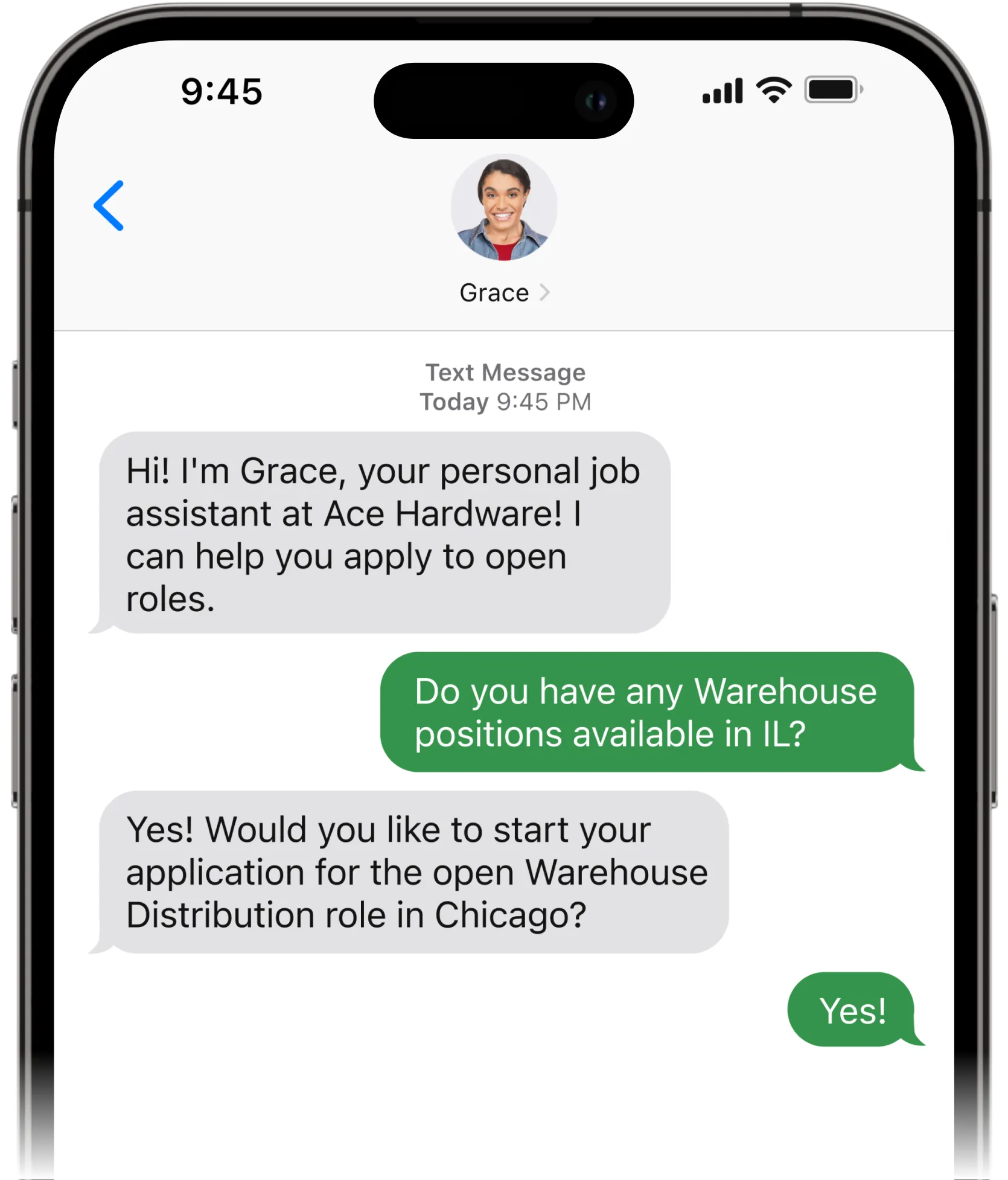
Fast forward 3 years, our talent acquisition team couldn't live without Grace anymore. Candidates think she's real and ask to meet her when they come to onsite interviews. It's amazing to see the journey from first launch to now.
What tactics did you use to get buy-in from recruiters? Was there an “aha moment”?
SN: It was definitely when recruiters saw Grace — that’s our AI assistant — communicating with candidates and handling that scheduling work. When they saw that this was taking things off their plate and saving them time, that was the aha moment and that was when I truly started to see the impact. They were trusting the process, trusting the technology. We actually had one situation where Grace stopped working because we had a system outage on our end, and they missed her. They thought of her as a real assistant, and they were freaking out that she was gone. It was only a couple of days, but once she was back online, within 24 hours they scheduled over 200 interviews. So just based on that experience, I know they trust her, they rely on her, and they can't see themselves doing their jobs without her anymore.
How has this new technology meshed with Ace’s brand identity as the “helpful place”?
SN: Being Ace the helpful place is at the forefront of everything we do. So having this technology in place is important because it actually allows the team to have more of those human interactions when interacting with the candidate directly. I know a lot of companies utilize technology to run their entire talent acquisition process where there's no human touchpoint until they walk in the door, but that’s not something that works for us. Our biggest challenge was figuring out how to use this technology to our advantage without losing the human component. We had quite a few conversations about that, and for us, it came down to allowing the recruiter to be in control of moving the candidate through the process and having those direct touch points with the candidates. Because that keeps the core of what being Ace helpful alive for our brand and the candidate.
Why do you think your candidates have responded so well to this new experience?
SN: From a candidate standpoint, they’re all really busy. Everybody is on their phones, running a million miles per hour between work, childcare, whatever the case might be. So the way we thought about this when we set up Grace is that we want technology to be there to not burden, but to help. And the way we think of it is, if we send out a request for an interview at 3 p.m. via email or try to do a phone call, the likelihood that you’re able to reach the candidate is 50-50. If you do it via AI technology with something like Grace it's an automated text message. Nobody needs to pick up a phone. They can be anywhere, anytime, not even in this country, in this time zone, and they can pick the interview date or time that works best for them. All of this happens on the candidate’s terms, but it’s also super easy for our recruiters as well. That to us is the biggest win-win.