

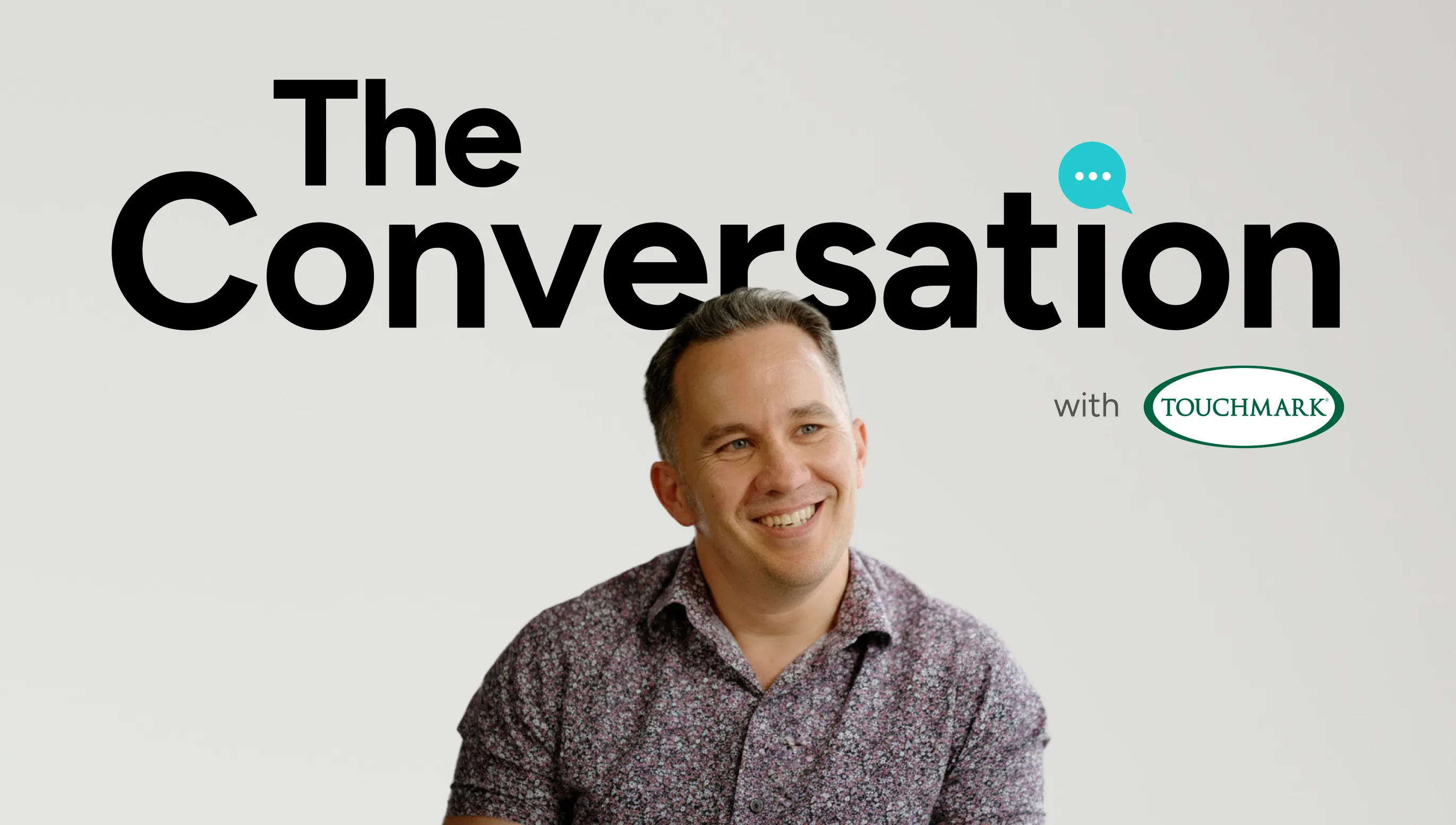


When Cameron Pickett took the role of Director of Talent Density at Touchmark, a senior living and healthcare organization operating across multiple states and Canada, he arrived with something most leaders don't have: proof.
At his previous company, Pacific Seafood, Cameron had led a Paradox implementation that accomplished something the organization had never done in its 80-plus-year history — filling all of its roughly 500 seasonal positions. The technology worked. The partnership worked. So when Cameron got to Touchmark and saw the same fundamental challenges playing out in a new industry, the path forward was clear.
We recently sat down with Cameron to talk about what it takes to hire at scale for people-centered roles, how he builds buy-in across a decentralized organization, and why — after more than a decade of HR technology implementations — he keeps coming back to the same partner.
Why is it so important to get hiring right at Touchmark, and what challenges pushed you toward an AI-centered approach?
Cameron Pickett: Many of our roles are high-volume and people-centered, so the employee experience directly impacts the resident experience, and every hire matters. That raises the stakes considerably, because we're also operating in a pretty complex environment. Our local HR leaders and operational managers are balancing recruiting alongside staffing, employee relations, resident care, and day-to-day operations, which naturally creates inconsistencies and delays. We're filling a lot of frontline roles where speed is everything — candidates are applying to multiple employers simultaneously, and if we don't engage quickly and move efficiently, we lose them.
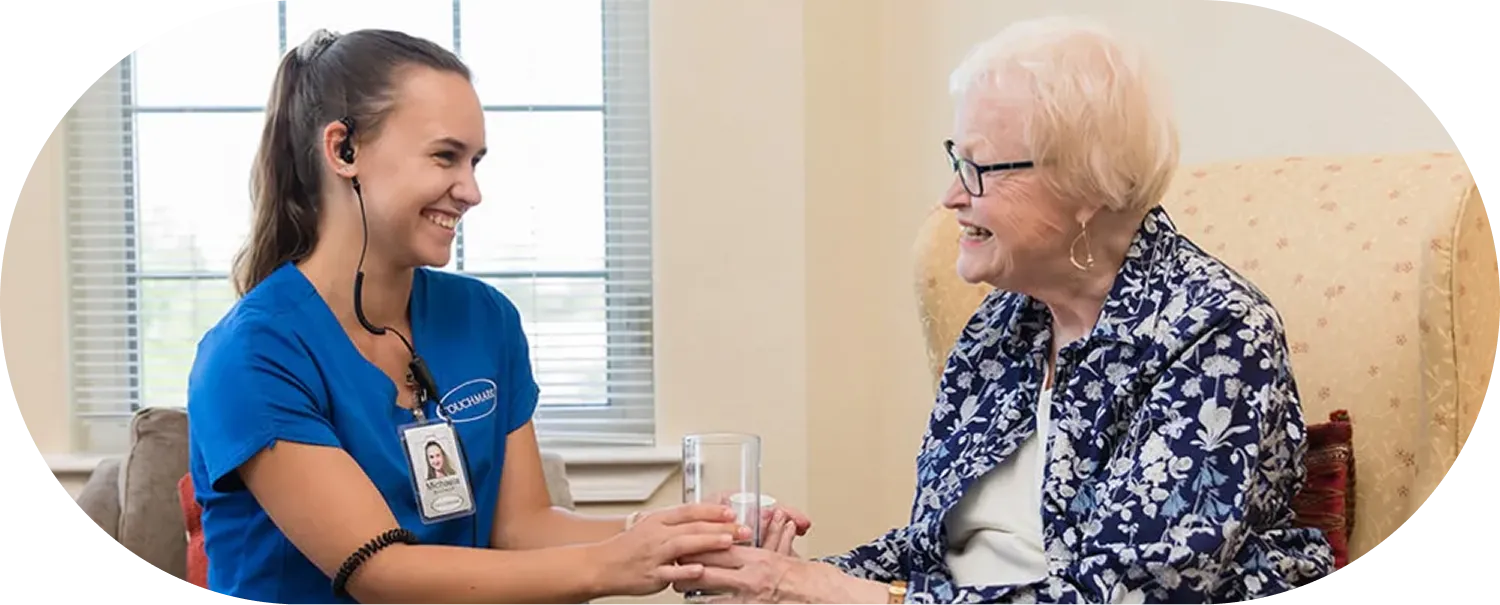
Before, that meant a lot of manual administrative work and a high percentage of candidates falling off simply because the process moved too slowly. So our focus has really become reducing friction and compressing the hiring funnel from end to end: time-to-apply, time-to-screen, time-to-schedule, time-to-interview, time-to-offer, time-to-hire, and ultimately onboarding.
You implemented Paradox before at Pacific Seafood. What made you bring it to Touchmark and what lessons were important enough to carry over?
CP: Having already done it at Pacific Seafood gave me a real advantage going in. I could speak from experience rather than theory — I knew what worked, where we saw efficiencies, and what adoption looked like. That credibility made a meaningful difference in building trust with HR leadership, operations, IT, and executive stakeholders at Touchmark.
What I made sure to carry over was the mindset that simplicity wins. It's easy during implementations to try to solve every future scenario at once. What actually works is focusing on the highest-impact opportunities first, building momentum, and evolving from there. Executive sponsorship matters enormously too. When leadership visibly reinforces the vision behind the transformation, adoption improves dramatically. And being clear that AI is there to augment people, not replace them, has been just as important here as it was the first time around.
On the flip side, what are you doing differently this time around?
CP: The biggest difference is how much more intentional we've been upfront about process design, stakeholder alignment, and change management. At Touchmark, we spent significantly more time simplifying and standardizing our workflows before introducing any automation — making sure everyone understood ownership, expectations, and what the future-state process should actually look like before we started building toward it. We're also spending a lot more time preparing hiring managers and local HR teams for what's ahead — not just training them on how to use the platform, but helping them understand why the change matters. When people understand the why, they become part of the effort instead of just the recipients of it.

Being clear that AI is there to augment people, not replace them, has been just as important here as it was the first time around.
Touchmark has a decentralized hiring structure. How do you build buy-in at that level, especially from skeptics?
CP: Everyone wants to know what's in it for them. If people don't see personal value, they're not going to engage. So I focus on the comparative difference between our old system and Paradox and what people can actually do with the time we're giving back. When candidates are applying via text, screening questions are automated, and fewer people are falling off at the top of the funnel, that means a larger talent pool. And when you have more candidates, you can be more selective about who you hire. That's what resonates.
I also learned you need ambassadors. My goal was to take the number one detractor and turn them into the number one promoter. At one of our all-day HR conferences, I had an HR manager who was openly against AI — they had every concern you can imagine. I opened the floor and let her poke holes in it. Within about an hour of working through every objection, she flipped completely. Now she's the one getting other HR managers on board. Every week someone asks me, "When is Paradox going live?" You can't manufacture that kind of excitement. You earn it.
What matters more to a successful implementation: the solution or the partnership?
CP: You need both, but if I had to choose one, I'd say partnership. I've done upwards of a dozen implementations over my career — ATS systems, HRIS, HCM, learning management systems — and I've worked with a lot of software providers. What sets Paradox apart isn't just the product. It's the people.
My rep when we implemented at Pacific Seafood flew out to Portland and did in-person training. Anytime we needed support, it wasn't "that'll cost extra". It was always: What do we need, let's find a solution. Most software-as-a-service companies don't work that way. Technical support comes with a fee, and everything else points you to a community resource page. The way Paradox supports their clients at every stage is genuinely what brought me back, and what made me confident it would work here. The best implementations feel less like a vendor relationship and more like an extension of your own team.