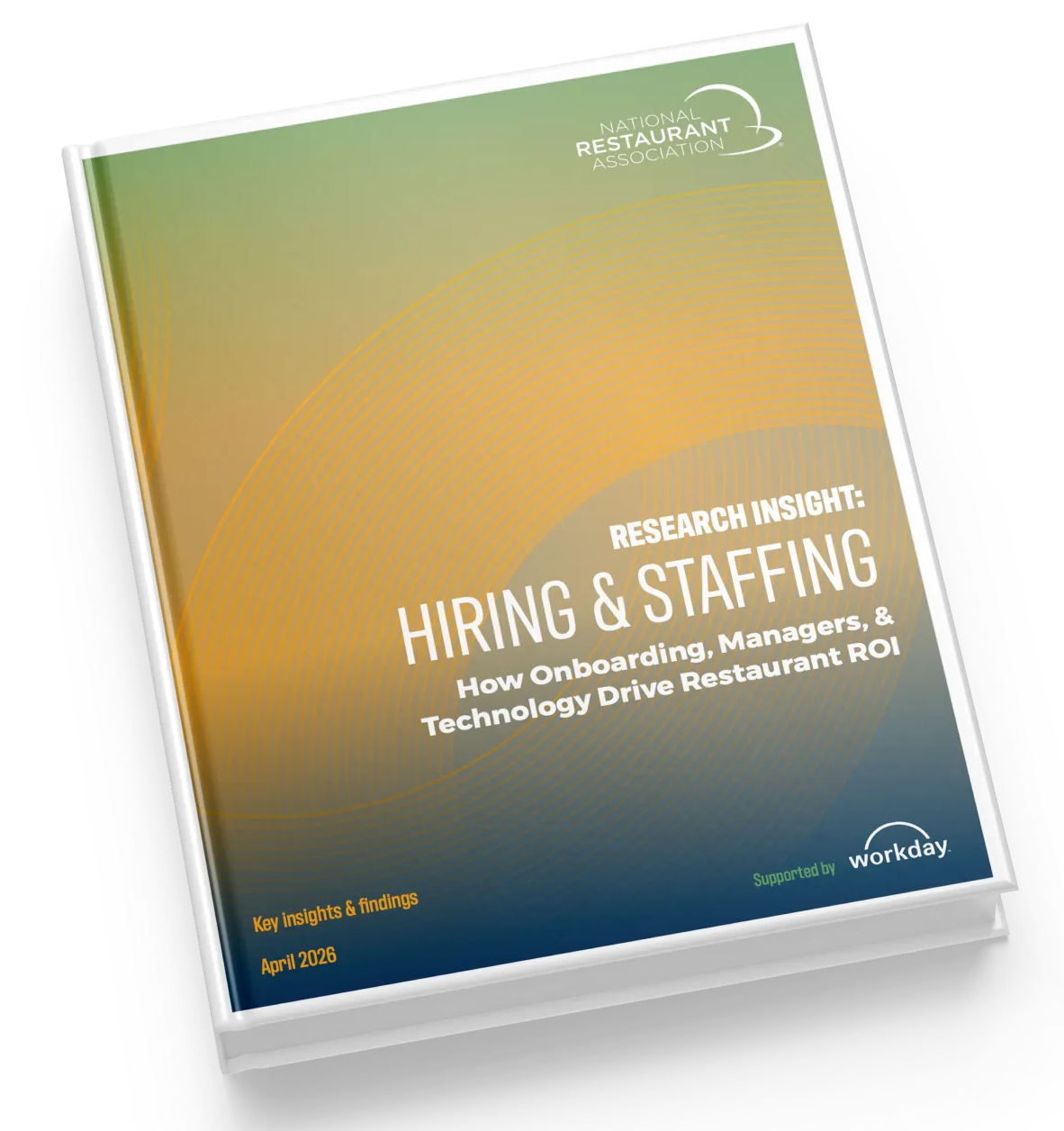
The Frontlines: Fixing Hiring at Scale


Listen to the podcast now:
Tim Sackett [00:00:00]:
Welcome back to The Frontlines. I'm Tim Sackett, joined as always by my co-host Madeline Laurano. Madeline, today we've got somebody I've been wanting to get on since we launched this thing.
Madeline Laurano [00:00:18]:
Yeah, this one's been a long time coming. I feel like every conversation I've had in the last year eventually leads back to this guy. Adam Godson, welcome to The Frontlines.
Adam Godson [00:00:28]:
Thanks for having me. I've been a fan of what you two are doing. Frontline hiring is — I don't want to say my life's work, but honestly, it kind of is at this point.
Tim Sackett [00:00:38]:
So for people who don't know you — which would be a very small number in our world — give the quick version. How did you get here?
Adam Godson [00:00:48]:
I grew up in Iowa. First job was detasseling corn — which, if you've never done it, is exactly as miserable as it sounds. Hot, early mornings, surrounded by cornfields. But you show up, you do the work. From there I ended up hanging "Now Hiring" signs on highway overpasses. At some point I found my way into HR tech, eventually became CEO of Paradox, and now I'm leading talent products at Workday. The through-line is that I've always cared about making the hiring experience better for the people who don't get a lot of attention — frontline workers, hourly workers, people who need a job that day, not in three weeks.
Madeline Laurano [00:02:10]:
And that urgency piece is so real. It's something we talk about constantly. These candidates are not sitting around waiting for a callback. They've applied to four other places already.
Adam Godson [00:02:22]:
Exactly. And the tragedy is that most organizations still operate like the candidate has infinite patience. Like they'll fill out a 45-minute application, wait two weeks for someone to email them, then drive across town for a first interview with a manager who might not even be there. That's not a process. That's a filter for desperation.
Tim Sackett [00:02:50]:
So what's the fix? Because I feel like we've been saying this for years and yet here we are.
Adam Godson [00:03:00]:
The fix starts with asking what you actually need to know. We've stripped it down to three questions: Can this person do the job? Will they actually show up? Are there any hard barriers — licensing, physical requirements, schedule conflicts? That's it. Everything else is noise. When you get to just those three things, you can run a conversational AI flow that qualifies a candidate in ten minutes on their phone.
Madeline Laurano [00:03:50]:
And what does time-to-hire look like when you actually do that?
Adam Godson [00:03:56]:
The best organizations we see are under five hours from application to offer. Some are under two. We had a candidate recently who saw a QR code on a drive-thru receipt, texted in while sitting in the parking lot, and was hired before she drove home.
Tim Sackett [00:04:25]:
A drive-thru receipt. That story never gets old.
Adam Godson [00:04:30]:
It shouldn't. Because that's a real person who needed a job, found out about an opening in the most casual way possible, and was hired the same afternoon. The alternative — go home, find a laptop, navigate a career site, upload a resume, wait for HR to review it — she would have been working somewhere else by then.
Madeline Laurano [00:05:00]:
Let's talk about conversational AI specifically. What's the state of adoption right now in frontline hiring?
Adam Godson [00:05:12]:
It's accelerating fast. The organizations that were early adopters — McDonald's, large health systems, big retail — they've been running this for years and the data is unambiguous. Lower time-to-fill, higher completion rates, better candidate satisfaction, fewer no-shows. The companies that haven't adopted yet are mostly stuck on fear. But every organization that actually turns it on sees the numbers move in the right direction almost immediately.
Tim Sackett [00:06:30]:
Walk us through the apply-to-hire flow end to end.
Adam Godson [00:06:38]:
Candidate sees an opening — text from a friend, QR code, job board listing, anything. They text a number or tap a link. The AI kicks in immediately — no waiting, no confirmation email nobody reads. It walks them through the three core questions, captures availability, answers their questions about the role, and if they qualify, schedules an interview right then. Manager gets a notification. Candidate gets a confirmation. The whole loop closes in one mobile session.
Madeline Laurano [00:07:30]:
And you think this moves upstream to white-collar hiring?
Adam Godson [00:08:00]:
Inevitably. Candidates who've had a great frontline hiring experience — fast, mobile, conversational — don't want to go back to a clunky enterprise ATS for a corporate role. The bar has been raised. And honestly, for most corporate roles, the same logic applies. Do you really need a 60-question application to hire a marketing coordinator? The questions are the same. The technology is the same. It's just a mindset shift.
Tim Sackett [00:09:00]:
Adam, this has been exactly the conversation I wanted. Thank you for coming on The Frontlines. Thanks to Workday and Paradox for making this show possible.
Adam Godson [00:09:20]:
Thanks for having me. Go hire somebody fast today.
Madeline Laurano [00:09:25]:
That's the tagline. See you next time.
Tim Sackett and Madeline Laurano sit down with Adam Godson, Head of Talent Products at Workday and former CEO of Paradox, to unpack what's really broken in frontline hiring — and what the best organizations are doing to fix it. Godson brings a rare combination of practitioner instinct and enterprise-scale perspective, from his early days detasseling corn in Iowa to leading one of the most influential talent tech portfolios in the world. The conversation gets specific: what questions actually predict success for frontline workers, why most ATS workflows are overbuilt for the wrong audience, and how the fastest companies are moving candidates from application to offer in under five hours.
- Why most hiring processes are overbuilt and underperforming
- The three questions that actually predict frontline success
- How top organizations cut time-to-hire to under five hours
- Conversational AI as a seamless apply-to-hire engine
- The drive-thru receipt that turned into a hire
- Why white-collar hiring will follow the frontline lead
Meet the speakers.

President, HRU Tech Resources
A leading voice in talent acquisition and high-volume hiring, with deep experience running TA at scale across restaurant, healthcare, and staffing environments.

Founder, Aptitude Research
Founder of Aptitude Research and one of HR tech's most cited analysts, focused on helping organizations navigate the rapidly evolving talent acquisition technology market.
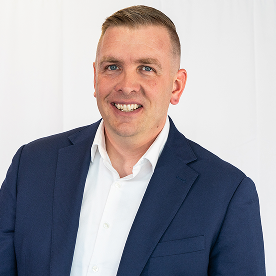
Head of Talent Products, Workday
Brings a rare blend of practitioner instinct and enterprise-scale perspective to talent products at Workday, having led Paradox as CEO through its formative years as a conversational AI pioneer.
Related content


You might also like...


Every great hire starts with a conversation.
Demo Olivia now


© 2026 Copyright Paradox, Inc. All rights reserved.
