HR Leaders: Why 95% of Valvoline Leaders Started as Hourly Technicians



Listen to the podcast now:
Chris Rainey [00:00:00]:
Today I’m speaking with Jon Caldwell, SVP and Chief People Officer at Valvoline. Jon, welcome to HR Leaders.
Jon Caldwell [00:00:10]:
Thanks, Chris. Really glad to be here.
Chris Rainey [00:00:15]:
Valvoline has a remarkable statistic — 95% of your leaders started as hourly technicians. How did that become the operating model?
Jon Caldwell [00:00:28]:
It wasn’t an accident — it was a deliberate choice that became cultural DNA over time. When you look at Valvoline’s business model, it’s built on technical expertise and customer trust. The best store manager isn’t someone who studied business management — it’s someone who can change oil in 15 minutes, talk to a customer about their vehicle, and train a new tech to do the same. That expertise only comes from the floor. So we built our career pathways to formalize what was already working informally.
Chris Rainey [00:01:30]:
Walk me through what those pathways look like.
Jon Caldwell [00:01:35]:
We have a structured apprenticeship model starting at the hourly technician level. New hires come in knowing there’s a clear path — from lube tech to certified tech to service advisor to assistant manager to store manager and beyond. Each step has defined skill requirements, training milestones, and timeline expectations. We want someone coming in for their first job to be able to see exactly what their career at Valvoline could look like — not just a job, but a trajectory.
Chris Rainey [00:02:40]:
And how does that affect how you hire?
Jon Caldwell [00:02:45]:
Completely changes it. We’re not just hiring for the role in front of us — we’re hiring for potential. Can this person grow? Do they want to? Are they teachable? We look for curiosity, reliability, and a service mindset. Those are things you can’t easily train. Technical skills — we can absolutely teach. So our screening process is designed to surface those qualities, not just verify that someone can show up and follow instructions.
Chris Rainey [00:03:40]:
With 12,000 hires a year across 2,100 locations, how do you maintain consistency in that approach?
Jon Caldwell [00:03:50]:
Technology is a big part of it. We use conversational AI to handle the initial screening and scheduling at scale, which means every candidate gets a consistent, responsive experience regardless of which location they’re applying to. The hiring manager gets a qualified candidate who’s already been through the first filter. Their job in the interview is to assess those harder-to-screen qualities — culture fit, growth mindset, service orientation. That’s where their judgment matters most.
Chris Rainey [00:04:55]:
What about retention? Does the promote-from-within model actually move the needle?
Jon Caldwell [00:05:02]:
Significantly. When people can see a future at a company — a real one, not a vague promise — they stay longer. Our retention rates for employees who’ve been promoted at least once are dramatically higher than for those who haven’t. The first promotion is the critical moment. It confirms that the pathway is real, that the company keeps its word, and that investing in Valvoline as a place to grow your career is worth it.
Chris Rainey [00:05:55]:
Any advice for HR leaders at other companies who want to build something similar?
Jon Caldwell [00:06:03]:
Start by auditing your current leadership pipeline. How many of your managers came up from frontline roles? If it’s a small percentage, ask why. Is it because the pathway doesn’t exist, or because it exists on paper but not in practice? Then build the structure around the answer. Define the steps, the skills, the timelines. Make the promise visible from day one. And make sure your hiring process is actually selecting for the people who can make that journey — not just the ones who can fill the immediate need.
Chris Rainey [00:07:00]:
Jon, this has been a brilliant conversation. A real model for what frontline workforce strategy can look like when it’s done with intention. Thank you.
Jon Caldwell [00:07:10]:
Thanks, Chris. We’re proud of what we’ve built — and still learning every day.
Chris Rainey sits down with Jon Caldwell, SVP and Chief People Officer at Valvoline, to explore what a genuinely frontline-first workforce strategy looks like at scale. Across 2,100+ service locations and 12,000 annual hires, Valvoline has built a culture where career growth begins at the hourly level — with structured apprenticeship models, clear promotion pathways, and a leadership philosophy rooted in the belief that the best leaders are built from within.
- How Valvoline’s promote-from-within model reaches 95% of leadership
- Apprenticeship and structured career pathways for hourly technicians
- Hiring and retaining 12,000 people a year across 2,100+ locations
- Building growth ambition into frontline roles from day one
- Why internal mobility for frontline workers is a retention strategy
Meet the speakers.

CEO & Co-Founder, HR Leaders
Co-founder of HR Leaders and host of the HR Leaders podcast, helping CHROs and people leaders navigate the future of work through conversations with the world’s top HR practitioners.
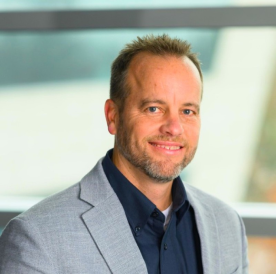
SVP & Chief People Officer, Valvoline
Architect of Valvoline’s frontline-first workforce strategy, where structured apprenticeship and promote-from-within pathways have made hourly technicians the primary source of leadership talent.
Related content


You might also like...


Every great hire starts with a conversation.
Demo Olivia now


© 2026 Copyright Paradox, Inc. All rights reserved.
